

Limited Awareness, Strong Opposition: Nairobians Wary of Proposed Ride-Hailing Minimum Fare
Nairobi passengers are expressing reservations about the proposed minimum fare for ride-hailing services, concerned that higher charges could make the services less affordable and push users toward cheaper alternatives. The proposal would increase the current minimum fare of approximately KSh180–220 for trips booked through platforms such as Uber, Bolt, Little Cab and Faras, with the stated objective of improving drivers’ earnings.
Public awareness of the proposed changes remains relatively low, with only 27 per cent of respondents reporting they had previously heard of the minimum fare proposal. However, after the proposal was explained, 59 per cent considered it the wrong approach, compared with 39 per cent who supported it.
Opposition to the proposal appears driven mainly by concerns about affordability and the government’s role in setting prices. Thirty-six per cent of those opposed said competition among ride-hailing companies should set fares rather than government intervention. In contrast, an equal proportion said a minimum fare would increase ride costs. Support for the proposal was largely based on the view that drivers should earn more, cited by 16 per cent of respondents.
Preference for Market-Based Pricing
The preference for market-based pricing was also evident more broadly, with 63 per cent saying fares should be set by competition among ride-hailing companies, compared with 33 per cent who supported government regulation.
The findings point to a broader concern about government intervention in the sector, particularly when such intervention could directly affect transport costs. While drivers need better compensation, passengers appear less willing to support measures that achieve this through higher fares.
Cost of Living Shapes Passenger Sentiment
These concerns stem from a difficult economic backdrop for consumers. Eighty-one per cent of respondents said they were very concerned about rising prices for essential goods and services, including fuel, food, rent and transport. Concerns were particularly high among those aged 35 and above, at 91 per cent. A similar proportion identified either the high cost of living or constrained household incomes as the biggest challenge facing them.
This price sensitivity could directly affect the ride-hailing sector if fares rise significantly. Ride-hailing services are used primarily for essential travel, with 72 per cent of trips linked to commuting, business or errands, while 29 per cent are for social and leisure activities. Users make an average of 6.8 trips per month, indicating that ride-hailing has become an established part of urban transport for many Nairobi residents.
Passengers Could Shift to Cheaper Alternatives
The strongest indication of the potential impact of the proposed minimum fare comes from passengers’ stated responses to higher prices. Sixty per cent said they would switch to alternative forms of transport if fares increased significantly. Matatus were the most commonly cited alternative, followed by boda bodas, walking and personal vehicles.
Another 22 per cent said they would continue using ride-hailing services but reduce trip frequency or switch to cheaper options. Only 18 per cent said they would continue using the services without changing their behaviour.
Balancing Driver Earnings and Consumer Costs
The proposed minimum fare therefore poses a difficult policy trade-off. While higher fares could increase drivers’ earnings per trip, they could also reduce passenger demand if users switch to cheaper modes of transport. For drivers who depend heavily on ride-hailing for their income, fewer trips could ultimately offset some of the gains from higher fares. 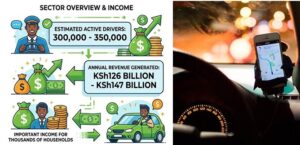
With an estimated 300,000 to 350,000 active ride-hailing drivers generating between KSh126 billion and KSh147 billion annually, the sector has become an important source of income for thousands of households. The challenge is to improve driver earnings while keeping ride-hailing affordable

enough to retain its customer base.