
Dangote Refinery Breaks Ground, Putting Africa’s Financing Ambitions to the Test
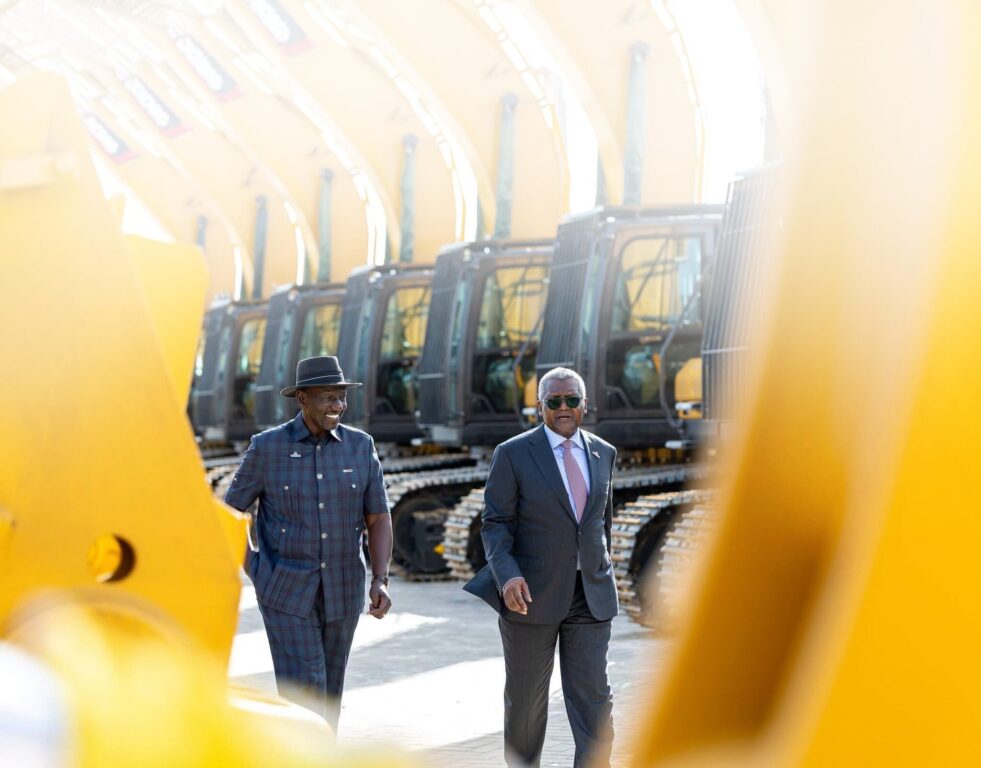
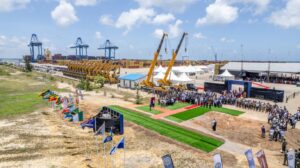
On 30 September 2026, President William Ruto joined African leaders and businessman Aliko Dangote in Lamu to break ground on a proposed US$16 billion East African refinery, designed to process up to 700,000 barrels of crude oil per day and supply petroleum products to Kenya and neighbouring markets. The refinery is expected to be completed in 2030 and has been presented as a major investment in regional energy security, industrialisation, and integration.
The timing is significant. Only weeks earlier, Ruto launched Kenya’s national conversation on Vision 2060, the proposed successor to Vision 2030, which calls for a development agenda that looks beyond individual political and electoral cycles. The Government has said the new long-term framework will address, among other issues, climate change, technology, innovation, artificial intelligence, and population development. The Lamu refinery therefore offers a useful test of the question at the heart of any long-term African development vision: can the continent finance the scale of its ambitions?
The Financing Question
At the United Nations General Assembly (UNGA), President Ruto placed the financing challenge squarely within the international financial system. He argued that developing countries borrow at significantly higher rates than developed economies and called for longer-term, local-currency financing, greater use of guarantees and risk-sharing instruments, and increased lending from multilateral development banks. His central formulation was that “capital must price risk; it must not price prejudice.”
The Dangote refinery illustrates why this matters. A US$16 billion industrial project requires capital on a scale that cannot ordinarily be mobilised through public budgets alone. The project is being led by private African capital, with Dangote offering regional governments a combined 30 per cent stake. The eventual shares are expected to be listed on the Nairobi Securities Exchange. This represents a different proposition from development financed principally through aid or sovereign borrowing: African capital, international investors and regional governments participating in an asset intended to serve an African market.
Evidence suggests Africa’s financing architecture is evolving. In 2025, the African Development Bank approved more than US$11 billion in financing and disbursed US$7.1 billion, while private-sector operations reached a record US$2.8 billion. The Bank also reported that African countries contributed more than US$190 million to the latest replenishment of the African Development Fund.
More significantly, African institutions are increasingly seeking to reshape how capital is mobilised and deployed. The African Development Bank’s New African Financial Architecture for Development (NAFAD) was endorsed by African Union heads of state in February 2026 and adopted under the Abidjan Consensus in April. Its objective is to coordinate Africa’s financial ecosystem more effectively around development financing.
Yet the constraints remain substantial. The AfDB reported that 21 African countries were in debt distress or at high risk of debt distress between 2023 and 2025, while debt-service costs continued to constrain fiscal space. The Bank also notes that Africa’s shift from concessional to commercial borrowing has increased debt-service burdens. The refinery consequently represents both progress and a financing challenge: Africa is increasingly capable of originating projects of continental scale, but the financial system must provide capital without creating unsustainable debt burdens.
The Sustainability Test
Financing a refinery is not, by itself, synonymous with sustainable development. The Lamu project raises environmental and social questions, including concerns about impacts on the coastal and marine ecosystem, land rights, and compensation. A Kenyan court has ordered the preservation of parts of the site pending further proceedings, while affected residents have challenged aspects of the project. The longer-term energy question also looms. A 700,000-barrel-per-day refinery could reduce dependence on imported refined petroleum products and retain more value within the region. But Africa’s development ambitions increasingly must reconcile industrialisation with decarbonisation, environmental protection, and climate resilience.
For Vision 2060, sustainability cannot be an afterthought. Projects must generate economic value while meeting environmental standards, protecting communities, and remaining commercially viable as energy systems evolve.
Financing the Dream
The Lamu refinery is more than a petroleum project. It shows the scale of capital required for Africa to move from exporting raw materials to processing, manufacturing, and regional value chains. Ruto’s UNGA message provides the financial framework for that ambition: Africa needs more capital, but also better-priced, longer-term, and better-structured capital. His Vision 2060 provides the longer horizon. The Dangote refinery offers a tangible project against which that ambition can be measured. The question is no longer simply whether Africa can imagine ambitious futures. It is whether it can build the financial institutions, investment structures, governance systems, and environmental safeguards that can turn those ambitions into durable assets. The Lamu refinery will be one of the continent’s most closely watched tests of that proposition.