

Beyond Representation: Kenya’s Key Takeaway from the G7 Summit
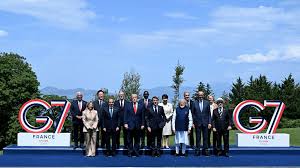
Kenya made history this week by participating in the G7 Summit for the first time, joining discussions traditionally reserved for the world’s largest advanced economies. For President William Ruto, the invitation to Évian, France, was more than a diplomatic milestone. It was an opportunity to place African priorities at the centre of conversations on global finance, climate funding, investment, and economic reform.
While most headlines focused on Ukraine and global tensions, Kenya came with a different goal: to ensure Africa’s voice was included in decisions shaping the continent’s economic future. The bigger question is not just that Kenya got a seat at the table, but what the country did with that opportunity.
A Push for a Fairer Financial System
Kenya’s main message at the summit was a call to reform the global financial system. President Ruto stated that many developing countries still face high borrowing costs, even after making significant improvements in their economies and governance. This problem is not unique to Kenya. Across Africa, governments are spending a larger share of their budgets on debt payments while also trying to fund infrastructure, healthcare, education, and climate adaptation.
When countries pay higher interest rates, building roads costs more, electricity projects take longer to fund, and governments have less money for social programmes. Businesses also face higher costs, which can slow investment and job growth. At the summit, Kenya joined others in calling for changes to make development finance more affordable and better suited to the needs of emerging economies. It remains unclear whether these reforms will happen, but the issue is now a central topic in global discussions.
Turning Diplomacy into Investment
Beyond pushing for financial reform, Kenya used the summit to highlight its appeal to investors. In recent years, the country has worked to become a regional centre for technology, renewable energy, manufacturing, and financial services. The G7 was an opportunity to share this message with some of the world’s largest economies and investors.
People often misunderstand the value of these meetings. Major investment decisions are rarely made at summits. Instead, these events help build relationships, raise visibility, and build trust that can lead to future investments. For Kenya, the goal was clear: ensure that discussions about Africa’s economic future include real investment opportunities.
This is important now because competition for global investment is intensifying. Countries are not only competing on their economies but also on how they position themselves strategically.
Critical Minerals and the New Global Competition
One of the less-discussed but important topics at the summit was critical minerals. As countries move faster towards clean energy and new technologies, the need for minerals used in batteries, renewable energy, and advanced manufacturing is rising quickly. Governments are now more focused on ensuring they have steady supplies of these resources.
Africa is central to this discussion. Kenya used the summit to push for talks on partnerships related to critical minerals and wider industrial growth. The details of future deals will come later, but the overall importance is already clear.
The focus is no longer just on extracting resources from the ground. Now it is about adding value, processing, sharing technology, and ensuring that countries with these resources receive a greater share of the economic benefits. For African economies, this shift could be a game-changer.
Climate Finance Remains a Priority
Climate finance was also a central part of Kenya’s message. This issue is especially important for countries that produce little pollution but suffer some of the worst climate effects. Droughts, floods, and changing weather patterns continue to cause major economic problems across Africa.
Kenya has consistently positioned itself as a leader in renewable energy and green development. The country’s energy mix is already among the cleanest globally, with geothermal, hydro, and wind power playing a significant role.
At the summit, Kenya’s message was clear: climate ambition must be matched by climate finance. Developing countries cannot be expected to shoulder the costs of adaptation and green transitions without access to affordable, predictable funding.
Kenya’s Growing Global Profile
The summit also showed how Kenya’s role in international diplomacy is shifting. President Ruto’s attendance led to debate across Africa. Some questioned why Kenya was so prominent in discussions of broader African issues, while others saw the invitation as proof of Kenya’s growing diplomatic influence.
No matter how you look at it, the invitation signals that things are changing. Kenya is now regarded as an important voice on issues such as climate policy, peacebuilding, financial reform, and development finance. Its work in regional security, climate leadership, and diplomacy has elevated its profile. But greater visibility brings higher expectations. Being at the table is one thing; turning talk into real results is another.
From Visibility to Influence
For Kenya, the summit was about more than just being seen. It was about having influence. As the world’s economy and politics continue to change, countries that help set the rules will benefit far more than those that only follow them. The real impact of Kenya’s role at the G7 Summit will not be seen in speeches, photos, or official statements. It will test whether talks on financial reform result in cheaper loans, climate finance commitments materialise into projects, investment discussions generate jobs and industry, and new partnerships on critical minerals create lasting value rather than short-term gains.