

From Crude Oil to Fuel: How the Dangote and Changamwe Refineries Differ
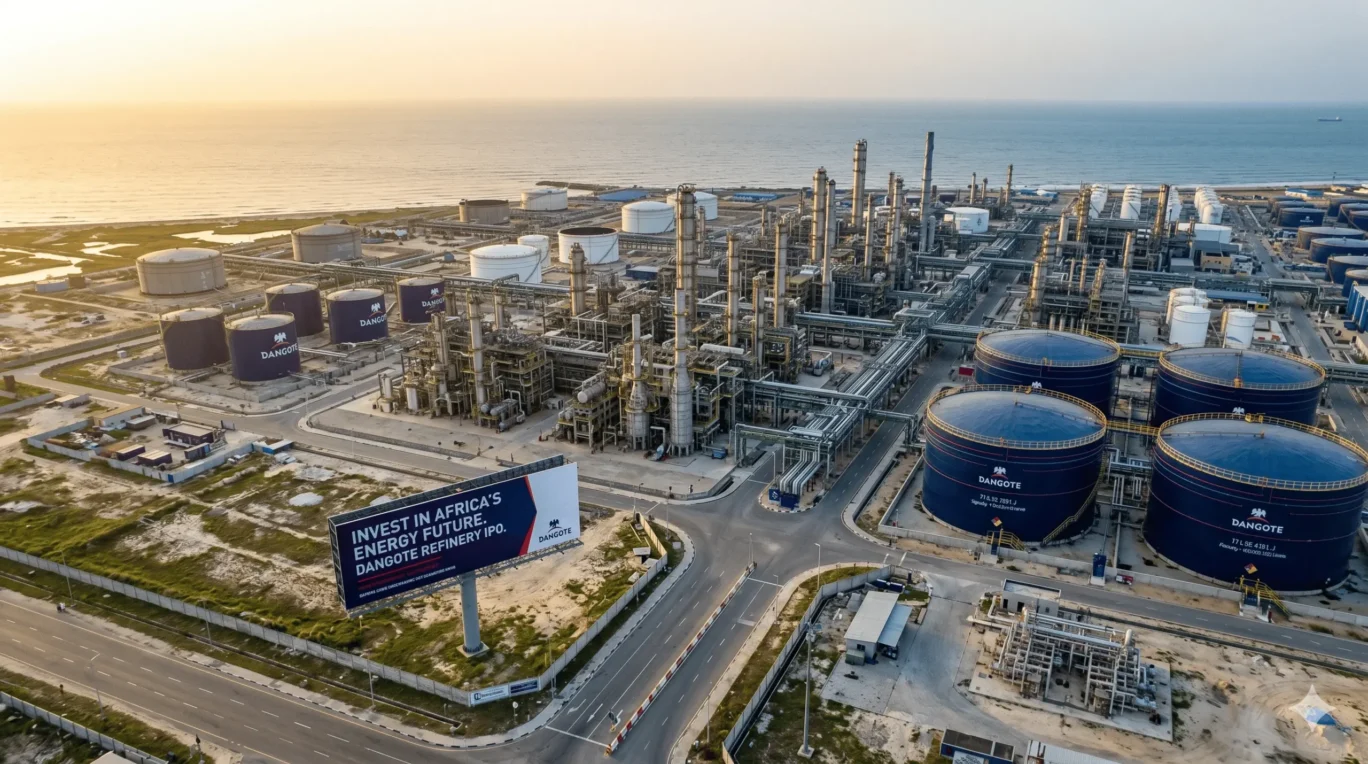
A key distinction exists between simply refining crude oil and maximising what you can extract from every barrel. Kenya’s former refinery at Changamwe in Mombasa was largely a hydroskimming operation. It separated crude into fractions and treated them, but could not convert the heavier fractions into petrol, diesel, and aviation fuel, which the market increasingly demanded.
It commissioned two refinery complexes in 1963 and 1974, and operations ceased in September 2013.
The proposed Dangote East African Refinery in Lamu represents a fundamentally new generation of refining. At a planned capacity of 700,000 barrels per day, it is designed as an integrated refining, petrochemical, power and logistics complex.
It will use Honeywell Technologies’ process technologies and engineering services, leveraging proven engineering designs developed for Dangote’s refinery in Lekki, Nigeria. The facility is expected to process a wide range of crude oils, from light to heavy grades, and to produce gasoline, diesel, jet fuel and polypropylene. Understanding this difference is essential to understanding what Lamu could mean for Kenya.
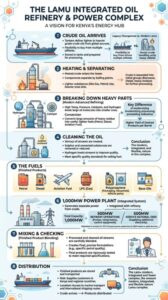
This breakdown visualises the processes up to the point at which petroleum and petroleum products from the refinery enter the market.
Conclusion
The easiest way to understand the difference between Changamwe and the proposed Lamu refinery is to look at what happens to the crude’s heavy components. Changamwe could separate crude and produce petroleum products, but its older design could not convert large quantities of heavy oil into the lighter fuels Kenya increasingly needs. The Lamu refinery is designed to take that process further, and it also includes a mega power plant that could serve the country’s growing electricity needs.