
Securing Market Access: AGOA’s Renewal and Kenya’s Export Ambitions
The United States Congress has extended the African Growth and Opportunity Act (AGOA) for a further two years, securing preferential access to the US market until 31 December 2028. The extension was included in a broader government funding bill passed by the US House of Representatives by 370 votes to 48, following Senate approval in August. The legislation now awaits President Donald Trump’s signature.
The decision offers welcome relief after months of uncertainty over the future of one of the most important US-Africa trade arrangements. AGOA had previously been restored only through the end of 2026, following a one-year extension. The latest action therefore provides an additional two years of continuity, without altering the programme’s substantive provisions. Its principal effect is to move the expiry date from December 2026 to December 2028, while giving US policymakers and stakeholders time to consider possible reforms.
The extension is significant because it provides the certainty businesses need to invest, expand production and enter new markets. For companies deciding on factories, machinery, employment and supply chains, uncertainty over market access is set to increase risk and discourage investment. The two-year extension therefore provides a more predictable operating environment, although it does not resolve the longer-term question of the US-Africa economic relationship.
What it Means for Kenya
Kenya is well placed to benefit from continued AGOA access. The United States remains an important trading partner: US imports of goods from Kenya totalled approximately US$858.9 million in 2025, a 16.5% increase from the previous year, while total US goods trade with Kenya was approximately US$1.8 billion.
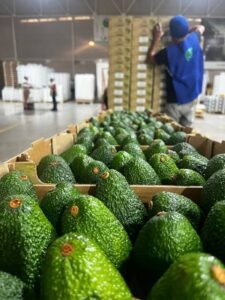
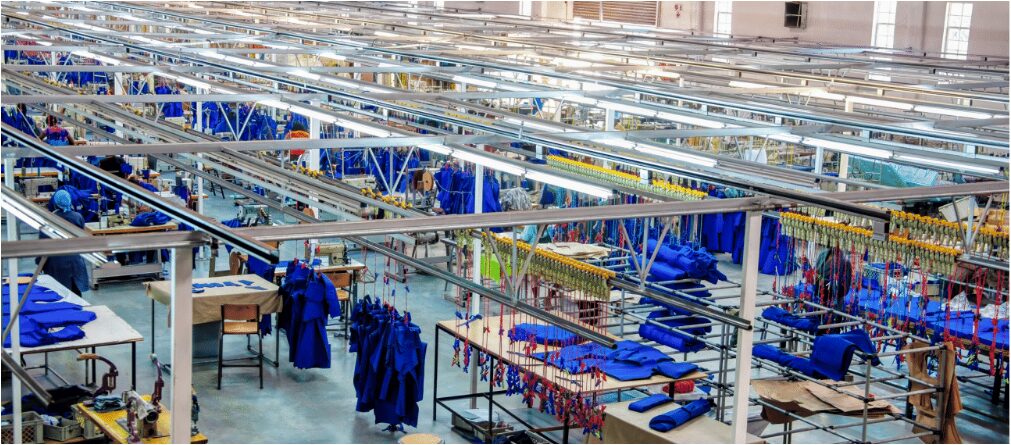
AGOA has been particularly important to Kenya’s apparel and textile industry, where preferential access to the US market has supported export-oriented manufacturing, employment and investment. The programme also benefits other sectors, including agriculture and light manufacturing. Across sub-Saharan Africa, AGOA supports export sectors whose significance extends beyond export receipts to employment, foreign exchange earnings and broader economic resilience.
For Kenyan businesses, the extension offers three immediate opportunities. First, it provides time to expand. Manufacturers and exporters have a clearer basis for negotiating contracts, increasing production and investing in capacity. The additional certainty may also enhance Kenya’s appeal as a location for export-oriented investment. Second, it creates an opportunity to deepen value addition. Kenya should use preferential market access to move beyond exporting primarily raw or minimally processed products. Greater local processing, manufacturing and branding would enable Kenyan firms to capture more value while building resilience against future changes in trade preferences. Third, it provides space to diversify markets and products. Businesses should use the period to strengthen their US presence while developing alternative markets. AGOA should be a platform for competitiveness, not a substitute for it.
Limits of Extension
The two-year renewal should nevertheless be seen as a reprieve rather than a permanent settlement. Its limited duration means that businesses making investments with ten- or fifteen-year horizons may still face uncertainty about the conditions that will prevail after 2028.
More importantly, the extension does not address the broader strategic question of the United States’ long-term economic vision for Africa. African governments and businesses continue to seek greater predictability and clarity, particularly as global trade becomes more fragmented and increasingly shaped by geopolitical and economic-security considerations.
Kenya should therefore avoid becoming overly dependent on any single preferential arrangement. Domestic competitiveness will ultimately determine whether Kenyan businesses can retain US market share when preferences change. This requires addressing constraints such as production costs, logistics, skills, standards compliance, access to finance and the efficiency of trade processes.
The Way Forward
Kenya should treat the period up to 2028 as a strategic window, not merely an extension of the status quo. The government should engage early with US policymakers and private-sector stakeholders on the future of AGOA, while ensuring Kenyan exporters are positioned to take full advantage of the additional market access.
At home, policy should focus on strengthening manufacturing capacity, supporting value addition, improving export infrastructure, and reducing costs that undermine competitiveness. Businesses, meanwhile, should use the additional certainty to secure long-term contracts, invest in productivity and quality, and diversify their markets.
The ultimate objective should be to ensure that Kenyan exports remain competitive on the basis of their quality, productivity, reliability and value, rather than on preferential tariffs alone. If Kenya uses the next two years to strengthen its productive capacity and prepare for the post-AGOA environment, the extension can serve as a catalyst for a more diversified, competitive and resilient export economy.