

A Nation on Edge: Political Gangs Raise Fears of Post-election Violence
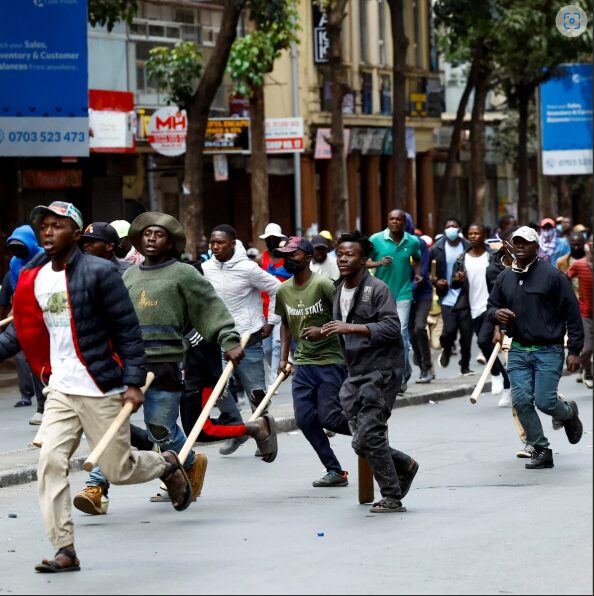
Goonism has sparked growing concern as politicians hire armed gangs for as little as KSh500 per day, while poverty and ruthless political competition threaten to unleash uncontrolled violence as the country heads towards next year’s general election.
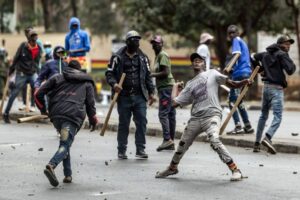
The country has entered a volatile political cycle in which youth unemployment and elite impunity are colliding in dangerous new ways. Some politicians have turned to networks of idle youth to manufacture violence. Since the Gen Z agitation of 2024, concern has grown about the increasing role of goons in political activities.
It appears the country is institutionalising a market in violence that could outlast any election. In November 2025, research firm Odipo Dev and civic collective Tribeless Youth published a report describing the trade as a form of gig economy, complete with a rate card based on the buyer’s seniority.
According to the report, KSh500 was enough to disrupt a protest for a ward representative, KSh1,500 for the same job commissioned by a member of parliament, KSh2,000 by a governor and KSh2,500 by a businessman. A land seizure fetched between KSh1,500 and KSh2,000.
A recruiter typically manages between 10 and 30 people. The average recruit earns less than KSh10,000 a month, while recruiters and handlers can take in hundreds of thousands of shillings during an election season. They pay in cash just before the job, usually at petrol stations, to avoid traceability.
Recruiters operate both on the ground, at “bases”, boda boda stages, matatu termini, bars and football pitches, and digitally through WhatsApp groups. Social media has created a new recruitment pipeline, allowing violence to be organised as quickly as a group chat.
Another report by the National Cohesion and Integration Commission (NCIC), titled “The Evolution of Organised Criminal Gangs in Kenya”, traces the emergence of public gang activity to pre-independence Kenya. Between the 1940s and 1960s, young, disillusioned and jobless men became involved in crime as they sought to cope with socio-economic hardships.
During this period, the report says, Mau Mau fighters promised their supporters land and freedom. However, they were left disillusioned, as only colonial loyalists were rewarded with land, while other supporters were denied the same rights.
After independence, NCIC says the rise and evolution of criminal gangs were largely influenced by politics, particularly the creation of the Kenya African National Union (KANU) youth wing.
Initially formed to help the police fight crime, promote the party’s agenda, and support tree planting and soil conservation activities, the wing later evolved into an outfit for political mobilisation and enforcement.
It became involved in organising commuters, participating in national celebrations, and occupying seats on District Development Committees (DDCs) and at universities before eventually transforming into a militia and a tool for political manipulation and violence, particularly during elections.
The NCIC report notes that prominent politicians used the wing to harass and disrupt opposition rallies, creating a climate of fear and intimidation. Its close ties to the ruling party gave it legitimacy and protection, allowing it to operate with relative impunity.
The report also identifies the emergence of online gangs that exploit the anonymity, reach and speed of the internet to recruit members, coordinate operations and incite violence. It names X, Facebook, WhatsApp and TikTok as central to gang recruitment and mobilisation.
Signal to Post-election Violence?
The National Police Service (NPS) and the political class insist they want to stamp out these gangs, but analysts say they are deeply entrenched on all sides. Could this signal a risk of post-election violence?
In 2007 and early 2008, the scale and speed of the violence that engulfed the country after the controversial presidential election of December 27, 2007, shocked both Kenyans and the world.
Two months of bloodshed left more than 1,000 people dead and up to 600,000 internally displaced people (IDPs) in a country regarded as a bastion of economic and political stability in a volatile region.
High-ranking politicians who had been implicated in organising political violence since the 1990s were never brought to book and continued to operate with impunity. Widespread government failures also contributed to the explosive anger exposed after the disputed election.
Against this history, the current proliferation of organised criminal gangs poses a clear danger to Kenya’s national stability.