
The Name Can Wait; The Architecture Can’t
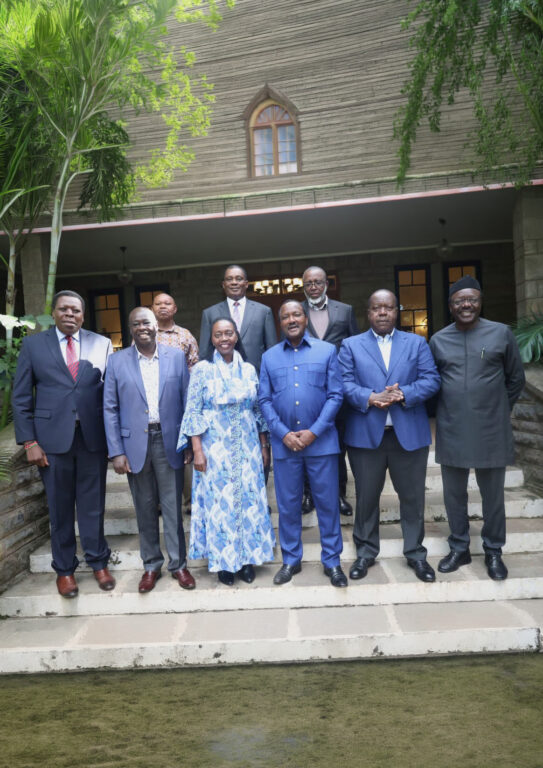
For 10 months, Rigathi Gachagua’s position on the opposition ticket has been consistent: delay naming the candidate. In late August, before leaving for the United States, the Democracy for Citizens Party (DCP) leader said the United Opposition would settle on its presidential candidate around March or April next year, arguing that mobilisation must come first and asking, “what is the hurry?”
His model appears to replicate 2002, when Mwai Kibaki was named the opposition’s sole candidate on October 14, with the election due on December 27.
The risk he cites of going early is that a named candidate would face government harassment, and this is not a bluff. In July, DCP won the Ol Kalou by-election, marking the first time in this electoral cycle that the opposition had taken a parliamentary seat from the ruling coalition. DCP’s candidate polled 35,440 votes.
For a leader whose bargaining power rests on a single region, consolidating before negotiating is rational. Every by-election win raises the price of his endorsement, which is the strongest version of the waiting game.
Nobody Else is Waiting
The idea that delay freezes the field has already failed, as Kalonzo Musyoka’s camp has resolved to press ahead with his candidacy regardless of Gachagua’s view, driven by fear that waiting until March or April could derail the opposition’s momentum.
On October 4, Edwin Sifuna unveiled The Equitable Party (TEP) as his 2027 vehicle. Still, it was also revealing that Kalonzo, Fred Matiang’i, Justin Muturi, Gachagua, Martha Karua and Jeremiah Kioni were all absent.
Before that, the Registrar rejected the Sifuna camp’s attempt to rebrand as the Ukombozi People’s Party because the name resembles Kalonzo’s Ukombozi Alliance, formerly known as the Azimio Alliance.
Each of these is a vehicle with its own officials, aspirants and claim to a ticket. Gachagua’s own August proposal for an early DCP-Wiper arrangement was dismissed by other opposition leaders as a “selfish boardroom” deal.
March is the Paperwork, Not the Decision
“March or April” may sound like a decision window, but the Independent Electoral and Boundaries Commission (IEBC) calendar suggests otherwise. On 16 March 2027, parties must submit membership lists and the names of candidates seeking to contest their primaries, along with the dates and venues.
Primaries and intra-party disputes must conclude by early May, while nominations run from 29 May to 11 June.
On a plain reading, the question of which vehicle carries a joint candidate must be answered around the time Gachagua proposes to start answering it. However, a candidate named in April on a vehicle whose lists were lodged in March is a negotiation conducted after the leverage has been spent.
Then there is Gachagua’s own eligibility after the High Court upheld his impeachment on 8 June 2026. A Supreme Court reference asks how Chapter Six disqualification applies while appeals are pending, and the court sent it to the Attorney General for advice before proceeding.
None of this requires imputing motive, but it does mean that delay costs him less than it costs anyone else. Kalonzo needs a ticket, and Sifuna needs a party that exists.
Gachagua may find that time brings a ruling that settles his standing and, with it, his price. That is a legitimate position, but it is a personal hedge, not a collective strategy, and the opposition’s other principals can see the difference.
Mt Kenya is Not One Vehicle
The waiting game also assumes the Mt Kenya region will wait for him, but in his absence, Kiharu MP Ndindi Nyoro has been building and popularising his own vehicle, the People’s Party of Kenya.
The Jubilee brigade led by former President Uhuru Kenyatta, who recently handed over the party leader mantle to Matiang’i, has also been rebuilding its own structures in the region.
Despite moving from the United Democratic Alliance (UDA) and saying he would seek re-election on Gachagua’s DCP, Murang’a Governor Irungu Kang’ata is the latest to join the Sifuna camp.
Therefore, if the waiting game works, the opposition should reach March with its vehicles still negotiable and with DCP’s bargaining power undiminished.
If it doesn’t, the ticket will be decided before the name is announced, by whichever parties have lodged lists, held primaries and registered their symbols. Three things will show which: whether Kalonzo’s Oct 10 declaration takes place and whether DCP joins or resists it; whether the Supreme Court reference is resolved before March 16; and whether DCP is part of a coalition agreement by then.
Gachagua can point to 2002, and the precedent is real, but Kibaki’s announcement was the final step in a coalition informally assembled beforehand, not the first.