

President Ruto Bets on Infrastructure with Looming 2027 Elections
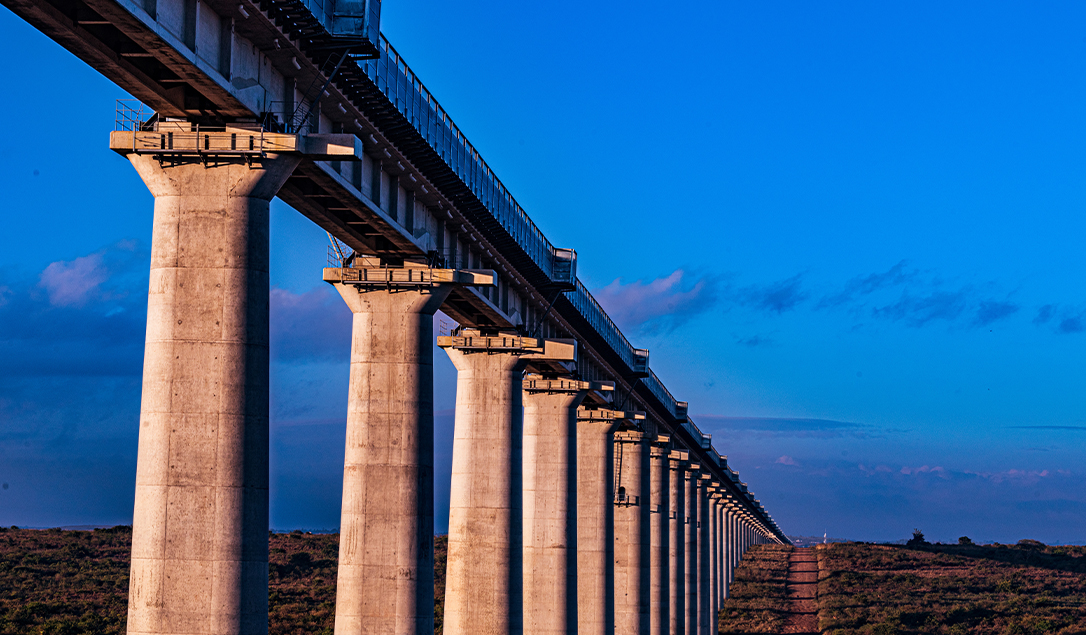
Infrastructure projects were among the biggest beneficiaries of the FY 2026/27 Budget, with substantial allocations directed towards roads, railways, energy, water, and transport projects, as President William Ruto places significant emphasis on capital-intensive developments expected to bolster his re-election bid next year.
This is expected to become the administration’s most important campaign platform and the clearest measure of its performance amid heightened global uncertainty and rising geopolitical tensions, which continue to exert pressure on energy and food prices, increasing inflationary risks and volatility in global markets.
The government will be required to defend its record through tangible development outcomes, with President Ruto expected to seek re-election on the strength of roads, electricity connectivity, ports, markets, and other development projects delivered under his administration.
President Ruto’s administration plans to spend KSh 4.82 trillion in FY 2026/27, equivalent to 23.2 per cent of the country’s GDP. Of this amount, KSh 3.57 trillion (74 per cent of the total budget) will be allocated to recurrent expenditure, while KSh 750 billion (16 per cent of the total budget) will be earmarked for development projects, including infrastructure, as well as the Contingency Fund and the Equalisation Fund.
County governments will receive KSh 502 billion (10 per cent of the total budget), comprising KSh 428 billion as their equitable share of revenue and KSh 74 billion in additional allocations. The additional allocations include KSh 16.6 billion from loans and KSh 57.4 billion from development partners in the form of grants.
The government has set aside KSh 220.4 billion for road development, including KSh 44.3 billion for road and bridge construction, KSh 58.0 billion for road rehabilitation, and KSh 118.1 billion for road maintenance.
To expand railway transport, the government has allocated KSh 38.4 billion to railway projects. In addition, KSh 400 million has been proposed for the Kenya Ferry Ramp in Likoni, Mombasa; KSh 1.0 billion for the development of public ferry landing ramps on Lake Victoria, including Mbita and Sena in Suba North and Suba West constituencies in Homa Bay County; KSh 150 million for the acquisition of public ferries on Lake Victoria; and KSh 582 million for the Nairobi Bus Rapid Transit Project, a critical public transport investment expected to reduce congestion and enhance mobility.
In the energy sector, the administration has allocated KSh 30.9 billion, including KSh 7.5 billion for the National Grid System, KSh 20.2 billion for rural electrification, and KSh 3.2 billion for alternative energy technologies. These investments are expected to expand access, lower costs, and support sustainable growth.
In the water sector, KSh 51.5 billion has been allocated for water and sewerage infrastructure development, KSh 6.3 billion for water resources management, and KSh 2.5 billion for water storage and flood control. To support irrigation development, a further KSh 1.1 billion has been allocated for irrigation and drainage development; KSh 1.8 billion for large-scale commercial irrigation schemes; KSh 3.3 billion for community-managed irrigation projects; KSh 3.0 billion for public irrigation schemes; and KSh 1.6 billion for revitalising irrigation in arid and semi-arid land (ASAL) areas.
President Ruto has consistently emphasised the need to mobilise capital for priority infrastructure projects. In January, he stated that Kenya had chosen to anchor its economic model on work, production, and exports, supported by deliberate investment in infrastructure, energy, irrigation-led agriculture, and skills development, with the aim of creating jobs, reducing poverty, and upholding the dignity of every citizen.
To support this agenda, the President noted that the National Infrastructure Fund (NIF) and the Sovereign Wealth Fund would be established to help finance ambitious development programmes while protecting future generations from unsustainable debt.
In March 2026, the government established the NIF following the enactment of the National Infrastructure Fund Act 2026. The fund is designed as an innovative mechanism for scaling up infrastructure development by mobilising private capital and expertise to deliver commercially viable projects while reducing reliance on taxation and public debt.
The NIF will promote infrastructure growth by pooling capital from diverse sources, including pension funds, sovereign wealth funds, private equity firms, banks, and development finance institutions, to finance large-scale, long-term projects.
Proceeds from privatisation will be channelled into the fund, ensuring a transparent flow of revenue towards financing national priority projects, including highways, airports, seaports, electricity generation, ICT, water and irrigation, and agribusiness.
Initially, proceeds from the March 2026 Initial Public Offering (IPO) of the Kenya Pipeline Company, which raised KSh 106.3 billion, together with the anticipated KSh 204 billion from the partial divestiture of the government’s stake in Safaricom PLC to Vodacom, will provide the fund’s seed capital.
According to the Cabinet Secretary for the National Treasury and Economic Planning, John Mbadi, the government has submitted to the National Assembly a Bill to establish the Sovereign Wealth Fund, comprising three distinct components: a stabilisation component, a strategic infrastructure investment component, and a future generations component.
The fund will operationalise Article 201 of the Constitution on intergenerational equity by ensuring that wealth derived from natural resources is invested productively and distributed equitably between current and future generations.
The Rironi-Nakuru-Mau Summit Expressway, currently under construction, stands as an early demonstration of this approach. Other priority projects include the Nairobi–Mombasa Expressway and the Mau Summit–Eldoret–Malaba Highway, both of which are expected to strengthen regional connectivity and facilitate trade along the Northern Corridor.
In the ports and logistics sector, the government is leveraging private-sector capital and expertise to develop container terminals, cargo berths, inland container depots, and special economic zones in Mombasa, Lamu, Nairobi, and Naivasha, thereby strengthening Kenya’s position as the region’s leading trade and logistics hub.
As the country moves towards the 2027 General Election, infrastructure projects are likely to emerge as a key measure by which President Ruto’s administration will be judged. For many years, infrastructure development, particularly road construction, has been susceptible to political influence because of its visibility, territorial reach, and electoral significance, making it an effective instrument for patronage, electoral mobilisation, and coalition maintenance.