

36 Years On: Saba Saba and Kenya’s Continued Struggle for Accountability
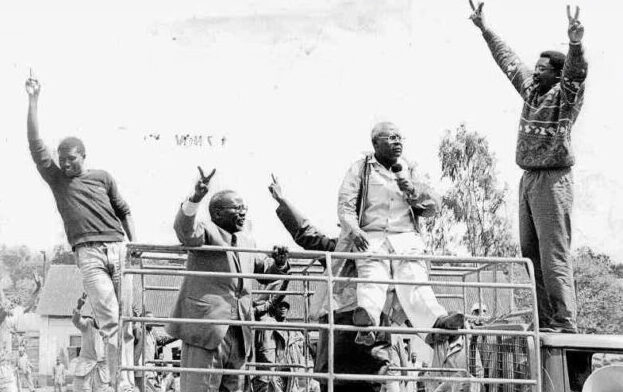
Thirty-six years ago, on July 7, one of the most significant acts of political resistance in Kenya’s history was born. “Saba Saba Day”. On this day in 1990, demonstrators took to the streets to demand fair elections, leading to deaths, with several injured and others arrested.
On the day, reaching the Kamukunji grounds in Nairobi carried urgency, symbolising a break amid political repression. Dissent had been brewing in the country since President Daniel arap Moi began consolidating political power by amending the Constitution to ban multiparty politics and detaining critics.
Five months before the planned Saba Saba meeting, the President’s Foreign Minister, Robert Ouko, was brutally killed. Ouko’s dismembered body was found on a hill in the Kisumu Rural Constituency, and it was widely believed that his murder had been planned by people close to the President.
At the time, open defiance seemed the only way to start a national conversation. The government declared the Kamukunji meeting illegal. Among those arrested were Kenneth Matiba, Charles Rubia, and Raila Odinga, three senior politicians who were organising it, and they were subsequently detained without trial.
It is reported that the Saba Saba was preceded by the mysterious appearance of leaflets, printed and dropped across the country, inviting people to the meeting. As a result, the following day, media outlets, both local and international, reported that 39 people had died, 69 were injured, and over 5,000 had been arrested, with over 1,000 charged with looting and rioting.
The day marked the first serious, organised challenge to repression through defiance. Frantic attempts would subsequently be made to negotiate down demands for freedom by offering internal reforms in the ruling political party monopoly, the Kenya African National Union (KANU). Still, they were insufficient to stem the tide of change.
A year later, President Moi reluctantly yielded and agreed to term limits and to repeal constitutional bans on multiparty political parties. Within months of the return of political pluralism, 19 new political parties had been registered.
Over the years, many of those at the forefront of the Saba Saba protests have been arrested; the spirit of citizen power that fuelled the demonstrations remains.
Digitised Activism
Last year, on July 7, protestors again took to the streets in what is now known as “Maandamano”, the Swahili word for demonstrations, not just a sudden eruption of anger but part of a long and painful journey toward democracy.
Heavily armed police officers were deployed across the country, leading to widespread clashes with protestors. The Kenya National Commission on Human Rights (KNCHR) reported that 31 people had been killed, 107 injured, and 532 arrested. Two enforced disappearance cases were reported.
However, two years ago, Kenya witnessed a shift from ethnic-based mobilisation to issue-based activism. People aren’t coming together based on their tribe but are being united to fight for specific issues affecting their daily lives, such as economic policies, government accountability, and social justice. In 2024, nationwide demonstrations erupted over the controversial Finance Bill. The Bill had initially been presented to Parliament in May, sparking discontent over an increase in a range of taxes and levies for Kenyans; the power of digital activism was evident.
The protest saw significant participation by young people, who used digital media to organise and voice their opposition. A great number of those who drove the protests were Gen Zs, individuals born roughly between the late 1990s and early 2010s – a generation characterised by digital prowess and social consciousness. They created an organic, grassroots movement using social media platforms to mobilise and coordinate efforts quickly.
Using Artificial Intelligence (AI), they created images, songs and videos that amplified the movement’s messages and reached a wider audience.
Unlike previous protests, these demonstrations emerged spontaneously from the grassroots. The shift underscored a significant transition in the country’s politics. The new form of activism echoes a growing political maturity among Kenyans, who are now prioritising shared concerns over ethnic divisions. It has set a new precedent for addressing social and political issues in the country.