

Compliance or Punishment? Inside NTSA’s Tough New Era of Road Enforcement
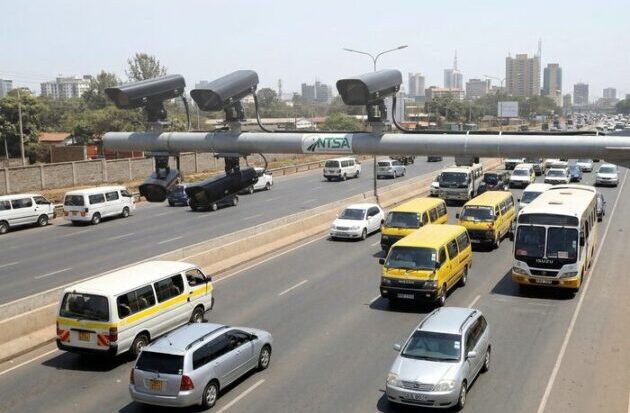
Starting this month, the National Transport and Safety Authority (NTSA) has launched a major new road safety enforcement plan. The changes include instant traffic fines, yearly inspections for private cars older than four years, stricter rules for commercial transport, and new digital tools to boost road safety.
Just days after the rollout, NTSA had to issue several public clarifications as confusion and criticism grew. Kenyans wanted to know how to pay instant fines, whether private cars would face roadside inspections, and when new telematics rules for commercial vehicles and school buses would take effect.
The rapid succession of announcements has sparked a broader conversation: where does stronger regulation end and regulatory burden begin?
A New Compliance Landscape
These new reforms mark a big change in how road safety is handled. In the past, enforcement mostly happened after traffic offences were committed. Now, the focus is on ongoing compliance, with drivers and transport operators required to demonstrate that their vehicles are safe at all times.
Although NTSA has since clarified that enforcement of some of these requirements has been deferred, the policy direction is unmistakable. Road safety regulation is becoming increasingly technology-driven and compliance-based.
What’s New? The Key Changes Motorists Should Know
The latest NTSA reforms introduce several changes that affect both private and commercial motorists. Some are already in force, while others have been clarified or deferred.
Instant traffic fines are now part of the enforcement framework: Certain traffic offences can incur immediate financial penalties rather than automatically proceeding through lengthy court processes. However, NTSA has clarified that these fines cannot be paid through the eCitizen platform. Instead, motorists must make payments in person into the NTSA account at designated KCB branches or authorised KCB agents, a measure the Authority says is intended to reduce fraud linked to fake SMS payment demands.
Annual inspections for older private vehicles: Private vehicles more than four years old are now required to undergo annual roadworthiness inspections under the new regulatory framework. The objective is to identify mechanical defects before they contribute to road crashes.
New compliance standards for commercial and school transport: The regulations introduce additional safety requirements for commercial service vehicles and school transport operators, including the use of telematics systems and other safety measures. However, NTSA has since clarified that operators will not be penalised yet for failing to comply with the telematics requirements or, in the case of school transport, the reflectorised stop signal arm requirement, until further notice.
No roadside enforcement for private vehicle inspections for now: Following public concern, NTSA has confirmed that traffic officers will not enforce mandatory inspection requirements during routine roadside checks for private vehicle owners. The Authority says further guidance on implementation will be issued in due course.
Beware of misinformation: NTSA has urged motorists to rely only on its official communication channels. Genuine instant fine notifications are sent through the Authority’s official shortcode, 22847_NTSA, and the public has been warned against fraudulent SMS messages requesting payment through unofficial channels.
The Cost of Compliance
The strongest public reaction has not been against road safety itself. Few motorists oppose safer vehicles or stricter standards for public transport. The concern is the cumulative financial impact.
For an owner of a five-year-old private vehicle, annual inspections now become another recurring obligation alongside insurance premiums, maintenance costs, fuel, parking charges and licence renewals.
Commercial operators face an even longer compliance checklist. Fleet owners must prepare for inspection schedules, vehicle certification requirements and, eventually, investments in telematics technology once implementation begins. Individually, each requirement may appear reasonable. Collectively, they represent a noticeable increase in the cost of operating a vehicle.
For households already managing higher transport costs, electricity bills and general inflation, many see the reforms as arriving at a particularly difficult time.
The Balancing Act
Whether these reforms ultimately succeed may depend less on the regulations themselves than on how they are implemented. Public confidence is shaped by communication, affordability and consistency.
The recent wave of clarifications illustrates how quickly uncertainty can emerge when significant regulatory changes are introduced. Misinformation surrounding instant fines, vehicle inspections and telematics requirements spread rapidly, prompting NTSA to repeatedly reassure motorists that some provisions would not yet be enforced and to urge the public to rely only on official communication channels.
For many Kenyans, the debate is not about whether vehicles should be safe. It is about whether the pace of reform and the growing cost of compliance risk placing an even heavier burden on motorists already navigating a challenging economic environment.
Looking Ahead
The reforms mark one of the most ambitious overhauls of Kenya’s road safety regime in recent years. If implemented effectively, they have the potential to improve vehicle safety, strengthen accountability and reduce road traffic fatalities.
However, regulation works best when compliance is seen as achievable rather than punitive. For NTSA, the challenge now extends beyond enforcement. It is to demonstrate that the new framework is not simply about collecting fines or imposing more obligations, but about building a road transport system that is safer, more predictable, and trusted by the people expected to comply with it. In the end, the success of any regulation is measured not by the number of penalties issued, but by the number of accidents that never happen.