

Guardians of the Tide: How High-Integrity Blue Carbon Is Reclaiming Kenya’s Coastline
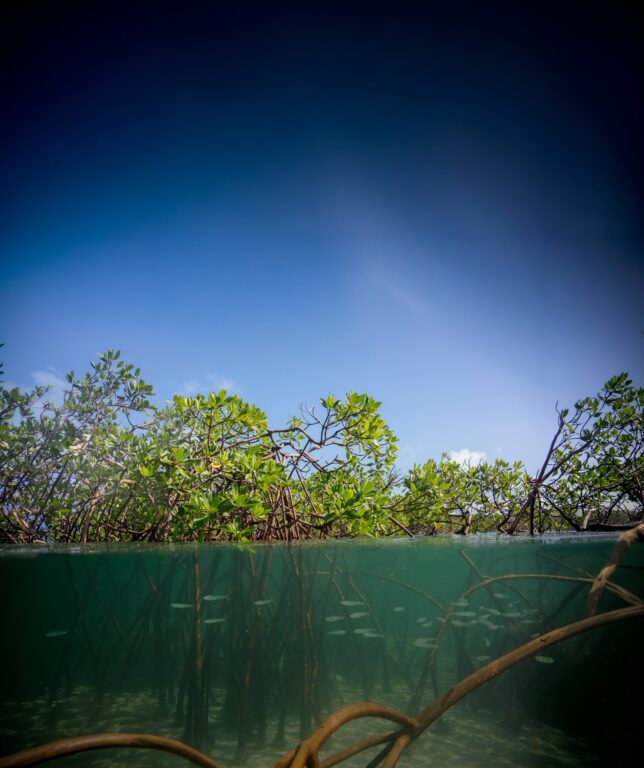
Along Kenya’s coastline, some of the country’s most important climate assets are not found in power plants, solar farms or forests. They are rooted in tidal mud, submerged beneath shallow coastal waters, and woven into the livelihoods of communities that have lived alongside the ocean for generations.
Mangroves and seagrass meadows are Kenya’s blue carbon ecosystems, natural systems that capture and store carbon in their vegetation, roots, sediments and soils. They are also much more than carbon sinks. They help protect shorelines, support fisheries, improve water quality and provide habitats for marine life. According to a Kenya Marine and Fisheries Research Institute (KMFRI) study drawing on national ecosystem data, Kenya has about 61,271 hectares of mangrove forests and an estimated 33,600 hectares of seagrass.
Yet these ecosystems have faced degradation. KMFRI reports that Kenya has been losing mangrove forests at approximately 0.7% annually, while the loss of coastal ecosystems can increase exposure to coastal hazards and affect fisheries.
This is where blue carbon is beginning to shift the conversation, not simply by putting a price on carbon, but by creating a financial incentive to keep coastal ecosystems standing.
The Carbon Beneath the Tide
The term blue carbon refers to carbon captured and stored by coastal and marine ecosystems, particularly mangroves, seagrasses and salt marshes. These ecosystems are particularly important because carbon can accumulate not only in vegetation above the water but also in the waterlogged soils and sediments beneath it.
A mangrove forest is not simply a collection of trees waiting to be counted. Its roots slow water, trap sediment and create conditions in which organic matter can accumulate. The result is an ecosystem that performs both ecological and climate functions.
Turning those functions into carbon finance requires far more than planting seedlings and counting how many trees survive. A credible blue-carbon project must answer difficult questions.
One of the strongest examples is found in Gazi Bay, Kwale County. Mikoko Pamoja, meaning “mangroves together”, began in 2010 and is recognised by Plan Vivo as the world’s first community-led blue-carbon project. The project involves 1,081 households and has issued more than 22,000 Plan Vivo Certificates to date. Its community ownership model has directed revenues towards priorities such as clean water, education and community development.
The project grew from a simple yet consequential idea: if coastal communities are expected to protect mangroves, conservation needs to deliver tangible value to the people doing the protecting.
In Vanga Bay, the Vanga Blue Forest project brings together communities from Vanga, Jimbo and Kiwegu. Plan Vivo currently records 974 participating households and more than 23,000 certificates issued. Revenue has supported community priorities, including hospital equipment, school construction, bridges and public sanitation facilities.
A mangrove restoration project can plant thousands of seedlings, but long-term conservation depends on whether communities have meaningful reasons and authority to protect the forest after the planting is complete.
From Tree Planting to Protecting Ecosystems
Restoration is increasingly understood as more than planting. Healthy mangroves require appropriate hydrology, sediment movement, biodiversity, and protection from activities that undermine regeneration.
International carbon methodologies are becoming more sophisticated in response. Verra’s current methodology for tidal wetland and seagrass restoration, VM0033 v2.1, accounts for carbon stored in biomass and soil organic carbon and requires an assessment of risks such as erosion and submergence associated with sea-level rise.
Verra is also consulting on a major revision to the methodology. The proposed version would, among other changes, introduce a dynamic performance benchmark and updated approaches to leakage and tidal-wetland science.
Community Benefits
For communities along Kenya’s coast, blue carbon can make conservation tangible. The value of a protected mangrove forest can translate into clean water, better schools, healthcare equipment, livelihood opportunities, and stronger coastal protection. In projects such as Mikoko Pamoja and Vanga Blue Forest, carbon revenues have already been linked to community development priorities. The bigger opportunity is to ensure that, as Kenya’s blue-carbon market grows, communities remain at the centre of the value chain, not simply as people living next to the forest, but as partners in protecting and benefiting from it.