

Eyes in the Sky, Roots in the Soil: How Drones Could Make Agriculture More Sustainable in Kenya
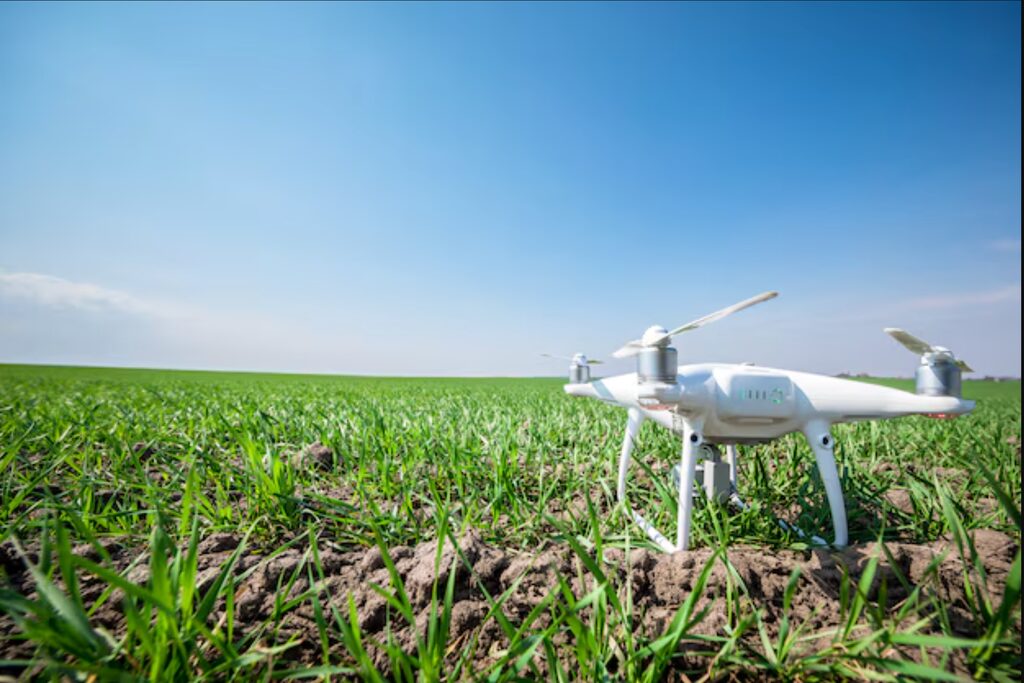
From the ground, a farm can look deceptively uniform. Rows of crops stretch across a field, the soil appears healthy, and plants seem to grow at the same pace. Yet from above, a different story emerges. A drone flying over the same field can reveal water stress, early signs of disease, and areas that are thriving with minimal intervention. In minutes, an ordinary farm can become a useful map, helping farmers decide where to water, fertilise, treat, or leave the land alone.
This is where drones are reshaping precision agriculture. Their value isn’t merely that they fly over farms, but that they help farmers understand the land at a finer scale. Equipped with cameras and sensors, drones collect data on crop health, soil conditions, and field variation. When combined with data analysis, these images guide more targeted action and reduce guesswork.
Another opportunity lies above the fields: ensuring women and girls are part of the future this technology is creating.
As drones become increasingly important in agriculture, women and girls must not be left on the sidelines. Emerging technologies are often discussed in terms of what they can do for communities, with less attention to who gets the chance to learn, build careers, and become leaders in the industry.
For women and girls, drones can be more than agricultural equipment. They can open pathways into science, technology, engineering, data analysis, entrepreneurship, and leadership. Learning to operate drones, interpret aerial imagery, or manage agricultural data builds practical skills linked to a rapidly changing technology sector and to real problems in local farming systems.
Prudence, co-founder of DaDa Drones, captures this opportunity clearly: “Drones are not just tools for improving agriculture; they are an opportunity to open doors for women and girls in technology, innovation and leadership. If we want the drone industry to grow sustainably, women and girls need to be in the room, flying the drones, analysing the data, building the businesses and making the decisions that shape how this technology is used.”
Her point goes beyond representation. The future of agricultural drones depends on people with the skills and confidence to operate them. That means introducing girls to drones early, training young women in technical skills, and supporting women who want to build careers or businesses in drone technology.
Women are already central to agricultural communities across Africa, making their participation in agricultural technology particularly significant.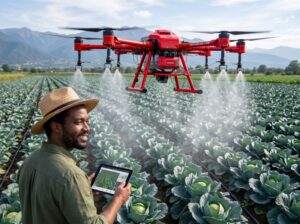 Women trained in drone operations and data analysis can become local technology leaders, translating aerial data into practical decisions and showing younger girls that technology belongs in their hands, too.
This matters for productivity and sustainability. Agriculture uses large amounts of land and freshwater, while excessive use of fertilisers and pesticides can strain soils, waterways, and ecosystems. As farmers face shifting weather patterns, drought, and the need to produce more with fewer resources, targeted decisions are increasingly important.
Water is one area where drones can support more sustainable farming. Rather than treating an entire field as if every plant has identical needs, farmers can use aerial data to identify water stress and adjust irrigation. In regions where water is scarce, even small efficiency gains matter.
The same principle applies to fertilisers and pesticides. If only some areas need attention, farmers may not need to apply the same number of inputs across the whole field. Detecting problems earlier can reduce unnecessary chemical use, lower costs, and limit runoff into nearby waterways.
Drones can also support long-term monitoring. Repeated aerial surveys create a visual record of how crops and fields change throughout a growing season, helping farmers identify recurring problems, assess practices, and make better-informed decisions in future seasons. Over time, that record can make planning less reactive and more strategic.
Still, drones are not a solution to every agricultural challenge. They can be costly to acquire and operate, and farmers need training to interpret data effectively. Connectivity, software, maintenance, and technical support may also be difficult to access in rural areas. Their benefits therefore depend on whether the technology is affordable, useful, inclusive, and accessible to the farmers and communities it is intended to serve.
The promise of agricultural drones is not a future in which machines replace farmers. It is a future in which farmers have better eyes on their land, water is directed to where it is needed, inputs are applied more selectively, and crops and ecosystems are monitored over time.
The most powerful role for drones may be simple: helping farmers see their fields more clearly so they can care for them more intelligently, while ensuring women and girls have a meaningful place in the technological future taking shape above those fields. If that future is built thoughtfully, drones can strengthen both the roots of agriculture and the opportunities rising above it.