

Africa at UNGA 81: Unlocking Capital, Talent and Opportunity
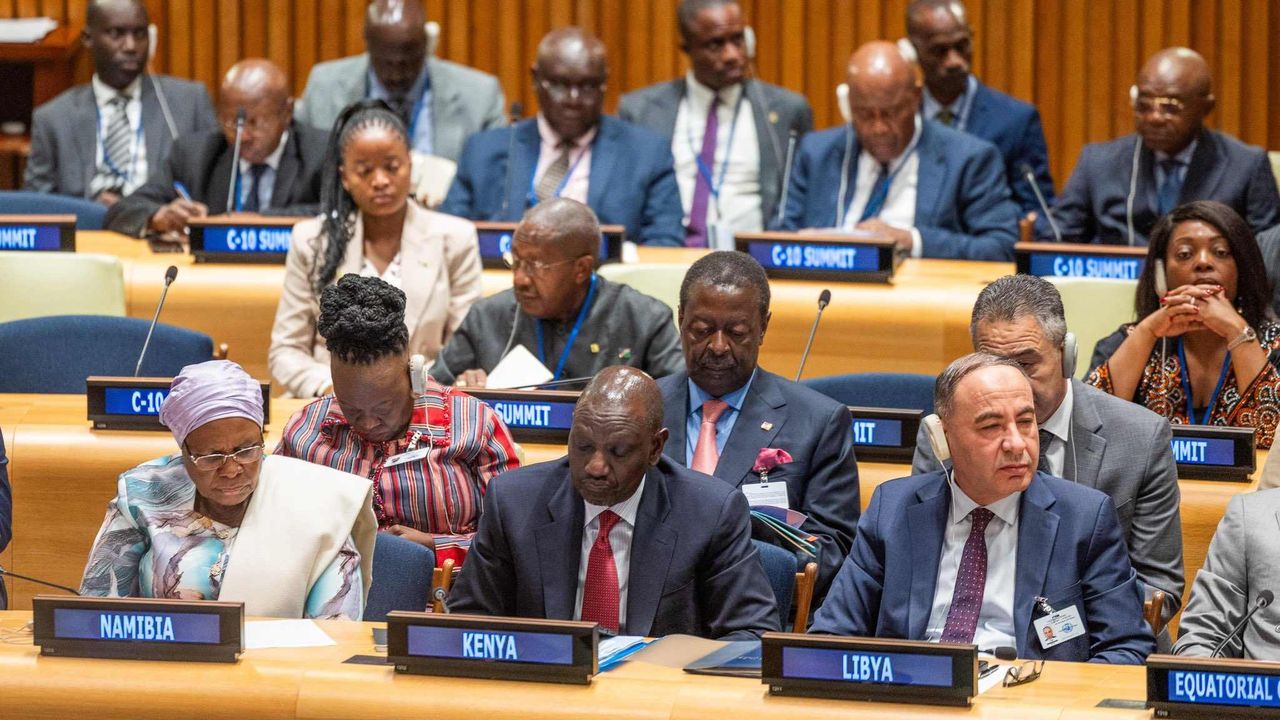
World leaders convened in New York for the 81st Session of the United Nations General Assembly (UNGA 81), themed “Restoring Trust, Managing Transformation: A United Nations That Delivers for All”. The gathering comes at a pivotal moment, as the rules governing global finance, technology, trade and international cooperation are being reassessed in response to geopolitical tensions, climate shocks, debt vulnerabilities, rapid technological change and a slowing global economy.
Throughout the discussions, Africa’s engagement has reflected a growing shift in posture. The continent is increasingly positioning itself not as a recipient of solutions but as an active contributor to their shaping. From reforming the international financial architecture to governing artificial intelligence and mobilising domestic capital, Africa is seeking a greater role in shaping the policies and institutions that will define the future.
President Ruto on the World Stage
President William Ruto used a series of high-level engagements at UNGA 81 to advance a consistent message: Africa has the capital, talent, resources and ideas needed for transformation, but global and domestic systems must evolve to unlock that potential. President Ruto advanced a broad vision centred on financing Africa’s development, harnessing technology, reforming global governance and expanding opportunities for future generations.
At the Africa We Build High-Level Roundtable, he argued that Africa’s principal development challenge is not a shortage of capital but the regulatory and financial frameworks that prevent domestic savings from financing productive investment. According to his argument, Africa’s pension, insurance and other domestic capital pools are now significant enough to support development, yet much of this capital remains trapped in low-risk investments rather than in infrastructure and industrial projects. Ruto called for reforms to risk assessment, insurance pricing and investment regulations to unlock African capital for African development. The message was clear: Africa does not lack money; it lacks systems that allow that money to work for development.
The theme of self-driven transformation recurred at the Accra Reset High-Level Convening, where Ruto emphasised the role of technology and artificial intelligence in economic growth. He argued that Africa’s greatest resource is its young and growing population and highlighted the MasterKey Digital Skills Mobility Corridor, an initiative designed to enable trusted cross-border recognition of skills, qualifications and work experience. The initiative aims to make African talent more mobile while strengthening trust, privacy and cybersecurity safeguards. Beyond talent mobility, Ruto called for greater investment in AI infrastructure, research and digital capabilities to ensure Africa becomes a creator and shaper of technology rather than merely a consumer.
His message on global governance was amplified at the Kenya-European Union Partnership for Multilateralism Summit. There, Ruto argued that the crisis facing multilateralism stems from institutions and rules that have failed to evolve alongside contemporary realities. He advocated reforms to make international institutions more representative, inclusive and effective, while addressing inequities within the global financial system. He maintained that Africa’s voice must be reflected not only in political institutions but also in the frameworks that govern development finance and global economic decision-making.
Speaking in his capacity as Chairperson of COMESA, Ruto assessed progress in implementing the Pact for the Future. While acknowledging Africa’s role in shaping the Pact, he argued that implementation has not delivered sufficient results, particularly in youth empowerment and development financing. He called for increased investment in young people, stronger youth participation in policymaking, and reforms to the international financial architecture that lower the cost of capital and enable African countries to finance their own development. He also welcomed efforts to establish a fairer international tax framework capable of reducing illicit financial flows and improving domestic resource mobilisation.
Technology governance was a central theme in a UNICEF high-level engagement focused on the Coalition for Children’s Rights and Protection in the Age of AI. Ruto advocated an approach that enables children to benefit from digital technologies while protecting them from emerging online risks. He stressed that children should not have to choose between access and safety, and called for stronger safeguards on data protection, online abuse, deepfakes, age assurance and AI literacy. The broader objective, he argued, is to ensure that technology is designed with safety and inclusion in mind from the outset.
Africa’s Place in Global Governance
A consistent theme across President Ruto’s engagements was the need for Africa to have a stronger voice in global governance structures. This was most evident in his address to the UN General Assembly, where he renewed calls for comprehensive reform of the United Nations Security Council.
Ruto argued that although all UN member states have equal voting rights in the General Assembly, the Security Council still reflects the geopolitical realities of 1945 rather than those of the twenty-first century. He questioned how a continent of 54 countries and more than a billion people remains excluded from permanent representation in the world’s foremost peace and security body.
Beyond political representation, he linked governance reform to economic justice. He criticised international financial systems that continue to impose disproportionately high borrowing costs on developing countries and argued that risk assessment models often fail to reflect economic realities. In his view, both political and financial institutions require reform to become more representative, fairer and more responsive to contemporary challenges.
The overarching message was that trust in multilateralism cannot be restored by rhetoric alone. It must be rebuilt through institutions that reflect today’s world and through systems that enable all countries, including African nations, to participate meaningfully in shaping global decisions.
Kenya’s Expanding Technology Diplomacy
Alongside these policy discussions, Kenya secured a significant technology partnership with the American AI company Anthropic on the sidelines of UNGA 81. The agreement sets out a framework for cooperation on AI skills development, research, responsible public-sector use of AI, AI safety, and innovation across sectors such as health and education.
The partnership closely aligns with Kenya’s broader digital transformation strategy and reflects the country’s efforts to position itself as a regional hub for responsible AI development. It also supports Kenya’s goal of ensuring that emerging technologies are deployed in ways that reflect local priorities, strengthen domestic capacity, and protect data sovereignty.
Importantly, the agreement signals Kenya’s intention to engage global technology companies not simply as consumers of innovation, but as partners in co-creating solutions that serve local and regional development objectives.
Conclusion
UNGA 81 underscored Africa’s growing confidence in shaping global conversations on development, technology, finance and governance. Across multiple forums, President Ruto advanced a coherent agenda: unlock African capital, invest in African talent, embrace emerging technologies responsibly, accelerate the energy transition, and reform global institutions to reflect contemporary realities better.