

Kenya and the Holy Herb: A Constitutional Relationship Still Undefined
Kenya’s relationship with cannabis has always been complicated. Every few years, the conversation resurfaces in Parliament, the courts or public debate. Reform appears within reach, only for the law to pull back. The Rastafari Society of Kenya’s recent petition to the High Court is the latest chapter in that story.
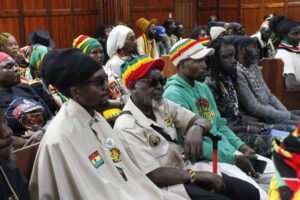
The Society was not asking the court to legalise cannabis for everyone. Its case was far narrower: to allow members of the Rastafari faith to cultivate, possess and use cannabis – the “holy herb” – as a sacrament during worship and private meditation.
The High Court declined. Not because Rastafari is not a religion. The court accepted that it is. Rather, it found that the Society had not laid the legal and evidential foundation required to justify a religious exemption. The judgment is less a rejection of the argument than a roadmap for what a successful constitutional challenge might require.
Procedure Before Principle
The first hurdle was procedural. Before asking the court to intervene, the judge held that the Society should have exhausted the administrative process already provided for under the Narcotic Drugs and Psychotropic Substances (Control) Act. The law allows licences to be issued for certain controlled uses of narcotic substances, yet the Society never applied for one.
That mattered. Courts are generally reluctant to address constitutional questions when Parliament has already provided a mechanism to address the issue. The principle is straightforward: where an existing legal process is available, it should be used before pursuing constitutional litigation. In essence, the court’s message was simple – try the existing process first. If it fails, return to court.
Is the Holy Herb Essential to the Faith?
The second hurdle was proving that cannabis is indispensable to the Rastafari faith. Throughout the proceedings, the court accepted that cannabis holds an important place in Rastafari practice. The difficulty was that the petitioners’ evidence was inconsistent. Some witnesses described it as an essential sacrament used to commune with Jah. In contrast, others acknowledged that worship could still take place without it and that not every Rastafarian uses cannabis.
That inconsistency proved significant. For a religious exemption to succeed, the court needed convincing evidence that prohibiting cannabis effectively prevented adherents from practising their faith. On the evidence before it, that threshold had not been met.
Rights Alone Don’t Win Constitutional Cases
The petition relied on scripture, historical practice and comparative jurisprudence, particularly South Africa’s Prince decisions. Those cases recognised Rastafari as a protected religion and, in 2018, decriminalised private cannabis use by adults on privacy grounds.
The Kenyan court did not reject those decisions. Instead, it distinguished them. Unlike Gareth Prince, the Society had not exhausted available statutory remedies before litigating, and the evidence presented did not consistently establish cannabis as an indispensable element of worship.
Interestingly, the State’s case was hardly overwhelming either. NACADA relied heavily on the public health risks associated with cannabis, but much of its evidence was presented in broad terms. Even so, a weak defence does not automatically lead to a successful constitutional claim. The burden remained on the petitioners to show why the Constitution required a religious exemption.
A Practical Problem the Petition Didn’t Solve
There was another gap. Had the court granted an exemption, how would it operate? The petition offered little guidance on issues such as licensing, age restrictions, possession limits, or safeguards against diversion into recreational use. Courts are generally reluctant to create regulatory frameworks where none have been proposed, particularly where public health concerns are involved. Rights do not exist in isolation. They must often be balanced against competing public interests, and the court was unwilling to design that balance.
More Roadmap Than Rejection
Perhaps the most striking aspect of the judgment is its candid acknowledgment of reality. The court noted the visibility of cannabis in Kenyan society – from products reportedly sold openly in some places to cannabis imagery on public transport and an increasingly open public discussion about its use. Yet cultural familiarity is not the same as legal recognition. Practice may become socially commonplace without acquiring constitutional protection.
For now, Kenya and the holy herb remain in something of a situationship. The debate is ongoing, public attitudes continue to evolve, and comparative jurisprudence points towards a more nuanced conversation than outright prohibition. But the High Court was clear: anyone seeking a religious exemption will need to do more than invoke constitutional rights. They must first exhaust the available legal processes, present consistent and compelling evidence that cannabis is indispensable to their faith, and propose a workable framework that addresses the State’s legitimate public health concerns. The court did not close the constitutional door. It simply found that this was not yet the moment to walk through it.