

What You Need to Know about the Sovereign Wealth Fund Act, 2026

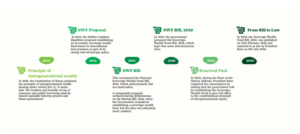
Key Highlights of the Sovereign Wealth Fund Act
Purpose of the Fund
The Sovereign Wealth Fund is established to:
- Provide the national government with a buffer from extraordinary shocks which may affect macroeconomic stability.
- Provide finance for strategic infrastructure investment priorities.
- Build a savings base for future generations when the minerals and petroleum resources are exhausted.
Sources of the Fund
The Act provides for the following as sources of the Sovereign Wealth Fund.
- The National Government’s share of profit derived from upstream petroleum operations.
- All petroleum royalties payable to the National Government.
- All mining royalties payable to the National Government.
- All bonus payments on grants or when production levels or prices of petroleum operations reach a defined level.
- All payments on grants or assignment of mining rights.
- All earnings from direct or indirect participation interest of the Government in minerals and petroleum operations.
- All proceeds from divestment from petroleum and mining interests held by the Government.
Components of the Fund

The Act establishes three distinct components of the Sovereign Wealth Fund:
- The Stabilisation Component to provide the national government with resources for management of extraordinary shocks which may affect macroeconomic stability.
- The Strategic Infrastructure Investment Component to provide funding for strategic infrastructure investment.
- The Future Generations Component to provide an endowment to support Strategic Infrastructure Investment for future generations; and distribute wealth across generations.
Conclusion
Importance of Sovereign Wealth Funds
Many nations, including Norway’s Government Pension Fund Global, which was created in 1996 and is one of the most successful sovereign wealth funds, have created such funds to manage their wealth and invest in global markets. Sovereign Wealth Funds help build resilience and stabilise national economies by setting aside surplus revenues during boom periods that can be utilised as a buffer during economic downturns.