

United Opposition Unity on Trial as 2027 Flagbearer Deadline Slips
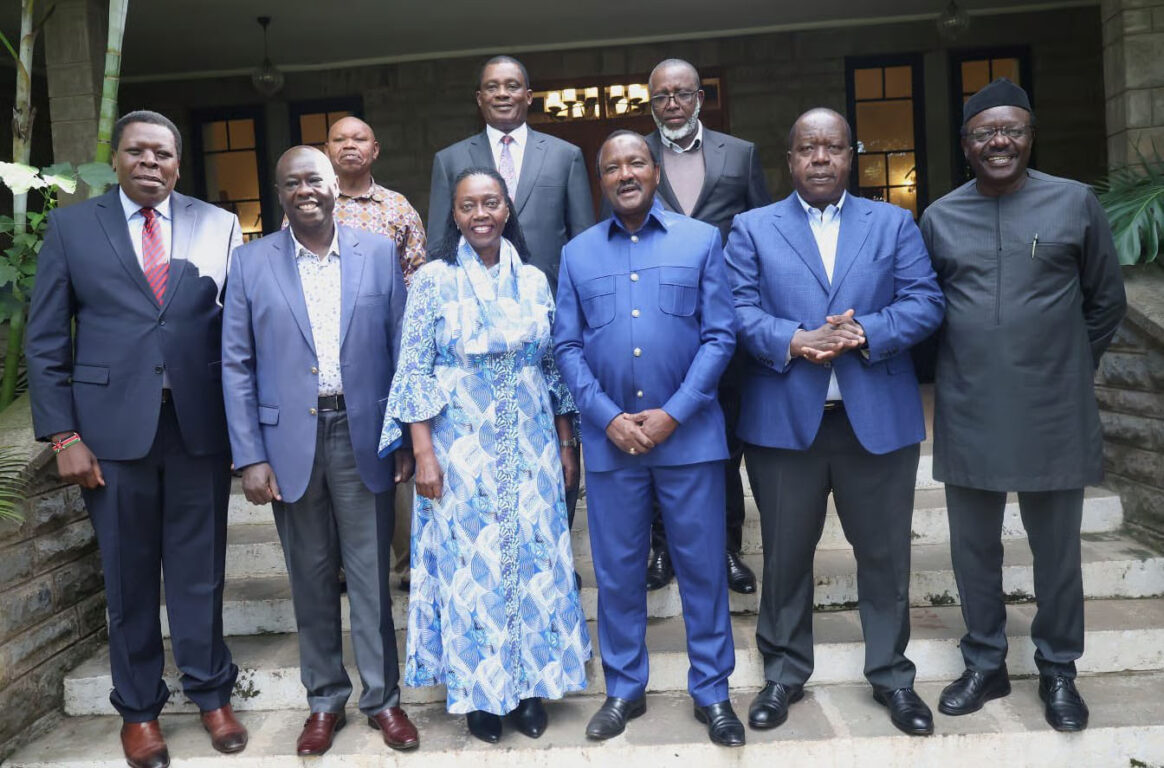
The much-anticipated unveiling of a single presidential flagbearer by the United Opposition is yet to materialise months after the leaders promised to name their 2027 candidate by the end of March.
Last December, Wiper party leader Kalonzo Musyoka announced that the United Opposition would unveil its presidential flagbearer by March 2026, setting the stage for an early showdown with President William Ruto.
The big question: “Is the delay exposing growing cracks, mistrust, or competing ambitions within the alliance?”
The opposition had said it had agreed to present a single candidate as part of what they described as a “government-in-waiting,” united by shared values rather than personal ambition, with Kalonzo declaring that the opposition would not delay its preparations, arguing that Kenyans were already demanding change.
He explained that the decision to name the flagbearer by the end of March was informed by the “fierce urgency of now”, noting that the country could no longer afford prolonged political uncertainty.
United Opposition comprises Rigathi Gachagua of Democracy for Citizens Party (DCP), Martha Karua of People’s Liberation Party (PLP), Kalonzo Musyoka (Wiper Party), Eugene Wamalwa of Democratic Action Party of Kenya (DAP-K), Dr. Fred Matiang’i (Jubilee Party), Dr. Mukhisa Kituyi – the official spokesperson and head of the secretariat for the United Opposition, Justin Muturi (Democratic Party), and Mithika Linturi.
Fresh Twist
On May 6, while speaking in Murang’a County, Gachagua claimed that the National Intelligence Service (NIS) had planted a spy to destabilise the movement from within.
Gachagua insisted that, in his view and that of his supporters, he would be the best candidate to face President Ruto on the ballot. However, he added that he would support whichever candidate is chosen as the United Opposition flagbearer.
A few days earlier, Jubilee deputy party leader in charge of operations, Jeremiah Kioni, had claimed that the United Opposition lacked a clear formula to select its candidate. He warned that Kenyans dislike uncertainty, which could cost the opposition in 2027 if they fail to decide soon.
In addition, the Orange Democratic Movement (ODM), through its Linda Mwananchi faction led by Nairobi Senator Edwin Sifuna, hinted at joining the coalition to edge out President Ruto. Sifuna said the team’s main agenda is to block President Ruto’s re-election, insisting he does not deserve to remain in office beyond 2027. Sifuna warned that multiple presidential candidates with a shared goal would guarantee President Ruto’s victory.
Political analyst Prof Macharia Munene has cautioned that opposition leaders must set aside parochial interests and unite if they hope to defeat President Ruto in the next general elections.
The process of selecting a flagbearer has been contentious, with disagreements over both the method and the candidate. Some prefer a scientific approach, while others favour internal negotiations. For instance, it has been reported that Dr. Matiang’i has proposed a public presidential debate among opposition leaders to allow Kenyans to judge which candidate is most suitable. However, Kalonzo’s allies have rejected the idea, calling it a tactic to derail.
Uncertainty
Whether the United Opposition will agree to field a single presidential candidate, and how that choice will be made, remains to be seen.
A recent survey by TIFA indicated that even if President Ruto’s relatively low popularity suggests his electoral vulnerability, the absence of a clear front-runner in the opposition ranks may render that apparent vulnerability irrelevant.
The next question is whether, and to what extent, those not selected to challenge President Ruto will remain steadfast in supporting their nominated colleague.
Such an issue relates to another finding presented in TIFA’s report: Ethnic community leadership. The findings revealed that only about half of Kenyans acknowledge the existence of such a leader within their community. This raises the question of how community members would follow the guidance of such a leader in their voting choices in 2027. This is especially true if that acknowledgement is currently based largely on the hope that he will become a presidential candidate. That leadership influence could largely dissipate if someone else is selected as the United Opposition candidate.