

“Chapa Mikwaju” Threats Stir Alarm as Gen Z Protests Test Democratic Tolerance
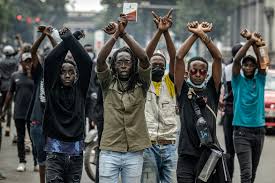
The amorphous, cross-ethnic Gen Z protests, rooted in shared generational frustrations over economic precarity, corruption, and political exclusion, are reshaping Kenya’s political trajectory. In addition, it is being exported to neighbouring countries, and the reception among those in power is not very positive.
Recent remarks by Tanzanian President Samia Suluhu Hassan suggested that Kenya and Tanzania should collaborate to address youth-led democratic activism. This has raised alarm, as last year’s protests tested democratic tolerance in both countries. These sentiments risk normalising repression and may undermine constitutional freedoms and democratic space.
On Monday, May 4, during a meeting with President William Ruto in Dar es Salaam, President Suluhu said that a firm approach by the two governments would be needed to counter youth unrest and safeguard peace in the region.
“We were talking about how to deal with these unruly children of ours. I don’t know what they call themselves. They pretend to be from East Africa, and wherever they go to fight for democracy, they make a mess, burn here and there and disturb their governments. I told Ruto we must stand firm on this with these troublemakers. Let’s not choose between Tanzanians or Kenyans; if they come to me, I will whip them; if they come to you, they should be whipped so that we can live in peace,” President Suluhu said.
The Tanzanian president added that youth in the East African bloc are becoming notorious for calling for astute governance and should be tamed. She maintains that the call for good governance is handled differently in different democracies, and those breaching the standards of conduct in Tanzania, despite their nationality, will be met with the full force of the law.
Already, the Kenya Human Rights Commission (KHRC) has raised concerns over the remarks, stating that it would not accept any attempt to import a coercive tactics approach into Kenya’s governance system.
“We will not allow a repeat of Tanzania’s 2025 situation on Kenyan soil. Not by decree, not by force,” KHRC said, adding that such rhetoric undermines constitutional freedoms and democratic governance.
Further, KHRC urged regional leaders to uphold protections for freedom of expression and peaceful assembly, noting that youth participation in civic life should not be criminalised. “Constitutional rights are not negotiable, and they are not subject to suppression in the name of order.”
Additionally, the Law Society of Kenya (LSK) President, Senior Counsel Charles Kanjama, warned against any suggestion that fundamental freedoms could be curtailed for political convenience, arguing that constitutional rights remain non-negotiable.
Kenya’s legal framework does not permit the use of force, coercion or punitive measures against citizens for the peaceful exercise of their rights. Articles 27, 28 and 29 protect equality, dignity, and freedom from cruel, inhuman or degrading treatment. These safeguards are absolute,” Senior Counsel Kanjama said.
The LSK rejected calls from the Heads of State to unite in taking disciplinary measures against youth uprisings. “Constitutional rights are not negotiable, and they are not subject to suppression in the name of order. Any attempt to undermine these freedoms will be met with firm institutional resistance through legal, civic and regional accountability mechanisms,” Senior Counsel Kanjama added.
The call is for East African regional governments to engage constructively with citizens rather than abusing their rights.