

Uhuru Kenyatta and the Law: Violation or Constitutional Conflict?
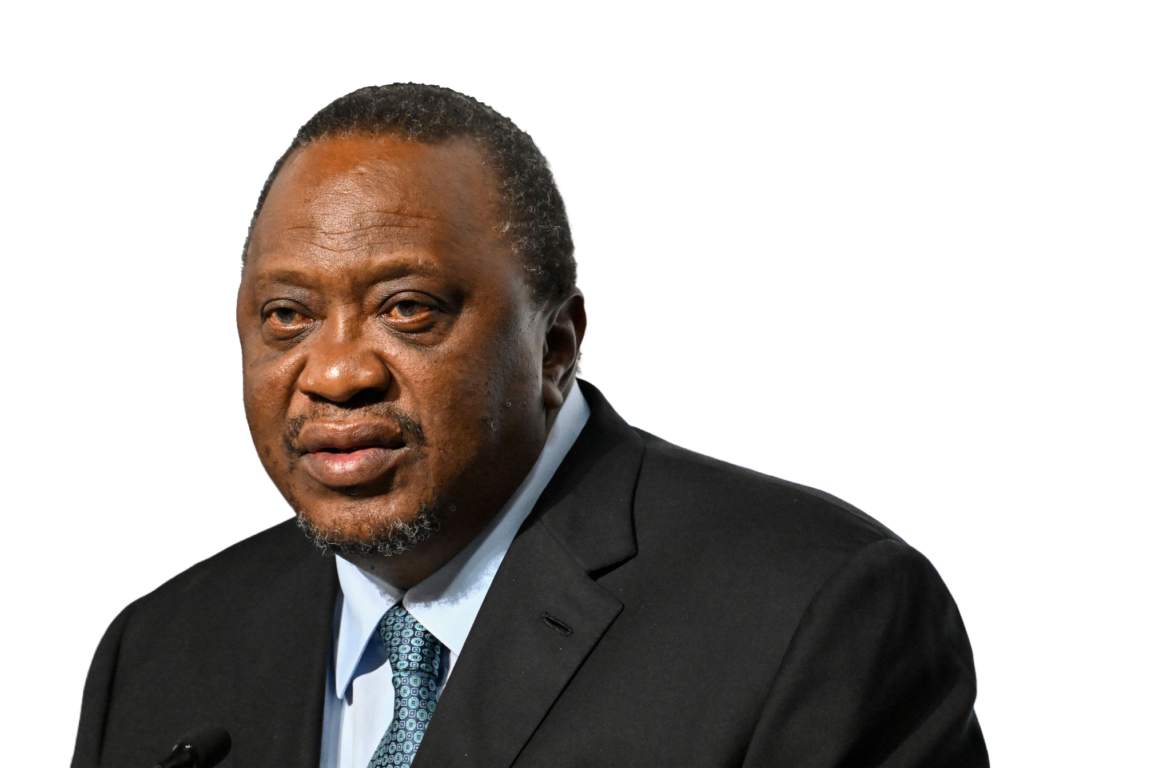
Former President Uhuru Kenyatta’s continued presence in Kenya’s political discourse is increasingly rattling President William Ruto and his allies, underscoring his influence despite having left office.
The former President’s recent political activities and strategic endorsements have been causing discomfort within government circles, with some of President Ruto’s allies accusing him of fuelling political divisions and funding opposition realignment.
Some government-affiliated Members of Parliament (MPs) have threatened to revoke the former president’s state benefits and retirement privileges, alleging that his public criticism violates expectations of statesmanship.
Even though he has dismissed claims that he is actively engaging in partisan politics, Uhuru insists that he is merely supervising a leadership transition within his party (Jubilee) in accordance with the Constitution.
Within the ruling coalition, the United Democratic Alliance (UDA), concerns have been growing over his continued political influence, especially in Central Kenya, where President Ruto has been trying to consolidate support ahead of next year’s general elections.
The former president’s ability to mobilise, network, and influence key political figures is a major source of anxiety for President Ruto and his allies.
In April, Uhuru caused a political storm when he endorsed former Interior Cabinet Secretary Dr. Fred Matiang’i for the presidency. Speaking by phone during a Jubilee Party meeting in Narok, Uhuru Kenyatta praised Dr. Matiang’i as a capable and resilient leader ready to lead the country.
The endorsement was interpreted by government officials as a clear sign that the former president intends to remain politically relevant and influential ahead of next year’s general elections.
The phone call made during Jubilee Secretary General Patrick Ole Kenta’s homecoming event in Purburush village, Narok, rattled the UDA party leadership, which accused the former president of political bitterness, incitement, and of leaving behind an economic crisis that the current administration is still fixing. Nandi Senator Samson Cherargei even threatened to push to withdraw Kenyatta’s retirement benefits, arguing that the former president had violated laws governing retired presidents.
Motion
In early May, Senator Cherargei filed a motion to withdraw the former president’s benefits and allowances. In his motion, the Senator argued that Kenyatta, since leaving office, has contravened regulations under the Presidential Retirement Benefits Act and punctured the dignity of the office of the retired president.
The Senator added that the former president has been actively engaging in partisan political processes contrary to Section 6 of the Act, which requires a retired president to take only a neutral, consultative, and advisory role for the benefit of the nation.
The legislator opined that his cited arguments, if established, undermine the rationale for the continued enjoyment of publicly funded retirement benefits. Therefore, he noted the need to ensure compliance with the law governing retired Presidents and to uphold the integrity of public expenditure, transparency, and accountability in the allocation and utilisation of state resources.
Should Retired Presidents Be Barred from Politics?
According to Bobby Mkangi, who served as a Commissioner on the nine-member Committee of Experts for Constitutional Review (CoE), which delivered the Constitution of Kenya, 2010, an intriguing provision exists in Kenya’s Presidential Retirement Benefits Act 2003. In an opinion article, he noted that the law provides that “A retired President shall not hold office in any political party for more than six months after ceasing to hold office as President.”
This legislation was enacted in 2003 to address what was, at the time, a new phenomenon in Kenya: the institution of a former president. With taxpayers footing the bill, the law provided for pensions, gratuities, allowances, and other services, including security, that former presidents would henceforth enjoy in retirement.
Upon retiring in 2002, the late President Daniel Arap Moi, who had been President since 1978 after taking over from Mzee Jomo Kenyatta, who died in office, would therefore become the inaugural personification of the new title and role of a retired president.
Since then, this insignia has been worn by the late Mwai Kibaki (2013) and, since 2022, by Uhuru Kenyatta.
According to Mkangi, given that the specific provisions of the Act that apply to a former president (some apply to the spouse and children) became temporarily redundant after the deaths of Moi and Kibaki, the legislation, and more so the provision mentioned earlier, have in recent years become of interest.
He pointed out that this is because the country now has a new retired president in the person of Uhuru Kenyatta. Unlike Kibaki, who chose a quiet retirement, Kenyatta has, to a certain extent, continued to lend his presence in the country’s political ecosystem.
Mkangi adds that, though somewhat subdued, former President Uhuru Kenyatta has kept signalling his intentions of remaining politically active. “He has not resigned, as required by law, from his leadership role in Jubilee Party. Additionally, his rhetoric and conduct indicate that he still wants in.”
What Next?
Section 4(1) of the same Act provides that the National Assembly may, through a motion endorsed by at least two-thirds of its membership, resolve to halt or vary a former president’s retirement package on the basis that the former head of state continues to hold office in or is actively involved in the activities of a political party.
As it stands, Uhuru Kenyatta violates the Act and can only be reprimanded by the National Assembly.
Additionally, the Constitution, which was promulgated after the Act and is superior to it, provides in Article 151(3) that “The retirement benefits payable to a former President and a former Deputy President, the facilities available to and the privileges enjoyed by them, shall not be varied to their disadvantage during their lifetime.”
Considering that Kenyatta is receiving his benefits under the prevailing terms, can the National Assembly vary these? Is this a law that invites Parliament to subvert the Constitution?
Mkangi, in addition, says that what is more pressing, however, is whether limiting the political activities of a retired president and pegging them to their retirement benefits is reasonable. What mischief does this address?
Dilemma
The growing backlash from President Ruto’s allies signals that Uhuru Kenyatta’s political shadow remains a significant factor in Kenya’s evolving politics. From a legal and constitutional perspective, this could be the question Kenyatta is trying to address: Is he the one going against the law, or is the law itself unfairly limiting him and conflicting with the Constitution?