

Trade And Financial Services Round-Up

Kenya
KRA eCitizen Outage Frustrates Taxpayers
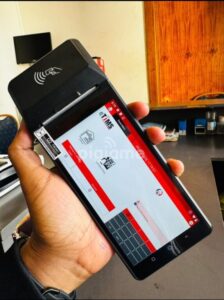 Taxpayers have faced frustration after technical disruptions on the Kenya Revenue Authority’s eCitizen services persisted for several days, affecting the generation and downloading of eTIMS invoices. Some users reported successfully generating invoices but being unable to download or finalise them, disrupting payments and other business transactions. The disruption has raised concerns among businesses that rely on eTIMS for routine tax compliance and invoicing.
(Source: Daily Nation)
Uganda
How Uganda’s Wealthy Borrowers Use Legal Loopholes to Delay Debt Repayment
 Wealthy Ugandan borrowers have increasingly used legal challenges over lenders’ licences, registrations and paperwork to delay or avoid repaying large debts, with court cases sometimes lasting for years. The strategy can be financially attractive because commercial borrowing rates of about 18–20 per cent are far higher than the 6 per cent default post-judgment interest rate courts apply when no rate is specified. This means that even borrowers who ultimately lose a case may benefit from keeping the money for years at a much lower effective cost. In contrast, the resulting risks and higher lending costs are ultimately passed on to other borrowers.
(Source: Monitor)
Tanzania
Tanzania Moves to Expand Loan Access Through Movable Assets
 Tanzanians could soon use a wider range of movable assets as collateral for loans under the proposed Secured Transactions (Movable Property) Bill, 2026, which Parliament has approved. The framework is intended to help individuals and businesses that lack traditional collateral such as land and buildings access formal credit, while establishing clearer rules for lenders to secure loans against movable property.
(Source: The Citizen)
Rwanda
RSSB Acquires BK General Insurance for Rwf31.7B
 The Rwanda Social Security Board (RSSB) has acquired BK General Insurance from BK Group for Rwf31.7 billion, completing a transaction the group announced on 31 August 2026. The deal covers BK Group’s entire holding of three million shares. It forms part of the group’s strategy to focus on commercial banking through Bank of Kigali and investment banking through BK Capital. The acquisition follows earlier plans to combine BK General Insurance with RSSB-owned Sonarwa General Insurance and Sonarwa Life Assurance, strengthening consolidation in Rwanda’s insurance sector.
(Source: The New Times)
Ethiopia
Ethiopia Doubles Contribution to AU Budget Amid Funding Challenges
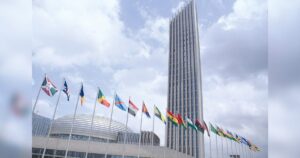 Ethiopia has voluntarily agreed to nearly double its annual contribution to the African Union (AU), increasing its assessed payment from about USD 8 million to USD 15 million and moving from Tier Two to Tier One. The decision, announced during the AU Executive Council session in Addis Ababa, places Ethiopia alongside some of the continent’s largest contributors, including Nigeria, South Africa, Egypt and Algeria, as the bloc continues to face significant financial pressures.
(Source: The Reporter)
Sudan
Sudan Forms Crisis Team as Pound Hits Record Low
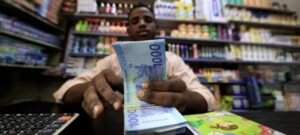 Sudan’s government has formed an emergency task force to tackle the rapid depreciation of the Sudanese pound after it fell to a record 6,600 pounds per US dollar on the parallel market. The crisis team, led by Finance Minister Gibril Ibrahim, will pursue urgent fiscal and monetary measures. At the same time, authorities also crack down on black-market currency trading, gold smuggling, and other illicit financial activities. The currency crisis comes as Sudan’s war continues to weaken the economy, disrupt exports and worsen inflation and living conditions.
(Source: Sudan Tribune)
Somalia
Somalia To Link Government Payroll System with National ID
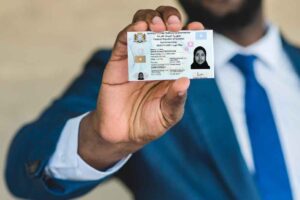 Somalia plans to link its government payroll system with the National Identification system as part of efforts to strengthen payroll management and improve accountability in the public sector. The initiative, announced by the Office of the Auditor General, is expected to help verify government employees, reduce payroll irregularities and ensure that public funds are paid to legitimate beneficiaries.
(Source: SONNA)