

Inside Kenya’s First Ebola Burial
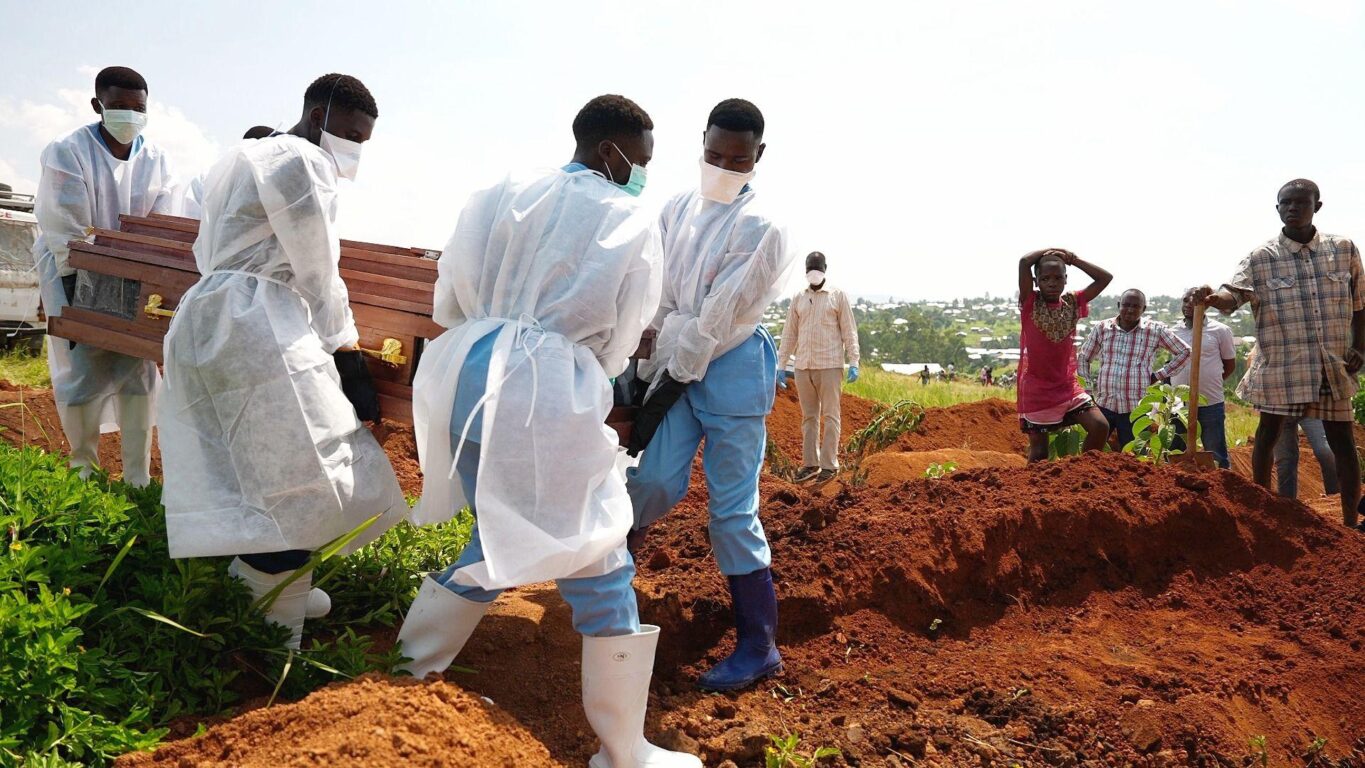
Kenya’s first Ebola burial at Lang’ata Cemetery in Nairobi was carried out under strict health protocols to prevent any possible transmission of the virus. The deceased, who had travelled from the Democratic Republic of Congo (DRC) via Uganda before arriving at Jomo Kenyatta International Airport, was buried shortly after 2.30 pm on Tuesday, with only a small number of mourners permitted near the gravesite.
Unsafe burial has been listed as one of the causes of the virus’s spread, and therefore, unlike a conventional burial, there was no viewing or touching of the body. A Ministry of Health official told the Daily Nation that the body must be buried within 24 hours of death.
The body is first cleaned and disinfected by trained health personnel, then wrapped in several layers of protective material before being transported directly to the cemetery. Family members are not permitted to handle the body at any stage. Transport is tightly controlled. According to the health official, only the body and the driver are allowed inside the vehicle.
At Lang’ata Cemetery, the precautions continued as health workers in full protective equipment handled the burial, while relatives remained at a safe distance. The grave was required to be at least six feet deep.
After the burial, protective equipment and other materials used in handling the body were destroyed on site. A fire was visible beside the freshly filled grave, and a health worker in a full hazmat suit subsequently disinfected the vehicle that had transported the patient from the airport to Nairobi Hospital. Security around the burial was also closely managed, with people attempting to document the proceedings being removed from the area. The controlled, largely private ceremony demonstrated the exceptional measures required when managing an Ebola death, balancing the family’s final farewell with the need to protect mourners, health workers, burial teams and the wider public from potential exposure.
(Source: Daily Nation)