

Infrastructure, Opportunity and the Constitution: Why Kenya Must Get the Conversation Right
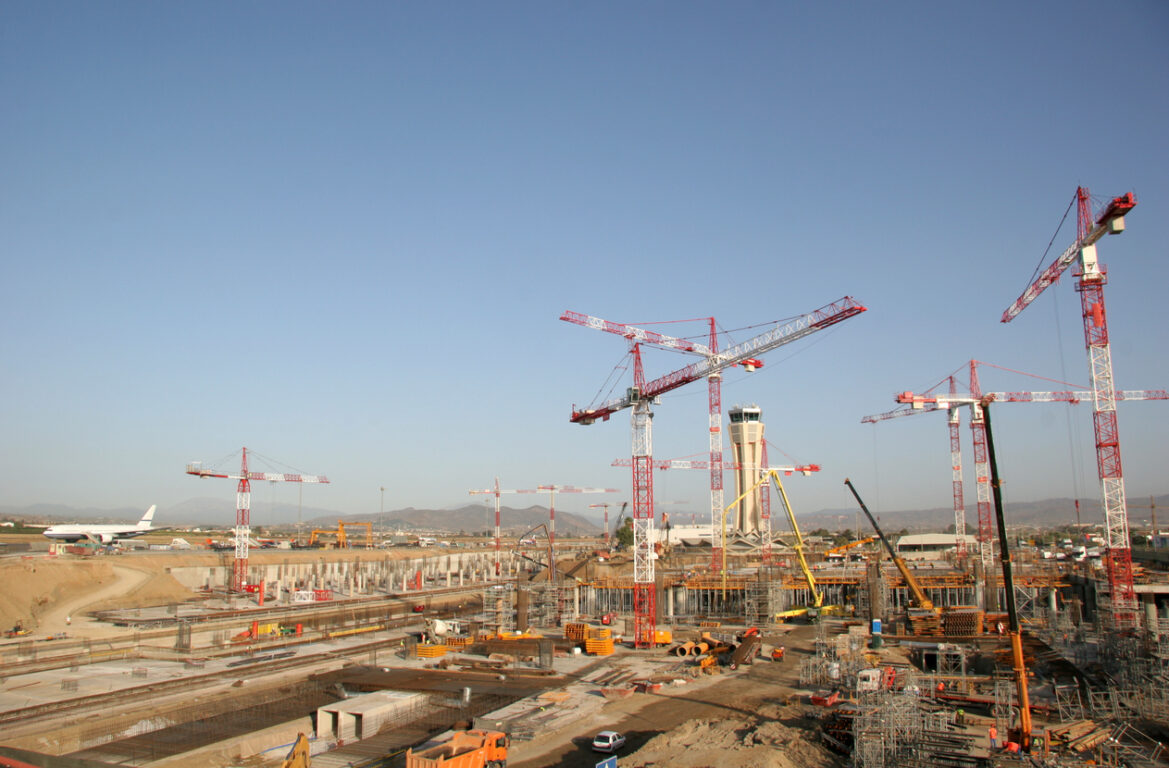
Moments of global disruption often reveal structural realities that ordinary stability tends to conceal. The ongoing crisis across parts of the Middle East offered one such moment. As airspace closures and security concerns forced airlines to reconsider long-established flight paths, several aircraft that would ordinarily traverse the Gulf began recalibrating routes across the African continent. In that moment of uncertainty, Nairobi quietly appeared on operational maps as flights were rerouted through Jomo Kenyatta International Airport.
This development was not merely an adjustment in aviation. It illustrated a deeper truth about infrastructure, geography, and preparedness. Kenya occupies one of the most strategic positions on the African continent. Nairobi sits along aviation corridors that connect Asia, Europe, the Middle East and Africa’s interior markets. Geography has therefore always positioned Kenya as a natural logistical bridge between continents.
Strategic geography alone does not build global hubs. Infrastructure determines whether a country converts geographic advantage into economic influence. The rerouting of aircraft toward Jomo Kenyatta International Airport, therefore, revealed both promise and limitation in equal measure. The airport’s strategic relevance became visible at precisely the moment when questions about its capacity and readiness also resurfaced.
Infrastructure as an Economic Backbone
The aviation example mirrors a much broader national reality. Infrastructure sits at the centre of economic transformation. Ports determine the efficiency of trade flows. Roads and railways connect producers to markets. Airports link national economies to global commerce, tourism and humanitarian supply chains. Digital infrastructure increasingly shapes the competitiveness of entire sectors.
Countries that recognise this reality treat infrastructure not merely as public works but as strategic national assets. Airports, in particular, have evolved into complex economic ecosystems. They support cargo logistics, attract international investment, generate employment and anchor tourism industries. In many cases, modern airports function as gateways through which nations integrate into the global economy.
Kenya’s infrastructure ambitions, therefore, extend far beyond aviation. The broader objective is to position the country as a regional logistics and commercial hub capable of serving Eastern and Central Africa. Aviation offers one of the clearest illustrations of how infrastructure can unlock or constrain national opportunity.
A Region That Is Moving Fast
Across the region, several countries have recognised the strategic value of infrastructure investment and have moved decisively to strengthen their aviation ecosystems. Ethiopia has invested heavily in aviation infrastructure while expanding Ethiopian Airlines’ global reach, reinforcing Addis Ababa’s position as a dominant continental hub. Rwanda has simultaneously embarked on developing Bugesera International Airport as part of a broader strategy to position Kigali as a logistics and conference gateway.
These developments reflect a deeper strategic calculation. Transport infrastructure shapes economic geography. Countries that invest early and consistently in connectivity often succeed in capturing regional trade flows and attracting multinational institutions that depend on efficient logistics networks.
Kenya understands this competition well. Nairobi already hosts one of the largest diplomatic and humanitarian ecosystems in the developing world, anchored by the United Nations. Humanitarian operations serving the Horn of Africa rely heavily on logistical networks operating through Nairobi, with Jomo Kenyatta International Airport functioning as a critical cargo and personnel hub.
The strategic foundation already exists, therefore. The question confronting policymakers is whether infrastructure development will move quickly enough to sustain that advantage.
The Governance Question Behind Infrastructure
Recent discussions about airport expansion proposals have demonstrated that infrastructure development is rarely a purely technical matter. Engagements involving global aviation players such as Qatar Airways, alongside proposals from the Adani Group, triggered intense public debate about the financing, ownership, and governance of critical national assets.
Such debates are neither surprising nor undesirable. Infrastructure in a constitutional democracy inevitably attracts scrutiny because it involves long-term financial commitments, public resources and strategic national interests. Public concern often reflects a deeper expectation that development must occur within a framework of accountability and legitimacy.
Kenya’s Constitution provides a clear foundation for navigating such decisions. Article 10 outlines national values and principles, including integrity, transparency, good governance, sustainable development, and meaningful public participation. These principles were deliberately embedded within the constitutional framework to ensure that development decisions reflect both economic necessity and democratic legitimacy.
Financing Development Without Losing Constitutional Discipline
The ongoing conversation around the proposed National Infrastructure Fund arrives at a critical moment for Kenya’s development agenda. The country faces a structural challenge: the need to expand and modernise infrastructure while simultaneously managing fiscal pressures and public debt.
Innovative financing mechanisms are therefore becoming increasingly important. Infrastructure funds, public-private partnerships and blended finance arrangements may offer viable pathways for mobilising the capital required to build modern transport systems, energy networks and logistics corridors.
Financing innovation, however, must remain anchored within constitutional discipline. Public participation cannot be reduced to a procedural formality introduced after decisions have effectively been made. Citizens must have genuine opportunities to interrogate the financing structures, governance arrangements, and the long-term national implications of projects built using public assets.
The late constitutional scholar H. W. O. Okoth-Ogendo once warned about the dangers of “constitutions without constitutionalism.” His observation captured a paradox that continues to shape governance debates across many democracies. A country may possess a progressive constitutional framework while failing to embed the values that give that framework meaning.
Infrastructure policy often sits directly within that paradox. Large projects attract powerful commercial interests, enormous financial flows and intense political attention. Development urgency can easily overshadow constitutional safeguards if governance institutions do not remain vigilant.
Getting the Infrastructure Conversation Right
Kenya stands at a critical juncture in its development journey. The country possesses strategic geography, a vibrant private sector, and a growing regional influence, which together create powerful economic opportunities. Infrastructure will determine whether those opportunities translate into long-term national prosperity.
The brief aviation disruption caused by the Middle East crisis provided a glimpse of Nairobi’s relevance within global transport networks. It demonstrated how quickly an opportunity can arise when geography and infrastructure intersect.
Capturing that opportunity requires more than building runways, highways and ports. It requires building public confidence in the systems through which such infrastructure is conceived, financed and delivered.
Infrastructure ultimately begins with concrete, steel and engineering plans. Sustainable development, however, rests on something far less visible but far more enduring. It rests on a commitment to ensuring that opportunity is pursued within the discipline of constitutionalism.