

The Price of Coexistence: Communities, Wildlife and a Changing Climate
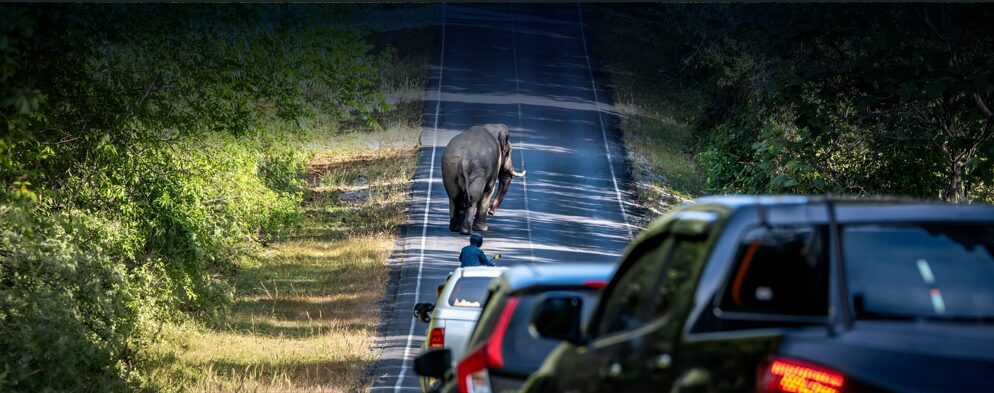
In Wangwaci, Laikipia County, elephants can enter farms and destroy crops, fences and other property. For a large commercial farmer, such losses may be financially painful. For a smallholder farmer, losing a field of maize or vegetables can mean losing food for the family, school fees or money for the next planting season. Some farmers are forced to harvest early or spend nights guarding their farms, living with the constant fear of an encounter.
At Manguo, in Kiambu County, communities depend on wetlands and surrounding waterways for their livelihoods. But hippos can leave Manguo Swamp, also known as Kiboko Swamp, at night to feed, bringing them into close contact with people. Their size, strength and unpredictable behaviour make encounters particularly dangerous. Crops can be destroyed, property damaged and, in severe cases, people injured or killed. For these communities, wildlife is not something seen only on safari; it is part of everyday life and sometimes a threat to survival.
So, who invaded whose home? The answer is complicated. Kenya’s success in wildlife conservation has helped elephant populations recover significantly. At the same time, human settlements and agriculture have expanded into areas once used by wildlife. Habitat fragmentation, climate change, shrinking water sources and competition for land have brought people and animals into closer contact.
The impact is more than physical. Human-wildlife conflict can become a daily struggle marked by fear, uncertainty, and economic insecurity. Yet neither the elephant nor the hippo is deliberately invading human territory. They are responding to the same basic needs as people: food, water and space.
As wetlands are degraded, wildlife corridors are blocked, and natural habitats are converted to farms and settlements, animals have fewer places to move. Drought and changing weather patterns can further reduce water and food availability, pushing wildlife closer to human settlements.
The result is a shrinking boundary between wildlife and people. Kenya has taken steps to address the challenge. The Kenya Wildlife Service uses problem-animal response teams, fencing, tracking and geofencing, translocation and community-based deterrents. Beehive fences, early-warning systems and other non-lethal approaches can help keep elephants away from farms. Where individual animals repeatedly cause serious conflict, translocation may also be considered.
Compensation is another important intervention. Communities affected by wildlife attacks and damage can seek compensation, and the government has been working to improve the process. But compensation alone cannot solve the problem. Paying a farmer after an elephant destroys a crop does not restore the lost harvest, months of labour or the sense of security.
The long-term answer must therefore be coexistence, not simply conflict management. That means protecting wildlife corridors before they are settled, restoring degraded wetlands and habitats, improving land-use planning and using technology to identify areas where conflict is most likely. GIS, remote sensing, animal tracking and community-based early-warning systems can help authorities and residents act before an encounter becomes an emergency.
Most importantly, communities must be part of conservation decisions. People living alongside wildlife should not bear the greatest costs while the wider country benefits from wildlife tourism and conservation.
Perhaps, then, the question should not be: who invaded whose home? The elephant did not understand the farm boundary. The hippo did not understand the village path. And the farmer did not choose to lose a year’s harvest. The real problem is that the space between people and wildlife is disappearing.
Kenya’s conservation future will depend not only on protecting elephants and hippos, but also on ensuring that the people living beside them feel protected too. True coexistence means wildlife has safe habitats and movement corridors, while communities have secure livelihoods, effective prevention, timely compensation and a voice in conservation.
Conservation cannot succeed if communities see wildlife only as a threat. The future of Kenya’s elephants and hippos may ultimately depend on whether we can make room for both wildlife and people to belong.