

Kenya Braces for El Niño as Inflation and Flood Risks Threaten Economic Resilience
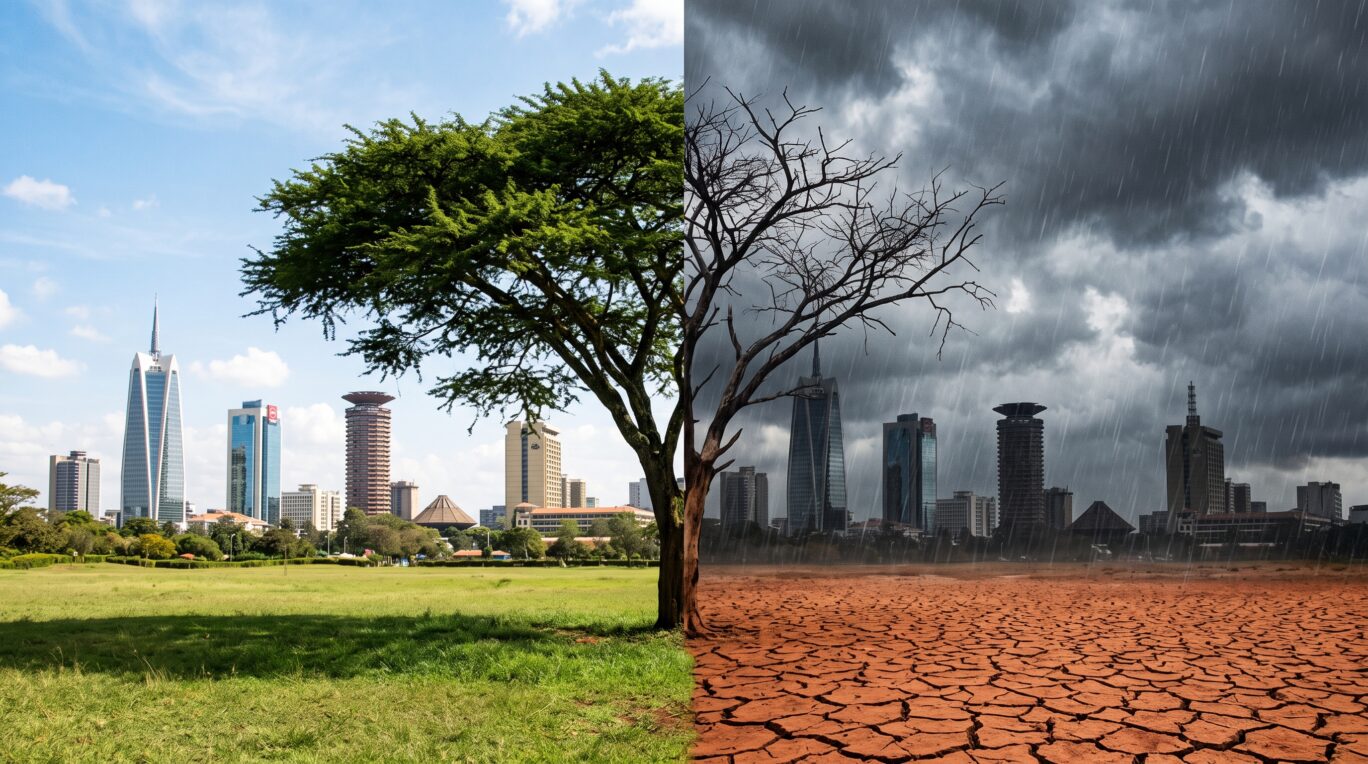
Analysis by the United Nations World Food Programme (WFP) shows that the strengthening El Niño weather pattern is set to significantly worsen food insecurity in some of the world’s most vulnerable countries through 2027. For Kenya, the weather pattern could have significant economic implications, particularly if disruptions to agricultural production drive up food prices. Economists warn that such weather-related shocks could fuel renewed inflationary pressures, further complicating the country’s economic outlook and putting additional strain on households and policymakers.
The country’s overall inflation remained within the target range in July 2026 and was broadly stable at 6.5 per cent, up from 6.4 per cent in June. Core inflation was likewise stable at 3.2 per cent in July, up from 3.1 per cent in June.
Non-core inflation decreased modestly to 15.0 per cent in July from 15.1 per cent in June, driven by lower energy price inflation, which was supported by government interventions, including subsidies and a temporary reduction in VAT on fuel.
Nevertheless, the food inflation component remained elevated due to higher vegetable prices. Overall inflation is expected to remain within the target range in the near term, assuming a de-escalation of the conflict in the Middle East. This will be supported by appropriate monetary policy actions, government interventions, expected stability in food prices, and a stable exchange rate.
Across Africa, the effects of the El Niño weather pattern are expected to vary widely. Countries such as Zambia, Zimbabwe, Malawi and Mozambique are among those vulnerable to weather-related disruptions to agricultural production. Prolonged drought could strain food supplies, reduce crop yields and drive up food prices, adding to inflationary pressures and weakening economic growth.
In addition, emerging markets are particularly vulnerable because households spend a larger share of their income on food and agriculture plays a major role in their economies, increasing the risk that central banks will have to keep policy tighter for longer.
Preparedness Push
Economists have warned that the weather phenomenon could slow economic growth, increase food costs and make inflation harder to control, potentially limiting central banks’ ability to ease monetary policy.
However, in Kenya, the Central Bank of Kenya (CBK) has maintained its benchmark lending rate and stated that its policy stance was appropriate, though there remained a need to monitor changes in global oil prices and any second-round effects on inflation. This was the third consecutive policy meeting at which the CBK has kept the rate at 8.75 per cent.
CBK projects that the economy will pick up to 4.9 per cent in 2026 (from 4.6 per cent in 2025) and to 5.3 per cent in 2027, supported by a robust industrial sector, resilient services, and stable agricultural growth.
The growth projections reflect continued uncertainty and the implications of the conflict in the Middle East for the performance of some key sectors of the economy, as well as the potential adverse impact of the El Niño weather phenomenon.
Government Preparedness
The government has classified 18 counties as high risk of flooding during the October-November-December short rains season. The National Disaster Operations Centre (NDOC), the government’s agency that coordinates national emergency response, disaster risk reduction, and 24/7 crisis monitoring, said the identified counties have been prioritised in the response plan based on their vulnerability and El Niño-related risks.
Counties in the Rift Valley, Lake Basin, Coast, and North Eastern regions are among the areas most likely to be hit hardest. Major cities, including Nairobi, Mombasa and Kisumu, are among the high-risk urban hotspots. Residents of Nairobi, Mombasa and Kisumu are at risk of flooding, drainage blockages, strain on infrastructure and disruptions to essential services, according to NDOC.
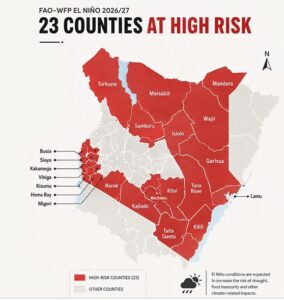
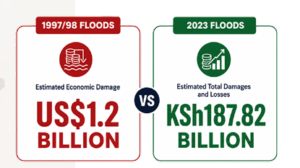
FAO and WFP are seeking US$202 million (about KSh26.1 billion) in anticipatory funding for Kenya, Somalia, Ethiopia, Sudan, South Sudan and Uganda, where the agencies say roughly 8.8 million people across East Africa are at risk of El Niño-related flooding, landslides and worsening food insecurity. The organisation warns that without adequate preparation, the impacts could resemble those of the 1997/98 floods, which caused an estimated US$1.2 billion in economic damage. More recently, the 2023 floods resulted in an estimated KSh187.82 billion in total damages and losses, following the prolonged drought that began in 2020.
The joint FAO-WFP report recommends clearing drainage systems, activating flood preparedness protocols, relocating people from high-risk areas, strengthening flash-flood early warning systems, improving urban drainage, expanding mobile healthcare, and promoting agricultural, health and property insurance.
Both FAO and WFP have also warned that climate change is increasing the likelihood and severity of El Niño-related disasters, including flash floods, outbreaks of water-borne diseases, soil erosion, crop destruction and livestock losses. These may later be followed by prolonged dry spells, extreme heat and an increased risk of cardiovascular, respiratory and maternal and child health problems.