

Full Flights, Empty Books: Inside Kenya Airways’ Financial Turbulence
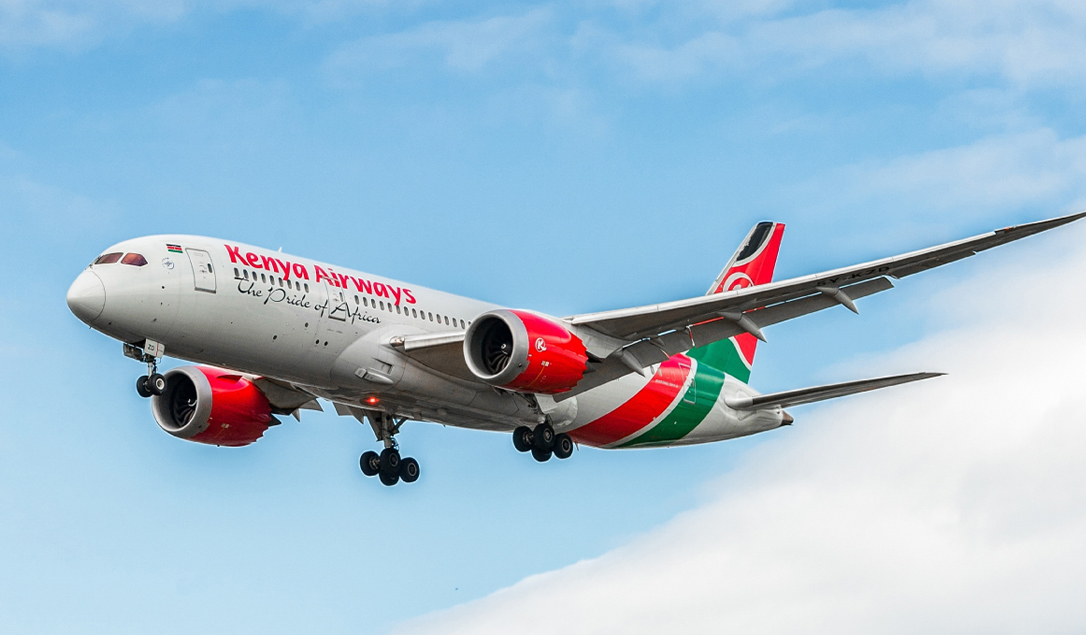
On March 24, 2026, Kenya Airways reported a net loss of approximately KSh17.1–17.2 billion for the financial year ended December 2025, reversing a KSh5.4 billion profit recorded just a year earlier. The swing was drastic, and it returned the national carrier to familiar financial territory after a brief recovery. Revenue declined by about 14 per cent to KSh161.47 billion, while operational capacity fell by roughly 18 per cent. These figures place the airline back at the centre of Kenya’s corporate and fiscal landscape, where questions of sustainability, ownership, and strategy converge.
A Fragile Recovery Unravels
The 2024 profit marked a rare moment of financial stability after more than a decade of losses. That turnaround was supported by currency gains, operational efficiency, and improved route performance. However, the 2025 results suggest that the recovery was not structurally anchored. Instead, it was vulnerable to operational shocks and external disruptions that quickly eroded gains.
At the core of the latest loss were grounded aircraft, particularly three Boeing 787-8 Dreamliners affected by engine and supply chain constraints. Reduced fleet availability directly led to fewer flights and constrained long-haul operations, which are typically among the airline’s most profitable segments. With fewer aircraft in service, the airline could not fully capitalise on demand across its network.
Passenger numbers declined by about 13 per cent. Revenue losses followed, estimated between KSh14 billion and KSh27 billion. Yet costs did not fall in tandem. Fixed operational expenses, maintenance obligations, and financing costs remained elevated. Finance costs alone rose to about KSh12.3 billion, up from KSh11.1 billion the previous year. The result was a widening gap between income and expenditure, pushing the airline back into loss territory.
Full Planes, Empty Margins
Despite the decline in passenger volumes, performance data reveals a counterintuitive trend. On several routes, load factors reached as high as 99 per cent. Demand remained strong, particularly on routes connecting Europe, Asia, and North America. This surge was partly driven by global aviation disruptions, including rerouting linked to instability in parts of the Middle East. Nairobi’s position as a regional hub allowed the airline to capture transit traffic.
This raises a critical question: If planes were nearly full, why did losses persist?
The answer lies in capacity and cost structure. High occupancy on a reduced number of flights cannot compensate for fewer total flights. Grounded aircraft limit frequency and network reach, while fixed costs continue to accumulate. In aviation, profitability depends not only on how full planes are, but on how many planes are flying and at what cost. In this case, constrained capacity and elevated expenses outweighed the benefits of strong demand. Against this backdrop, the airline is recalibrating its financial strategy.
Rethinking Capital: From One Investor to Many
Rather than pursuing a single strategic investor, management is now exploring a broader pool of investors. This includes potential combinations of equity participation, debt financing, revenue-sharing agreements, and even aircraft contributions.
This shift reflects both necessity and pragmatism. Securing a single investor in a capital-intensive and volatile industry has proven difficult. A diversified investor base could spread risk and provide more flexible funding options. It may also allow the airline to align different financing instruments with specific operational needs, such as fleet expansion or route development.
However, this approach introduces complexity. More investors mean more interests to balance. It also raises structural questions about ownership and control, particularly given the airline’s existing capital framework.
Debt, Ownership, and Strategic Tension
A significant portion of Kenya Airways’ financial structure is tied to government support. Over 90 per cent of its debt, estimated at around KSh146 billion, is owed to the Government of Kenya, which holds a 49 per cent stake in the airline. This creates a dual dynamic. The airline operates as a commercial entity yet remains closely linked to public finances and policy considerations.
One option under discussion is converting government debt into equity. This would reduce interest costs and improve the balance sheet. But it would also alter ownership dynamics, potentially increasing state influence or reshaping the shareholding structure.
This leads to a broader consideration. How should a national carrier balance commercial viability with strategic national interests? The answer is not purely financial. It involves policy decisions about connectivity, economic integration, and the role of public assets in competitive markets.
Partnerships as a Bridge to Recovery
While capital restructuring is underway, the airline is also pursuing operational solutions. New interline and codeshare agreements have been introduced, including partnerships with CemAir and JetBlue. These arrangements extend the airline’s network without requiring additional aircraft, allowing it to maintain market presence despite capacity constraints.
At the same time, efforts are being made to restore grounded aircraft ahead of peak travel periods. More planes in operation would increase frequency, improve route coverage, and enhance revenue potential. However, this recovery depends on resolving technical and supply chain issues that initially limited fleet availability.
Board-level changes earlier in 2026 also signal an internal recalibration. Leadership adjustments often accompany strategic shifts, particularly in periods of financial stress. They indicate an attempt to align governance with evolving operational and financial realities.
A Broader Context of Strategic Assets
Kenya Airways’ current trajectory is part of a broader context of strategic asset management in Kenya and the region. Previous attempts to privatise or restructure the airline have sparked debate over national control versus private sector efficiency. Similar discussions have emerged in other sectors, including infrastructure and energy.
References to transactions such as the Adani Group’s involvement in regional infrastructure highlight the scrutiny that large-scale investments can attract. These cases illustrate a recurring tension. External capital can provide necessary funding and expertise, but it also raises questions about terms, control, and long-term national interest.
The Path Forward
Kenya Airways now operates at the intersection of operational recovery and financial restructuring. Its immediate priorities are clear. Restore fleet capacity. Stabilise revenues. Manage costs. At the same time, it must secure capital that supports long-term sustainability without undermining strategic autonomy.
The airline’s position reflects both constraint and opportunity. Demand remains visible in high load factors and strong route performance. Partnerships are expanding network reach. Yet losses, debt obligations, and operational limitations continue to weigh on performance.
The outcome will depend on execution. Can restored aircraft capacity translate into consistent revenue growth? Will a diversified investor pool provide the stability that a single partner could not? And how will ownership structures evolve in a way that balances public interest with commercial discipline?
Kenya Airways is no longer simply managing a recovery. It is redefining its model. The next phase will not be measured only by profit or loss, but by whether the airline can align its operations, capital structure, and strategic role into a coherent and sustainable trajectory.