

President Ruto: The “CEO” Rewriting Kenya’s Development Financing Agenda
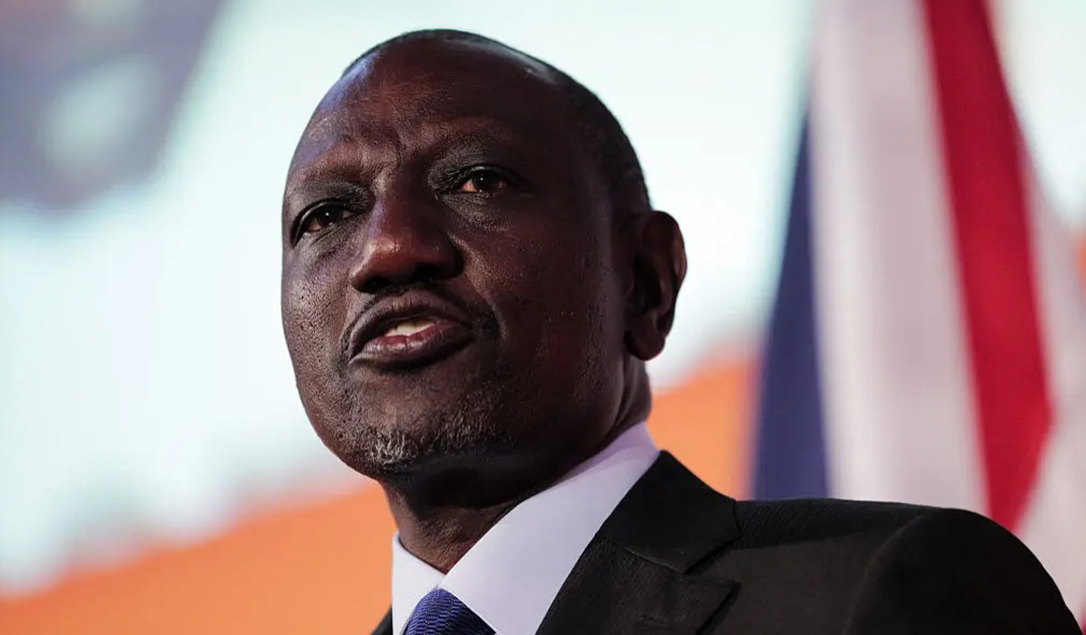
Since he assumed office in September 2022, President William Ruto has portrayed himself as a relentless dealmaker. Whether attracting investors, negotiating with international lenders, or building political alliances, the President constantly balances competing interests to maintain his agenda.
A consummate dealmaker, President Ruto has numerous international allies as well as friends in local politics. And from how he managed the Gen Z protests, where he strategically restructured his government by forming a broad-based cabinet, incorporating key members of the Orange Democratic Movement (ODM), to the ongoing United Democratic Alliance (UDA) and ODM alliance discussions, the President has positioned himself as more than just a traditional political strongman.
Besides making political deals, the President, unlike his predecessors, is said to be a hands-on “CEO”. In some instances, it has been reported that he personally calls to inquire about developments in various dockets and makes off-the-cuff policy pronouncements with far-reaching implications, revealing his hands-on leadership style and rattling some of his allies.
As outlined in his State of the Nation Address last year, the President stated that his administration was dedicated to an ambitious 10-year national transformation programme to increase the country’s productive capacity and long-term competitiveness fundamentally.
He repeated the same sentiments while addressing Heads of Mission and International Organisations in Nairobi in February, asserting that his administration would mobilise resources without adding unsustainable debt to the country’s balance sheet or imposing an additional tax burden on its citizens.
With the National Infrastructure Fund (NIF) signed into law, the government says the plan will unlock major investments and accelerate development across the country.
The shift in financing strategy comes amid efforts to reduce reliance on borrowing and instead leverage public-private partnerships and blended financing. The government argues this will help mobilise much-needed capital for transformative development, while preserving fiscal sustainability.
Key sectors under consideration include the modernisation of the Jomo Kenyatta International Airport (JKIA), the expansion of major road networks, and the scaling up of clean-energy infrastructure, such as geothermal, wind, and hydropower generation.
Using this model, the President has been pushing a very strong message for the “big fish”. “These projects won’t be run by politicians or people with big connections……experts and professionals will be in charge of the project, just like in a private company to ensure that none of the money is wasted or stolen,” he stated last week.
The National Infrastructure Fund
According to the President, the country needs billions of shillings annually for infrastructure development. He states that, instead of borrowing more from the international community, he is seeking the funds within the country.
On 10 March, the government officially listed Kenya Pipeline Company (KPC) Plc on the Nairobi Securities Exchange (NSE), making it one of the exchange’s top 10 largest companies by market capitalisation.
The listing, the first privatisation since 2008, was marked with a ceremonial bell ringing officiated by the President at the NSE Trading Floor in Nairobi. The ceremony followed the successful completion of the KPC Initial Public Offering (IPO), which recorded a 105.7% oversubscription and raised KSh112.374 billion.
The IPO created an opportunity for the country to shift towards a more sustainable model of financing infrastructure development and to access KSh1.2 trillion in long-term resources for various infrastructure programmes on the President’s agenda. That’s the seed money. According to the President, the government plans to use it to attract investors and raise KSh5 trillion over the next 10 years. “Unlike previous privatisation proceeds that were absorbed into the government’s general budget, the proceeds of this IPO, as well as future privatisation transactions, will provide capital to the National Infrastructure Fund,” President Ruto said.
Turning to international creditors, the President also obtained loans from China and the United States, two governments presently involved in economic, structural, and technological rivalry.
The US & China Deals
Last year, the government secured a US$1 billion (KSh129 billion) debt-for-food security swap with the United States International Development Finance Corporation (DFC). This 18-year financing agreement is intended to replace high-cost debt with lower-cost financing. The President also oversaw several agreements with China worth nearly US$1 billion last year, focusing on infrastructure and manufacturing.
Foreign Direct Investment
The President has also been keen on Foreign Direct Investment (FDI) and is actively engaging individual investors to secure funding for various projects, as part of his administration’s shift from sovereign borrowing to public-private partnerships.
Data from the Kenya Investment Authority indicate that 167 investment projects were registered last year, with renewable energy, communications, electronic components, fossil fuels, manufacturing, and agriculture as key sectors driving FDI.
Recently, several prominent Tanzanian entrepreneurs have increasingly turned their attention towards Kenya. Their investments span sectors such as manufacturing, oil and gas, fintech, and media.
One of the most notable moves came from Edha Nahdi, the chairman of Amsons Group. In 2024, Nahdi made headlines after his company acquired a 95% stake in Bamburi Cement for about US$183 million (KSh24 billion).
During the same period, another Tanzanian billionaire, Rostam Aziz, expanded his empire in Kenya through his company Taifa Gas. Aziz launched a US$130 million (KSh16 billion) project to build a 30,000-tonne LPG storage and handling facility at the Dongo Kundu Special Economic Zone in Mombasa. Earlier this week, the tycoon acquired a controlling stake in Nation Media Group from the Aga Khan Fund for Economic Development (AKFD).
In the oil and gas sector, Ally Edha Awadh made a strategic move through his company, Lake Oil Group. The businessman entered the Kenyan market by acquiring fuel stations belonging to Hashi Energy. This has enabled Lake Oil to establish a retail and distribution presence in the country.
Additionally, Tanzanian entrepreneurs are also investing in Kenya’s digital economy. Benjamin Fernandes, founder of Nala, has been expanding his fintech platform into Kenya with an investment of about US$5 million (KSh647 million).
The shift
Unlike his predecessors, President Ruto is shifting away from heavy reliance on international debt for development projects, particularly infrastructure, as he has sought to leverage private capital. This is expected to be realised through the National Infrastructure Fund and the Sovereign Wealth Fund, which aim to mobilise KSh5 trillion over the next decade, to finance the country’s projects without swelling national debt.