

China’s Renewed Push into Kenya’s Infrastructure Sector
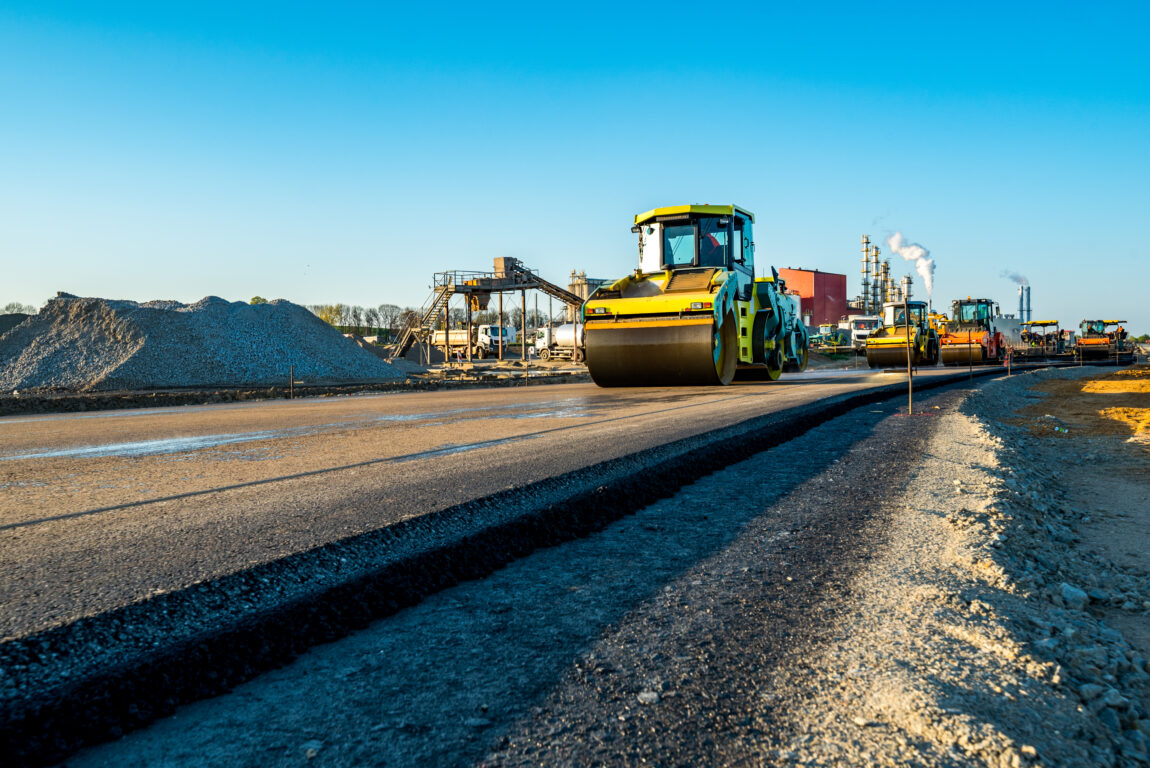
China will once again play a vital role in Kenya’s infrastructure sector after the government awarded major infrastructure projects to Beijing. On Friday, 28 November, the government and two Chinese state firms launched the construction of the Rironi-Nakuru-Mau Summit highway, a key public-private partnership project, expected to transform trade and transport across the region.
The KSh 200 billion dual carriageway will feature toll stations to maintain long-term efficiency and upkeep. The 233-kilometre upgrading project is part of the Northern Corridor network, a vital route in Kenya. It will be converted into a dual carriageway to reduce congestion, enhance safety, and promote regional trade.
The project comprises two sections: the A8 from Rironi to Mau Summit (175km) and the A8 South from Rironi to Naivasha via Maai Mahiu (58km), totalling 233km. The highway will be upgraded to a dual carriageway, with some parts four-lane and the segment between Naivasha and Nakuru six-lane. The expansion will feature modern interchanges, enhanced lighting, pedestrian walkways, and central separation to minimise accidents.
The project was divided into phases and will be funded by the partners through a combination of debt and equity, adopting a model that is gaining popularity after China’s traditional lending approach raised concerns about borrowers’ debt levels.
Reuters reported that Kefa Seda, Director General of the Public-Private Partnerships Directorate at the Ministry of Finance, had stated that the government has no capacity to borrow additional funds.
According to the Kenya National Highway Authority (KeNHA), one phase of the highway will cost USD 863 million and will involve China Road and Bridge Corporation partnering with the National Social Security Fund (NSSF) to expand two existing segments of a 139km, single-lane highway into four- and six-lane dual carriageways.
In the second phase, Shandong Hi-Speed Road and Bridge International, a subsidiary of China’s Shandong Hi-Speed Group, will upgrade an existing single-lane, 94km stretch of highway into a six-lane carriageway for USD678.56 million.
The deals for the two parts of the project will be divided into 75 per cent debt and 25 per cent equity. NSSF is expected to contribute 45 per cent of the equity funding for the phase in which it participates. The borrowing could be sourced from Chinese commercial lenders and state-owned entities such as the Export-Import Bank of China (China Exim Bank). The firms have until the end of 2027 to complete the construction, followed by a 28-year concession to collect tolls to recover their investment and make a profit.
 Partnership to Improve Infrastructure
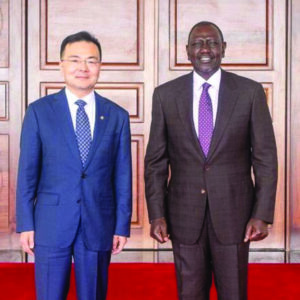
The Kenyan government has stated it will continue to deepen cooperation with China in a spirit of partnership and shared progress. On Thursday, 27 November, President William Ruto, speaking during a visit by a delegation from China Exim Bank led by Chairman Chen Huaiyu to Nairobi, said the increasing presence of Chinese enterprises in Kenya reflects their confidence in the country’s stability and their readiness to expand investments.
The meeting took place a day after Kenya signed a US$185 million concessional loan agreement with China Exim Bank to finance the Intelligent Transport System (ITS) project, a flagship initiative aimed at improving traffic coordination, enhancing road safety, and modernising key transport corridors.
In April, Kenya and China signed landmark agreements as their relations entered a new phase of comprehensive strategic cooperation. This elevated their bilateral relationship to a Comprehensive Strategic Partnership following President Ruto’s week-long State visit to China from April 18 to 26, at the invitation of President Xi Jinping.
The high-level visit marked a crucial moment for both nations, with over 20 agreements signed covering trade, digital innovation, health, education, agriculture, and infrastructure. This occurred at a time when Kenya was aiming to diversify its international alliances, especially after the imposition of a 10 per cent U.S. tariff on key exports.
Among the notable achievements was China’s renewed support for major infrastructure projects, including the extension of the Standard Gauge Railway (SGR) from Naivasha to Malaba and the development of the Nairobi-Nakuru-Mau Summit highway. A Memorandum of Understanding on Railway Cooperation will guide legal, technical, and operational reforms to ensure the sustainability and expansion of Kenya’s rail sector.
In Nairobi, the deployment of a new Intelligent Transport System aims to reduce traffic congestion and enhance the commuter experience. Meanwhile, a USD50 million investment in Murang’a County will establish a plant to manufacture traffic lights and other transport equipment, creating up to 5,000 jobs.