

Ruto’s 2027: NYOTA as a Youth Magnet and Visibility in ‘Development Tours’
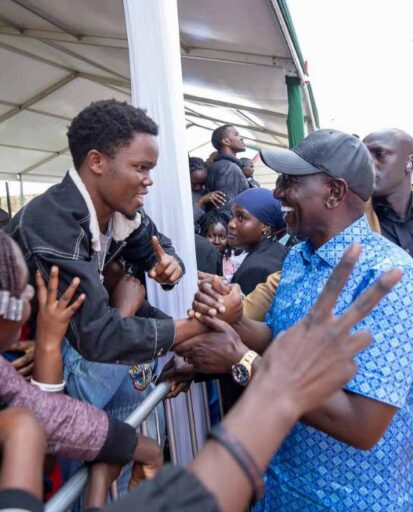
As the 2027 Kenyan general elections draw closer, President William Ruto is clearly deploying a calculated, multipronged strategy designed to shore up support across key demographics and critical swing regions.
The backbone of this effort is the National Youth Opportunities Towards Advancement (NYOTA) programme, a signature youth empowerment initiative offering business start-up capital grants to aspiring young entrepreneurs. This initiative, coupled with this week’s three-day tour of North Eastern Kenya, illustrates Ruto’s attempt to blend economic policy announcements with pointed political messaging.
Rolled out in phases throughout 2026, NYOTA is a clear strategic shift towards youth-centric policy, targeting a demographic that accounts for over 75 per cent of Kenya’s population under 35. The program provides grant funding, typically ranging from Sh25,000 to Sh50,000 per recipient, to nurture small businesses.
The programme touts transparency through direct presidential oversight. During his North Eastern swing, for instance, Ruto personally oversaw the release of KSh350 million to 7,500 young people in Garissa, an additional Sh63 million to 2,520 beneficiaries in the same county, with similar disbursements following in Mandera and Wajir.
Politically, NYOTA reinforces Ruto’s carefully curated image as the “hustler” champion, echoing the ‘bottom-up economics’ rhetoric that powered his 2022 campaign. By attending disbursements in person and defending this hands-on approach against critics who decry it as micromanagement or outright electioneering, Ruto emphasises accountability.
This directly challenges past perceptions of corruption associated with predecessors such as the Youth Enterprise Development Fund. This high-touch leadership style not only fosters trust among recipients but also creates easily shareable moments on social media, amplifying grassroots endorsements.
In the run-up to the election, empowering youth in arid, often-ignored areas like the North-East could secure a vital voting bloc, while simultaneously undermining opposition accusations of elite favouritism. However, the initiative is not without its detractors, with some already branding NYOTA a “scam” linked to World Bank loans and warning that it risks public backlash if the funds are mismanaged or fail to create sustainable, long-term employment.
From Security Pledges to Political Counterpunch
Ruto’s visit to the drought-afflicted counties of Garissa, Mandera, and Wajir served as a concise demonstration of his overall re-election methodology: mixing significant development pledges with sharp political ripostes to rivals. Major announcements included the anticipated full reopening of the Kenya-Somalia border in April 2026, after almost 15 years of closure due to threats posed by Al-Shabaab.
This reopening aims to revitalise cross-border trade and reestablish community ties among ethnic Somalis. Furthermore, Ruto’s pledge to host the 2026 Madaraka Day celebrations in Wajir, a historic first for the region, stands as a potent symbol of inclusivity, alongside accelerated infrastructure plans, such as the 750km Isiolo-Mandera road.
This outreach directly addresses the region’s decades-long grievances of marginalisation, exacerbated by poverty rates exceeding 60 per cent and persistent Al-Shabaab incursions. By promising an end to “citizenship profiling” and urging locals to join anti-terror efforts, Ruto positions himself as a unifying national figure.
This move strategically undercuts opposition figures like Rigathi Gachagua, who had previously attacked the tour, claiming it was merely sanitising “corrupt leaders” and disregarding a massive hunger crisis affecting over 850,000 children.
Ruto’s immediate response? Dismissing Gachagua’s allegations of “Al-Shabaab meetings” as nothing more than baseless tribalism, furthered his narrative of prioritising national progress over divisive ethnic politics, appealing to voters tired of old-guard rivalry.
In terms of re-election mathematics, this visit significantly enhances Ruto’s odds by actively courting the powerful Somali vote bank (estimated at over 2.5 million) and showcasing tangible progress in both security and economic stabilisation. It also effectively neutralises criticism from the United Opposition, characterising their attacks as opportunistic while his administration is demonstrably action-oriented.
Beyond the North Eastern focus, Ruto’s 2026 schedule reads unmistakably like an early campaign itinerary. Since January, he has made official stops in over a dozen counties, ostensibly for project inspections and NYOTA program launches.
To cement his incumbency, his itinerary has included visits to the Coast, Ukambani, Nyanza, the North Rift, and Mt Kenya. The visits have been marked by promises of road tarmacking, new irrigation schemes, and diplomatic updates, all framed within his “transformative 2026” vision.
Critics contend that these “development tours” are a thin veil for early campaigning, drawing parallels to his pre-2022 “sunroof campaigns”, during which he traversed the country under the guise of official inspections.
By declaring 2026 a “watershed year” for Kenya’s ‘first-world aspirations’, complete with promises of Standard Gauge Railway (SGR) extensions, sports complexes, and youth banks, Ruto deliberately builds political momentum, tying his leadership inextricably to the idea of national progress.
This strategy enables him to mobilise key allies who openly advocate for his “two-term” presidency during these events, all while circumventing the official campaign timelines set by the Independent Electoral and Boundaries Commission (IEBC).