

President Ruto Pushes for New Global Financial Order at G7 Summit in France
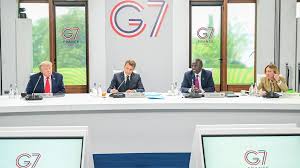
President William Ruto represented Kenya at the G7 Summit in Évian, France, from 15th to 17th June 2026, following an invitation from French President Emmanuel Macron. Kenya’s participation was positioned as an agenda-shaping partner, advancing priorities agreed at the Africa Forward Summit held in Nairobi in May 2026.
The President anchored Africa’s position on sovereign equality, arguing for a shift away from aid dependency toward mutually beneficial partnerships and investment-driven development that creates jobs and shared value. He further stated that Africa can no longer be viewed through a deficit lens in global decision-making spaces.
President Ruto also addressed structural barriers to African development, particularly the high cost of capital faced by African economies despite comparable fundamentals to other regions. He noted that Africa’s financial resources, estimated at over US$4 trillion in pension funds, insurance pools and reserves, are substantial, but require a stronger financial architecture to be mobilised for long-term investment. He pointed to Kenya’s domestic programmes in affordable housing and universal healthcare as examples of locally mobilised financing models.
He urged G7 partners to expand the use of guarantees and risk-sharing instruments through institutions such as the African Trade and Investment Development Insurance (ATIDI) and the Multilateral Investment Guarantee Agency (MIGA), describing guarantees as tools that convert risk into investment confidence. He reiterated that Africa is not a challenge to be solved but a central driver of global opportunity and growth.
In the second session on “Reviving Balanced and Shared Growth for All”, President Ruto underscored Africa’s growing role in the global economy, noting that six of the world’s fastest-growing economies are on the continent. He highlighted Africa’s demographic and resource advantages, including its projected dominance of the global workforce by 2050, vast arable land, and critical mineral reserves essential to the global energy transition. He called for increased investment in value addition, industrialisation, and manufacturing across Africa to ensure that wealth generated from its resources is retained on the continent.
In the technology-focused session on artificial intelligence, the President emphasised Africa’s digital inclusion and the need for stronger safeguards for users, particularly children. He called for age-appropriate design, robust age verification systems, enhanced parental controls, and improved protection against harmful content and AI-generated abuse, including in African languages such as Kiswahili and Sheng.
According to State House Spokesperson Hussein Mohamed, Kenya’s influence was reflected in eight Summit outcome documents. These documents covered risk-sharing mechanisms, debt reform, and critical minerals value addition. They also addressed infrastructure financing through initiatives such as the Partnership for Global Infrastructure and Investment (PGII) and Global Gateway. In addition, the documents emphasised strengthened cooperation in health systems and pandemic preparedness.
The Summit also advanced broader reforms in global financial governance. These included progress on debt restructuring frameworks and increased transparency. Leaders also renewed discussions on reforming institutions such as the International Monetary Fund, the World Bank, and the United Nations Security Council. Kenya described the outcomes as reinforcing Africa’s transition from a recipient of global policy to a central partner in shaping it.
(Source: Citizen)