

Kenya Secures Major U.S. Debt-for-Food Deal as Trump Administration Reviews Ties with Tanzania
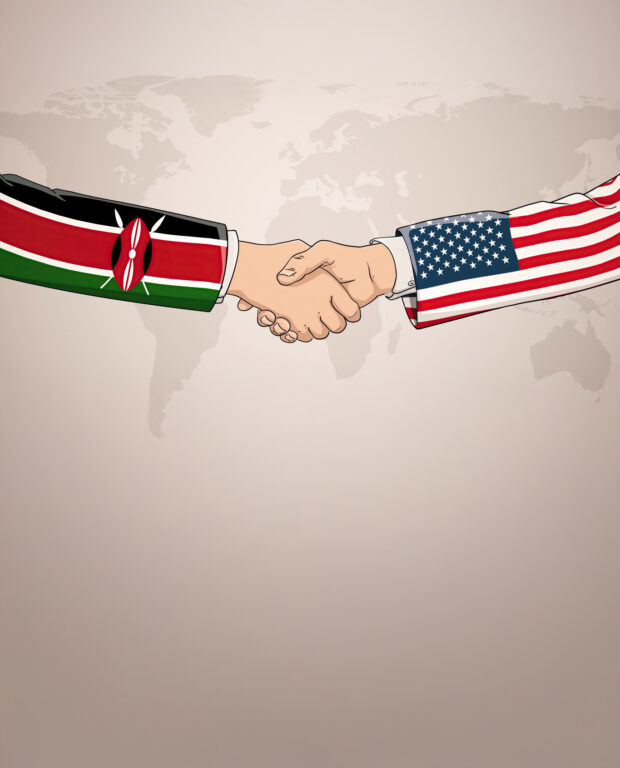
The United States (U.S.) International Finance Corporation has agreed to proceed with a USD1.6 billion (KSh 207.04 billion) debt-for-food security swap with Kenya to replace costly debt with lower-cost financing.
In Kenya, the signing of the Health Cooperation Framework between Kenya and the U.S. marks a significant strengthening of the two countries’ commitment to the full actualisation of universal health coverage.
According to President William Ruto, this transformative framework prioritises the supply of modern medical equipment to hospitals, the efficient and timely delivery of essential health commodities to health facilities, the upscaling of the health workforce, and the expansion of health insurance to ensure that every Kenyan is protected.
“We express our deep appreciation to the Government of the United States, under the leadership of President Donald J. Trump, for choosing Kenya as the first nation to sign such a framework. This decision reflects growing confidence in the strength, sustainability, and reform momentum of our healthcare systems,” President Ruto said in a post on X late on Thursday, December 4.
Under this agreement, the U.S. will commit USD$1.6 billion (KSh207.04 billion) to Kenya over the next five years, resources that will be channelled directly through government institutions, eliminating third-party intermediaries and guaranteeing that support reaches the intended beneficiaries for maximum impact and accountability.
President Ruto was in Washington, D.C., to witness the signing of a U.S.-brokered accord between the Democratic Republic of the Congo (DRC) and Rwanda. President Ruto said the DFC will increase its engagement with Nairobi, including sending a representative to be based in the country from next year. DFC is America’s development finance institution.
President Ruto spoke after witnessing the signing of the Kenya-U.S. Health Cooperation Framework, signed by U.S. Secretary of State Marco Rubio and Prime Cabinet Secretary Musalia Mudavadi.
The plan is expected to work similarly to so-called debt-for-nature swaps carried out by several countries in recent years that offered lower interest rates in exchange for nature protection.
The partnership builds upon Kenya’s long-standing health cooperation with the U.S., an enduring collaboration spanning more than 25 years and backed by over USD$7 billion (KSh905.8 billion) in investment.
A debt-for-food swap would allow Kenya to replace costly existing debt with lower-cost financing, provided it channels the savings towards programmes to boost food security.
Debt swap agreements with a focus on social or environmental benefits are becoming an increasingly popular financing tool in poorer parts of the world. Countries such as Ecuador, Belize, and Gabon have undertaken debt-for-nature deals in recent years.
Tanzania
Meanwhile, in Tanzania, the U.S. is reviewing its relationship with the neighbouring country following a brutal crackdown on protesters after contested presidential elections in October, the U.S. State Department announced.
The United Nations (UN) human rights experts have estimated that hundreds of people were shot dead while hundreds more were detained in the aftermath of the poll.
“The government of Tanzania’s ongoing repression of religious freedom and free speech, the presence of persistent obstacles to U.S. investment, and disturbing violence against civilians in the days leading up to and following Tanzania’s October 29 election, required this reconsideration of our ties,” said State Department Principal Deputy Spokesperson Tommy Pigott, in a statement.
The U.S. said these actions have put American citizens, tourists, and America’s interests in Tanzania at risk, and threatened to undermine the mutual prosperity and security that have defined their partnership for decades.
“The United States cannot overlook actions that jeopardise the safety of our citizens, or the security and stability of the region. The future of our bilateral relationship with the government of Tanzania will be based on its actions,” the statement concluded.
The development came as Meta confirmed in a statement that it had disabled or restricted social media accounts of two Tanzanian activists who had been posting videos of post-election violence.
Meta said it locked Maria Sarungi-Tsehai’s Instagram account in Tanzania following a legal order from the government. It also confirmed that Mange Kimambi was banned from Instagram and WhatsApp for repeatedly violating its recidivism rules.