

Kenya Raises Concern Over Citizens’ Safety in Tanzania Following Election Turmoil
Kenya has intensified diplomatic efforts with Tanzania following reports of human rights abuses against its citizens in the neighbouring country. On 6 November, Prime Cabinet Secretary for Foreign and Diaspora Affairs Musalia Mudavadi stated he had phone consultations with his Tanzanian counterpart, Ambassador Mahmoud Thabit Kombo, focusing on the welfare and protection of Kenyans living and working in Tanzania.
The day before, the Kenyan High Commission in Dar es Salaam assured Kenyans living in Tanzania of their safety amid post-election unrest. In a communique, the mission stated that the welfare of Kenyans residing in Tanzania remained a top priority, and that discussions with Tanzanian authorities had been held to secure their protection.
The assurances came days after a civil society organisation, Vocal Africa, raised concerns over the disappearance of two Kenyans in Tanzania. One was reportedly detained and another feared dead, prompting calls for intervention from Nairobi.
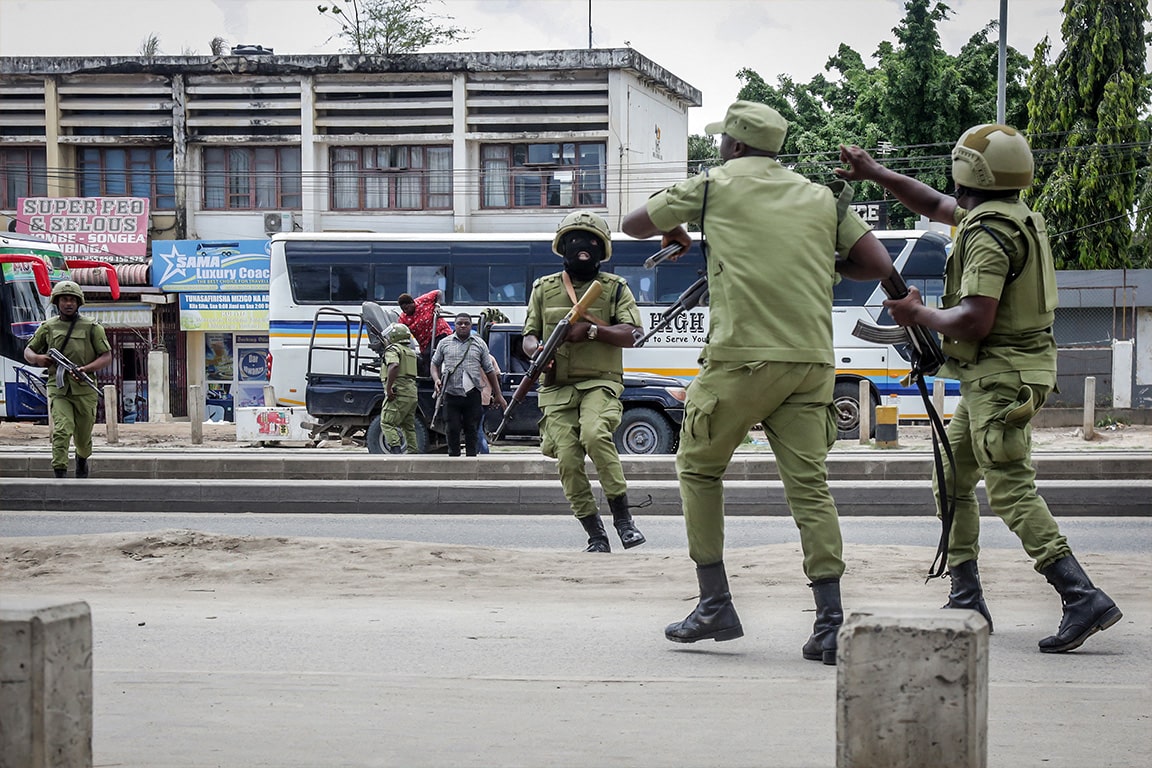
During the swearing-in ceremony of President Samia Suluhu Hassan on November 3 in the administrative capital Dodoma, she blamed foreigners for the deadly protests following a disputed election in which two main opposition candidates were barred from challenging her bid for another term in office.
She acknowledged the loss of lives and stated that it was not surprising that those arrested were from other countries, without providing details. It is unclear how many people died during the violence, as demonstrators took to the streets of major cities to demand that vote-counting be halted. The government deployed the military to assist police in suppressing protests. Moreover, internet connectivity was severed, disrupting travel and other activities.
Observers from the Southern African Development Community (SADC) said in a statement that the October 29 election fell short of the bloc’s principles and guidelines for democratic elections, citing the barring of opposition candidates. Additionally, the Tanzania Human Rights Defenders Coalition (THRDC) and the Tanganyika Law Society (TLS) have condemned the killing of protesters, arguing that the incidents have tainted the country’s image and eroded gains made in public trust for the administration.
The African Union (AU) Election Observation Mission (AUEOM) expressed serious concerns about the credibility of Tanzania’s elections, noting that the process was marred by irregularities, including cases where some voters were issued multiple ballots.
The AUEOM preliminary statement said the incidents undermined the integrity of the vote and called for urgent constitutional and electoral reforms. The mission’s findings identified several challenges in both the pre-election environment and election-day procedures.
The AU observers reported that, although the voting process began peacefully in the morning, the situation later descended into chaos in several regions due to protests, curfews, and an internet shutdown that hindered the transmission of reports.
Philanthropist Mo Ibrahim expressed alarm and misgivings about the Tanzanian election, stating that the violence against the demonstrators was unacceptable. “After the authoritarian regime of your predecessor, President Magufuli, we all welcomed you as a reformer President who believed and stood for democracy, rule of law and civil society, as you released political prisoners and offered space to the political opposition. We are thus dismayed by the new turn taken, banning opposition parties from elections, shutting the internet, shooting at demonstrators, most of them your young people,” he said in a statement.
The philanthropist added that an election excluding opposition parties is neither fair nor legitimate; the anger in the streets is understandable and expected. “In our conference in Marrakech last June, we made the point that there could be no leveraging of Africa’s huge domestic resources, no calling for more private capital to invest in our continent, without peace, security and rule of law. We specifically raised the alarm about the growing political violence against the opposition in the run-up to elections in Tanzania and Uganda, both resource-rich countries. The sub-region is already a home for unspeakable violence and human tragedy in Sudan. One failed state is enough,” Ibrahim added.
President Samia is a former vice-president who ascended to the presidency after the death of her predecessor, John Pombe Magufuli, becoming Tanzania’s first female President in 2021. She initially brought hope to millions amid the government’s repressive tactics against opposition leaders, civic groups, and journalists. However, critics argue that she has failed to reduce repression and has instead exhibited an authoritarian streak similar to that of her predecessor.
Kenya’s latest actions represent a shift from providing consular reassurances to taking formal diplomatic measures, as both nations strive to resolve emerging issues while preserving their longstanding relationship.