
Government Under Pressure Over Russia Recruitment Scandal and Citizens in Foreign War
Recent engagement between the Kenyan and Russian governments over the recruitment of Kenyans to fight in the Russia-Ukraine war has sparked widespread concern and debate. What initially appeared as an isolated case of foreign job recruitment has developed into a complex issue involving diplomacy and national security.
In February, the National Intelligence Service (NIS) released a report stating that more than 1,000 Kenyans had been recruited “to fight in the Russian-Ukraine war”, with 89 on the front line, 39 hospitalised, and 28 missing in action.
As reports continued to emerge of Kenyans’ recruitment into the Russian military under unclear circumstances, the government was compelled to intervene, raising questions about sovereignty and accountability. The situation not only highlighted the vulnerability faced by Kenyans seeking economic opportunities abroad but also emphasised the deep connection between global conflicts and domestic economic realities.
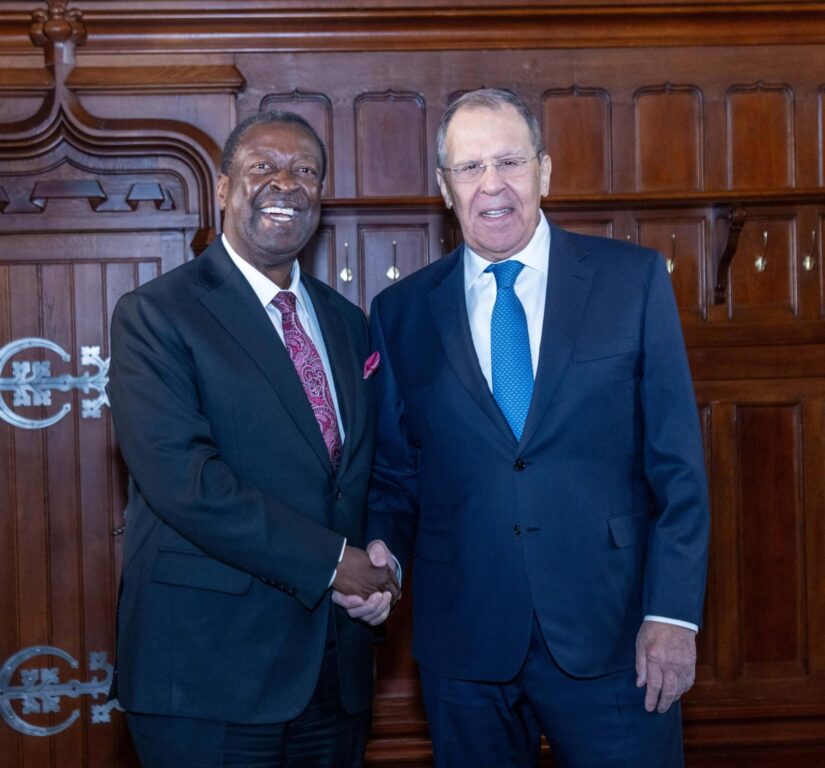
Earlier this week, the issue prompted government-to-government negotiations between the two states. Prime Cabinet Secretary and Cabinet Secretary for Foreign & Diaspora Affairs Musalia Mudavadi flew to Moscow to meet his counterpart Sergey Lavrov, Russia’s Foreign Affairs Minister, and agreed to halt the recruitment of Kenyans into the Russian military.
The government seems to have yielded to pressure from Kenyans and, encouraged by South Africa’s efforts, after the country (South Africa) secured the repatriation of 17 of its citizens who claimed they had been trapped in the eastern Donbas region in Ukraine after being lured into fighting for Russia.
Although Russia has agreed to cease recruiting Kenyans, Lavrov insisted that all foreign fighters had joined voluntarily “in full compliance with Russian law”.
Reports of over 1,000 Kenyan recruits, some through deception or trafficking, have raised fundamental questions about whether the government can protect its citizens and whether there have been failures or corruption within the immigration department and recruitment agencies. Additionally, the issue has become controversial as families of the recruits demand government action, and reports from the National Assembly and NIS have revealed the scale of recruitment. Some of the recruitment agents have been arrested and charged.
According to the government, Kenyans who joined the Russian war without official approval broke the law and will not receive compensation from the government. This is due to the legal and contractual circumstances surrounding their participation. Many of the Kenyans voluntarily signed contracts, which complicates the repatriation process.
According to Section 68 of Kenya’s Penal Code (Cap 63), it is illegal for any Kenyan to enlist in foreign armed forces without written authority from the President, and engaging in such acts can lead to criminal prosecution. Therefore, citizens involved in the Russia-Ukraine war face potential criminal charges in Kenya for breaching the law.
“Some Kenyans are facing either possible charges or they have had to write statements with some of our investigative agencies in Kenya for having been part of a process and the details are going to emerge as they face the law in Kenya. What has been happening is illegal. We are dealing with a situation where there has been a breach of law,” Mudavadi said during an interview on Citizen TV’s The Explainer, via livestream from Moscow, Russia.
The Prime CS, however, noted that the government would explore options, including amnesty, after repatriating the Kenyans, emphasising that the State is not indifferent to their plight.
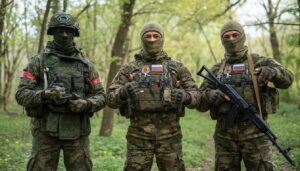
Russia has enlisted between 18,000 and 24,000 foreign nationals to participate in what Russian President Vladimir Putin described as a “special military operation” in Ukraine, according to Kyiv and media reports.
Many join voluntarily through official channels, while a significant number from Africa, South Asia, and the Middle East are lured via deceptive recruitment networks. They are then coerced, tricked, or forced into signing military contracts.
For instance, around 10,000 North Korean troops have been actively fighting alongside Russian forces since late 2024, under a mutual defence pact signed between Pyongyang and Moscow. The troops operate under Russian command, often in Russian uniforms with concealed identities. Their presence has attracted international condemnation.
In Kenya, the media have reported that at least 18 people have been killed in the war, while 30 others are missing.