

Beyond 2030: Rising Above Politics to Deliver Vision 2060
Kenya could achieve significant political, economic and social transformation within a generation if its new long-term development blueprint is grounded in citizens’ aspirations and insulated from electoral pressures.
Achieving that vision, however, will require bold and sustained reforms. These include tackling corruption at all levels of government, strengthening human capital, managing public debt and accelerating economic growth.
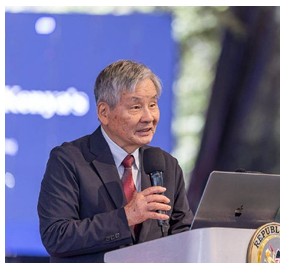
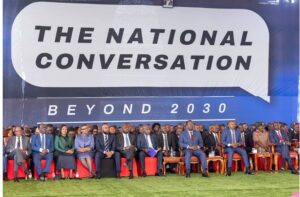
International economic consultant Prof. Hiroyuki Hino, one of the experts who advised President William Ruto on Kenya’s post-2030 vision framework, said corruption continues to undermine economic growth and weaken the country’s social fabric. Speaking at the National Conversation meeting at the Kenyatta International Convention Centre (KICC) in Nairobi on 12 August, he argued that curbing corruption could be truly transformative for Kenya.
Prof. Hino, a professor at Duke University in the United States, said Kenya could reach Singapore’s current economic status by 2063, when the country marks its centenary, by improving childhood nutrition, learning outcomes and access to basic services for ordinary citizens.
Tackling Corruption
A key challenge on the road to Vision 2060 is corruption, which remains endemic across Kenya’s public sector. In July, the World Bank urged the government to implement a raft of anti-corruption reforms as part of its latest US$750 million (KSh97.11 billion) lending package.
The World Bank has set more than 10 conditions for Kenya to unlock the new round of funding. These include the disclosure of public officials’ personal interests and the publication of regulations to restrict unsolicited public-private partnership (PPP) deals.
Kenya will also have to enact the proposed Whistleblower Protection Act, which seeks to promote fair competition, value for money, and the detection of the misuse of public funds. The adoption of the law is expected to anchor the declaration of personal interests by public officials, with such declarations reviewed and verified by the responsible commissions. The target is to raise compliance from a baseline of zero to 85 per cent by 2028.
Kenya is also expected to publish PPP Regulations to curb unsolicited project proposals, commonly known as Privately Initiated Proposals (PIPs). A PIP is an unsolicited technical and financial proposal submitted by a private entity to the government to develop an infrastructure or public service project.
The World Bank also requires amendments to the Public Finance Management (PFM) Act to ensure that any budget adjustments during execution remain strictly aligned with the fiscal aggregates approved by Parliament.
In addition, Kenya must consolidate human resources and payroll data for all ministries, departments and agencies, counties, non-commercial State corporations, commissions and independent offices.
Managing Public Debt
Alongside corruption, public debt remains a major challenge to Kenya’s long-term development ambitions. According to the latest National Treasury monthly bulletin, total public debt stood at KSh13.0 trillion as of June 2026. The debt-to-GDP ratio stood at 68.5 per cent, 18.5 percentage points above the International Monetary Fund (IMF) threshold of 50.0 per cent for developing countries.
High debt levels and rising debt-servicing costs continue to raise concerns about fiscal and macroeconomic stability. Kenya’s credit ratings — B from S&P Global, B3 from Moody’s and B- from Fitch Ratings — reflect the country’s high credit risk while indicating its continued ability to meet its financial obligations.
There are, however, signs of improvement. Recent policy measures, including liability management operations such as Eurobond buybacks and switch auctions, alongside fiscal consolidation efforts aimed at narrowing the budget deficit, have begun to improve Kenya’s credit trajectory.
On 27 January 2026, Moody’s upgraded Kenya’s credit rating from Caa1 to B3 and revised the outlook from positive to stable. The move signalled the potential for further improvement in the country’s credit profile as investor confidence strengthens and debt management remains prudent.
Similarly, on 17 July 2026, Fitch Ratings affirmed Kenya’s B- credit rating while maintaining a stable outlook. Together, Moody’s stable outlook and Fitch’s stable rating point to a gradual improvement in perceptions of Kenya’s creditworthiness.
Successful Eurobond issuances and liability management operations, including the February 2026 dual-tranche Eurobond issuance and associated buyback offer, have also helped smooth the external debt maturity profile and reduce near-term refinancing pressures.
Political Goodwill
Beyond economic and institutional reforms, the success of Vision 2060 will ultimately depend on political goodwill.
Since President Ruto announced the national conversation, opposition leaders have expressed discontent, while many Kenyans have shown limited enthusiasm for the initiative. The scepticism reflects the country’s highly charged political environment and raises the risk that partisan interests could overshadow a potentially historic opportunity.
For Vision 2060 to command broad public support, political leaders will need to resist the temptation to turn the national conversation into another political contest. In particular, they should avoid making the long-term blueprint part of the 2027 election campaign.
Instead, the process should provide Kenyans with an inclusive, credible and genuinely consultative platform to shape the country’s development priorities beyond 2030.
The central question is therefore not simply whether Kenya can formulate an ambitious Vision 2060. It is whether the country can build the political consensus, institutional discipline and public trust needed to sustain it across successive administrations.