

Baba Is Gone: The Man Who Shaped Kenya’s Democracy Despite Losing Every Election
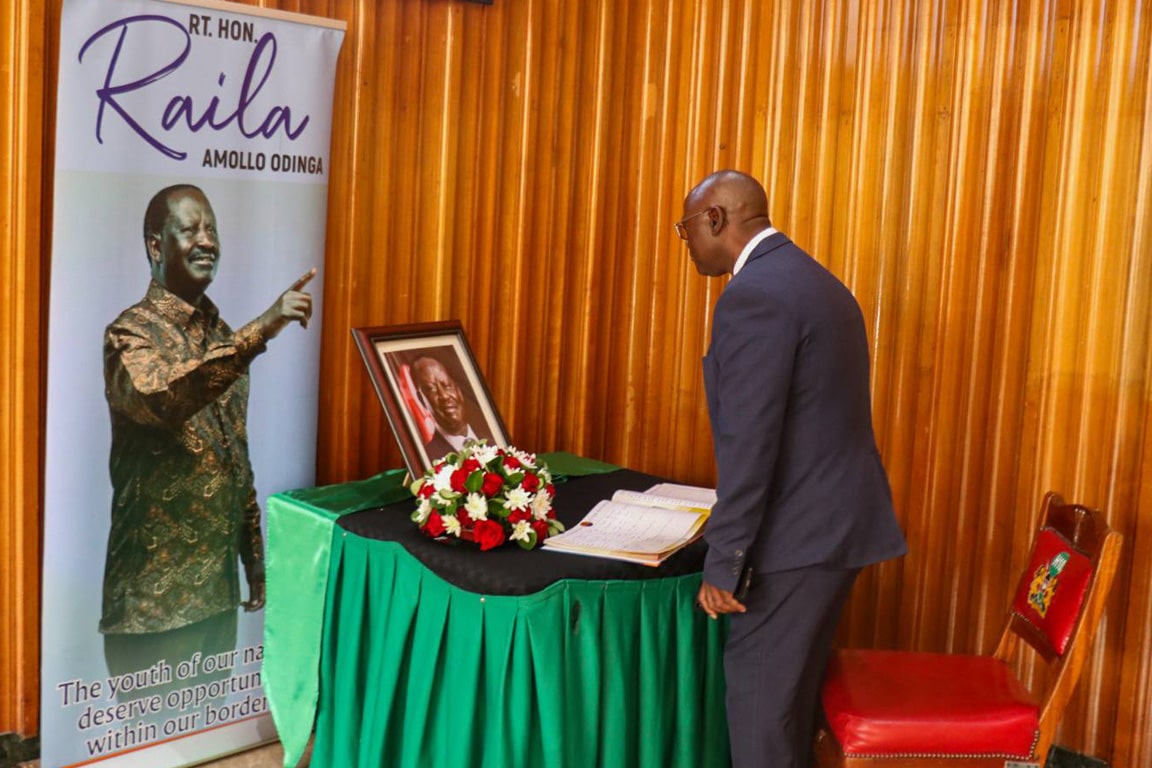
Raila Odinga, Kenya’s prominent opposition leader and five-time presidential candidate, died on Wednesday, 15 October, at the age of 80, following a heart attack. His demise marks the end of one man’s extensive political career that has shaped Kenya’s democracy.
In a statement, Devamatha Hospital in Kerala, southern India, said Raila died after collapsing during a morning walk. He had been treated for diabetes, hypertension, and chronic kidney disease.
Raila was first treated at an ayurvedic hospital in Kerala five days earlier, according to a local police official in India. On October 15, doctors performed cardio-pulmonary resuscitation there before he was transferred to Devamatha.
Raila, or “Baba” as he was affectionately known, was a key figure in Kenyan politics for over thirty years and served as Prime Minister from 2008 to 2013. He was a passionate politician who had risen as a vehement advocate and defender of multiparty democracy. He was loved by nearly fanatical supporters and vilified by a threatened political elite.
His father, Jaramogi Oginga Odinga, was a prominent figure in the fight for independence from British colonial rule and served as Vice President under the country’s founding leader, Mzee Jomo Kenyatta.
He began activism at an early age, but it came with a cost. During the failed coup attempt on August 1, 1982, against President Daniel arap Moi, Raila was arrested and charged with treason after being accused of being among the masterminds of the plot. He was detained without trial for six years.
In his 2013 memoir, “The Flame of Freedom”, Raila described the torture, physical abuse, and psychological intimidation he experienced during his detention.
Since 1992, when multiparty politics was reintroduced in Kenya, Raila has contested five Presidential elections and lost all of them by 2022. Each loss caused divisions, but also strengthened the country’s democracy.
Pan-Africanist
Raila was described as a dedicated pan-Africanist who criticised what he called neo-colonialism. He advocated for African unity, self-reliance, and integration by developing infrastructure, such as roads, and served as the African Union High Representative for Infrastructure Development from 2018 to 2023.
He was also appointed by the African Union (AU) to mediate in the 2010-2011 political crisis that erupted in the Ivory Coast after then-President Laurent Gbagbo refused to relinquish power following his loss to Alassane Ouattara in elections. His efforts, however, failed to resolve the standoff, as Gbagbo rejected Raila as a mediator, accusing him of bias towards Ouattara.
Odingaism
In their book, “New Constitution, Odingaism and the State of Internal Democracy in Orange Democratic Movement and its Effects on the 2013 Elections in Kenya”, George Odhiambo Okoth and Gordon Onyango Omenya argue that the obsession with the Odinga family is cultural.
According to the book, among the Luo, the Ker (teacher) was the supreme moral or spiritual leader. This leader was also a japaro (thinker) who had been elevated to the status of Ramogi (the Moses of the Luo). The name ‘Jaramogi’ means the disciple of Ramogi; it was the name given to Oginga Odinga, Raila’s father, not by himself but by the consensus of the community in 1954.
This installation explains why the Luo community has considered Odinga worth their support. Odinga’s excellent leadership in business and politics, as well as his status as the leading Luo politician, all provided reasons why his community placed their faith in him.
They highlight that Raila was not merely Oginga Odinga’s preferred son. He was also actively involved alongside his father in opposing the oppressive and authoritarian regimes of both President Kenyatta and President Moi. For this reason, Raila unofficially assumed leadership of the Luo community following his father’s death, though not in the same capacity as Ker this time.
This dissent against political oppression and authoritarianism informed Raila’s ideology and philosophy of social justice, liberalism, and political freedom of the masses, anchored in the ideology of social democracy.
Future of Kenyan Politics
Raila’s death is likely to bring majority realignments, along with quite a few head-spinning developments. His demise is expected to reshape the 2027 elections and national discourse.