

Katiba@16: Democracy, Power and the Unfinished Constitutional Promise
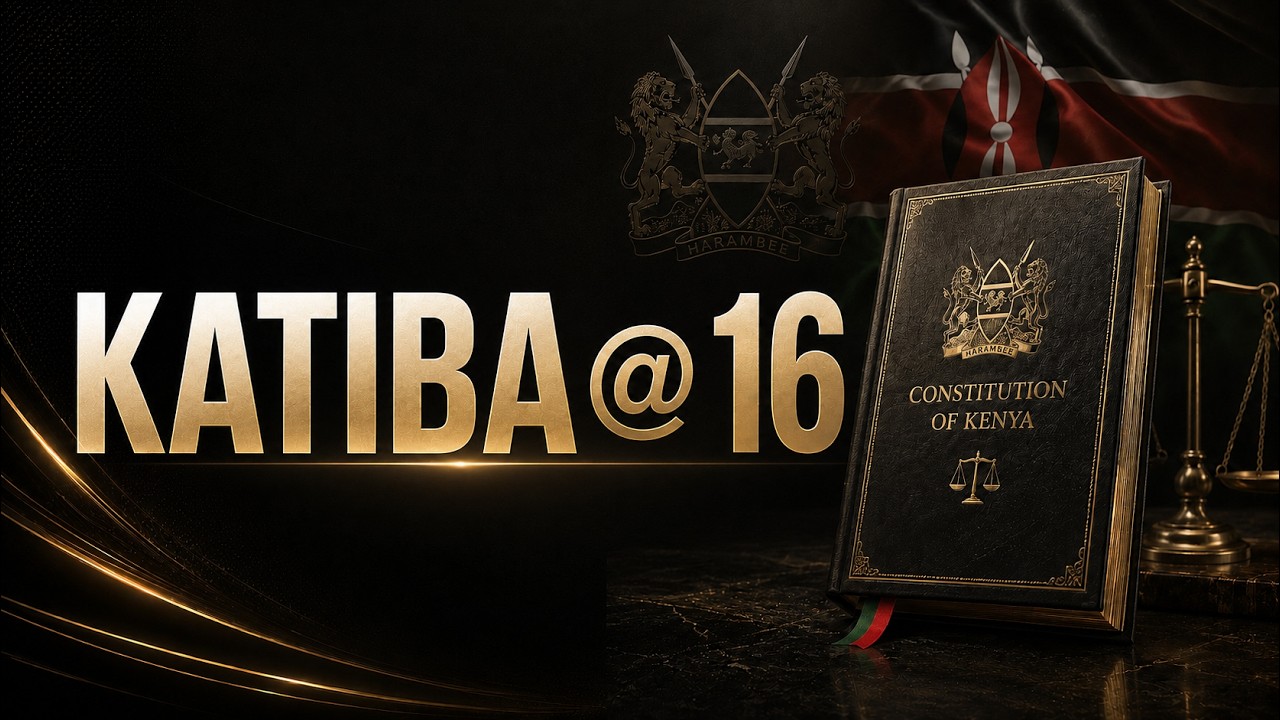
As the country marked the 16th anniversary of the 2010 Constitution of Kenya on 27 August, Kenyans once again confronted questions about the limits of political power, democratic legitimacy, and constitutional rule.
These hard questions include whether the country has faithfully implemented the Constitution, exercised the authority it confers responsibly, delivered the rights it guarantees, and whether its institutions have fully honoured the purposes for which they were established.
On Thursday, August 27, President William Ruto highlighted the delicate balance between the mandate secured at the ballot box and the constitutional limits governing its exercise. The President’s remarks came against a backdrop of growing political tensions.
Speaking at the 2026 Katiba Day Symposium in Nairobi, the President defended the democratic mandate of elected governments and emphasised that authority won at the ballot box must be exercised within the limits of the Constitution.
He said that an electoral mandate gives an elected government the legitimacy and responsibility to implement the programme on which it was elected. Still, he acknowledged that such authority must coexist with constitutional checks.
The Constitution serves two equally important purposes. First, it restrains power by distributing authority, establishing checks and balances, protecting fundamental freedoms, and providing remedies against abuse. Secondly, it manages power by requiring the State to govern, protect, provide for, and progressively realise the people’s social and economic rights. The government of the day has a responsibility to uphold both obligations.
In addition, a broader constitutional question arose about how much latitude an elected government should have to implement the programme on which it campaigned, particularly when its policies are challenged in court. For instance, when a court finds that a policy violates the Constitution, how should the executive and parliament respond promptly and constructively? However, such a question should not be framed as an attack on any institution.
16 Years Later
Since 2010, the country has made significant progress in governance, human rights and the rule of law, but challenges to fully implementing these advances remain.
The country’s Supreme Law has been described as one of the most progressive in Africa, transforming governance and strengthening the protection of fundamental rights and freedoms. Devolution remains one of the Constitution’s most significant achievements, enabling counties to take responsibility for delivering services closer to citizens.
In addition, the Constitution includes a Bill of Rights, which provides constitutional protection for fundamental freedoms and strengthens citizens’ ability to demand accountability from public institutions.
Further, the Constitution has expanded the country’s democratic space and strengthened the separation of powers through checks and balances among the three arms of government. This also includes promoting gender equality, including the constitutional two-thirds gender principle, another important milestone in the country’s constitutional journey.
Despite this progress, the country has yet to fully realise the promise of the Constitution. Disregard for court orders, corruption, delays in implementing the two-thirds gender rule, and the high cost of running devolved governments remain challenges. There are also fears of attempts to alter constitutional provisions for political interests, which could undermine the principles established under the 2010 constitutional framework.