
Today is Mon, 3 Aug 2026


Executive Walkway![]()
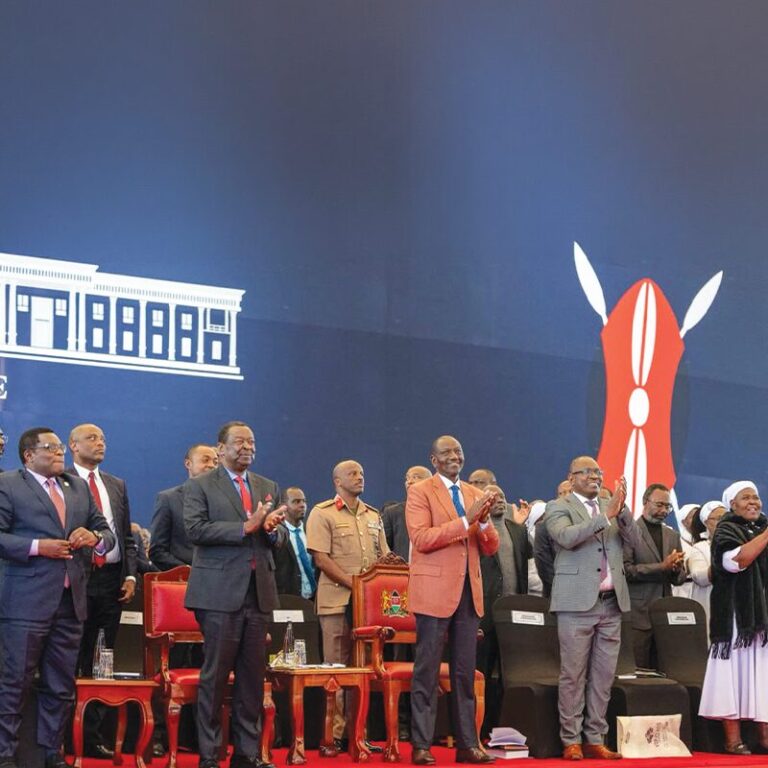
Ruto Hosts Quaker Church Leaders at State House
President William Ruto is expected to host leaders and members of the Friends Church (Quakers) at State House, Nairobi, on Monday, 3 August 2026. The engagement forms part of the President’s continued consultations with faith-based organisations, which remain influential stakeholders in national development, education, healthcare, peacebuilding, and community welfare across the country.
The meeting is expected to provide an opportunity for discussions on issues of national importance, including social cohesion, education, youth empowerment, and partnerships between government and religious institutions. The President is also likely to reaffirm the government’s commitment to working closely with faith-based organisations in advancing development priorities and promoting national unity.
Parliamentary Aisle![]()
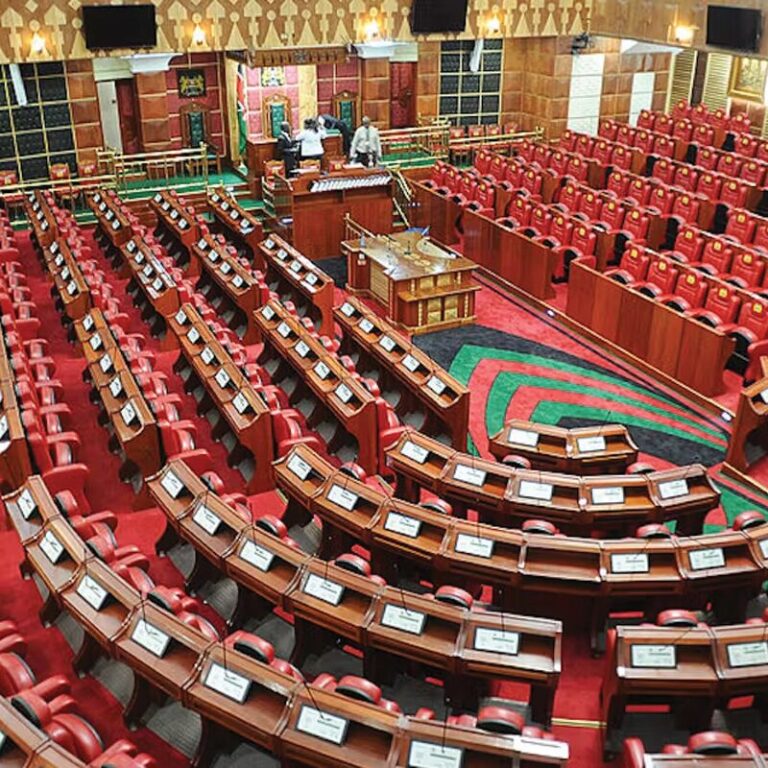
Youth Petition Puts Kenya's Rising Public Debt Under Parliamentary Spotlight
The National Assembly’s Public Petitions Committee is considering a youth-led petition seeking a 24-month freeze on public borrowing from the 2027/28 financial year, following presentations by the Bunge Mashinani School of Governance Initiative. The petition argues that slowing the pace of new borrowing is necessary to curb Kenya’s growing public debt and protect future generations from an unsustainable fiscal burden, while also calling for stronger parliamentary oversight, enhanced debt sustainability assessments, and greater transparency in debt management.
The proposal adds to the broader national conversation on fiscal sustainability and public finance management. While committee members noted that the National Treasury already publishes debt management reports, they welcomed continued citizen engagement on the issue, underscoring Parliament’s role in scrutinising public borrowing and ensuring accountability in the management of Kenya’s public finances.
Corridors ofJustice![]()

Recess
The High Court and the Supreme Court will be on recess on 1st August 2026 until 15th September 2026.
Talking of Which![]()

Balancing Innovation and Regulation in the FinTech Era
As financial technology continues to reshape banking, payments, lending, and digital assets, regulators are under growing pressure to encourage innovation without compromising financial stability or consumer protection. Against this backdrop, the “Balancing Innovation: A FinTech Regulation & Policy Sandbox Training Course” will take place in Nairobi from 3–7 August 2026, bringing together regulators, central bank officials, policymakers, fintech innovators, compliance professionals, and legal experts to explore modern approaches to governing the rapidly evolving digital finance ecosystem. The five-day programme will focus on the design and implementation of regulatory sandboxes, examining how controlled testing environments can support innovation while managing risk. Participants will also explore emerging issues such as artificial intelligence, digital assets, cybersecurity, data protection, consumer protection, and cross-border regulatory cooperation.
Watch out for![]()

Kenya's AI Policy Landscape in Perspective
As Kenya advances its artificial intelligence agenda, policymakers, legal practitioners, technology leaders, and researchers will convene on 3 August 2026 for the latest session in the AI Governance Webinar Series, hosted by the Centre for Intellectual Property and Information Technology Law (CIPIT) at Strathmore University. Running from 11:00 a.m. to 12:00 p.m. (EAT), the webinar will provide an overview of Kenya’s National AI Policy, offering participants an opportunity to examine the country’s emerging approach to AI governance. Discussions are expected to unpack the policy’s key provisions, its implications for businesses and public institutions, and its role in shaping Kenya’s digital economy. For organisations operating in technology, finance, healthcare, and the public sector, the webinar offers timely insights into the evolving AI policy landscape and the regulatory direction likely to influence future investment and innovation.
MovingUp![]()

Irene Pauline Bateebe Appointed to Kenya Pipeline Company Board
Irene Pauline Bateebe, Uganda’s Permanent Secretary in the Ministry of Energy and Mineral Development, has been appointed a Non-Executive Director of Kenya Pipeline Company (KPC), effective 28 July 2026. Her appointment strengthens the board with extensive expertise in petroleum infrastructure, energy policy, and large-scale project delivery as KPC continues to advance its regional growth strategy.
Bateebe has more than 20 years of experience in the energy, mining, and petroleum sectors. Before becoming Permanent Secretary, she served as Principal Refining Engineer at Uganda’s Ministry of Energy and Mineral Development, where she played a key role in the Uganda Oil Refinery and the East African Crude Oil Pipeline (EACOP) projects. She has also served as Chairperson of the Uganda Refinery Holding Company and as a board member of the Uganda National Oil Company (UNOC).
She holds a Bachelor of Science in Chemical and Process Engineering from the University of Dar es Salaam, a Master of Science in Refinery Design and Operation from the University of Manchester, and a Master of Science in Sustainable Energy Engineering from the KTH Royal Institute of Technology. She has also completed executive leadership training at the Blavatnik School of Government.