

The Tiny Superheroes Saving the Planet, One Flower at a Time
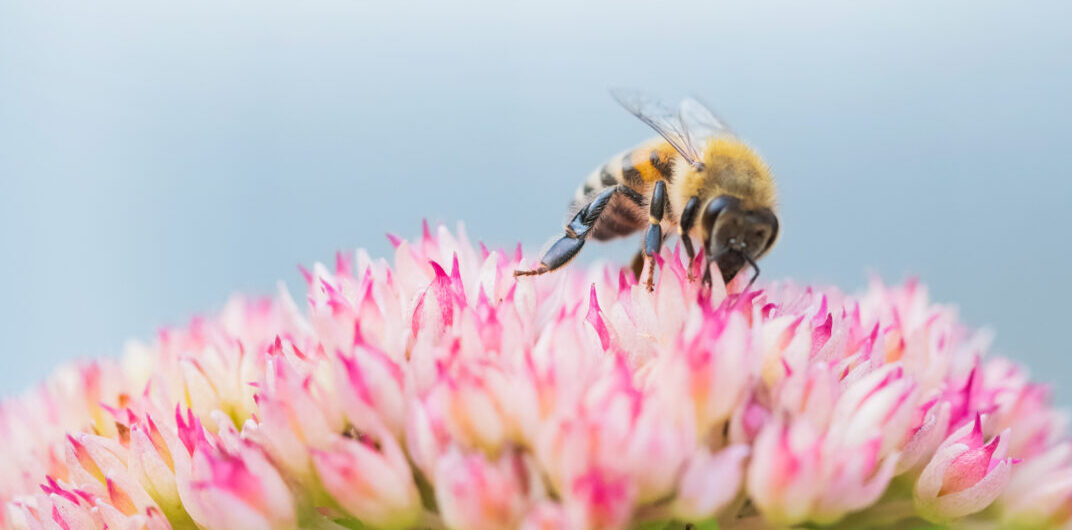
Imagine a world without coffee. Now imagine that same world without strawberries, chocolate, almonds, or tomatoes. Sounds like a dystopian nightmare, right? If we don’t appreciate bees, that’s exactly where we could be heading.
Bees are often seen as party-crashers out to ruin your day. Yet in reality, they are the glue that holds our global ecosystem together. Far from being simple honey-makers, bees are elite environmental engineers. Let’s dive into why these tiny aviators are the real heroes of planet Earth.
The Ultimate Plant Matchmakers
As a bee zips from flower to flower in search of nectar, its body acts like a walking sheet of glue, with pollen grains sticking to its hairs. When the bee lands on the next flower, some of that pollen rubs off.
This process, known as pollination, isn’t just a minor ecological side-quest. It is a monumental engine of life. Roughly one-third of every bite of food you eat depends directly on pollinators. If you enjoy a diverse diet of colourful fruits, crisp vegetables, and rich nuts, you have a bee to thank. Without them, our grocery stores would look incredibly bleak, filled mostly with wind-pollinated crops such as wheat and maize.
Beyond the Grocery Aisle: Keeping Nature Green
It’s easy to look at bees through a purely human lens, focusing on what they put on our dinner plates. But their resume extends far beyond the dinner plate. Bees are the ultimate guardians of biodiversity.
By pollinating wild trees and flowers, bees ensure the survival of diverse plant habitats. These plants produce seeds, berries, and foliage that feed countless other species, from birds to lions. Furthermore, robust plant life creates stable root systems that prevent soil erosion and absorb carbon dioxide from the atmosphere. When you save the bees, you aren’t just saving an insect; you are protecting the entire food web and the very landscapes we love to hike in.
A Master’s Degree in Teamwork
If you ever need a lesson in workplace efficiency, look no further than a beehive. A single colony of honeybees can contain up to 60,000 bees. They operate as a “superorganism”, a massive collective in which each has a specific, shifting job description based on their age.
The Nurse Bees: Young adults who stay inside to feed and care for the developing larvae.
The Architects: Bees that secrete wax from their abdomens to build perfectly geometric, mathematically flawless hexagonal honeycombs.
The Foragers: The seasoned veterans who fly up to three miles away from the hive to scout out resources.
To coordinate this massive operation, bees don’t send emails; they dance. When a scout finds a prime patch of wildflowers, it returns to the hive and performs the waggle dance. By shaking its abdomen and walking in a figure-eight pattern, it tells its sisters the exact angle of the food source relative to the sun and the precise distance. It is an incredibly sophisticated language written entirely in choreography.
A Helping Hand
Bees are currently facing a tough time. A combination of habitat loss, climate shifts, and heavy pesticide use has caused bee populations worldwide to decline significantly. The good news? You don’t need to become a professional beekeeper to make a difference. You can help turn the tide right from your own garden or balcony. How?
Plant a Bee Buffet: Grow native wildflowers in your garden. Bees love a variety of colours, especially blue, purple, and yellow.
Ditch the Chemicals: Avoid chemical pesticides and weed killers, which can confuse and harm foraging bees.
Build a Bee Hotel: Solitary bees (like mason bees) don’t live in hives. Leaving a small patch of undisturbed soil or hanging a wooden bee house gives them a safe place to rest.
Bees have quietly managed the planet for millions of years. They are fierce, highly organised, and fundamentally essential to life on Earth. So, the next time you hear that familiar buzz in your garden, don’t swat. Take a second to wave to the tiny superhero keeping our world colourful, healthy, and delicious.