

When Private Matters Become Public Battles in Kenyan Politics
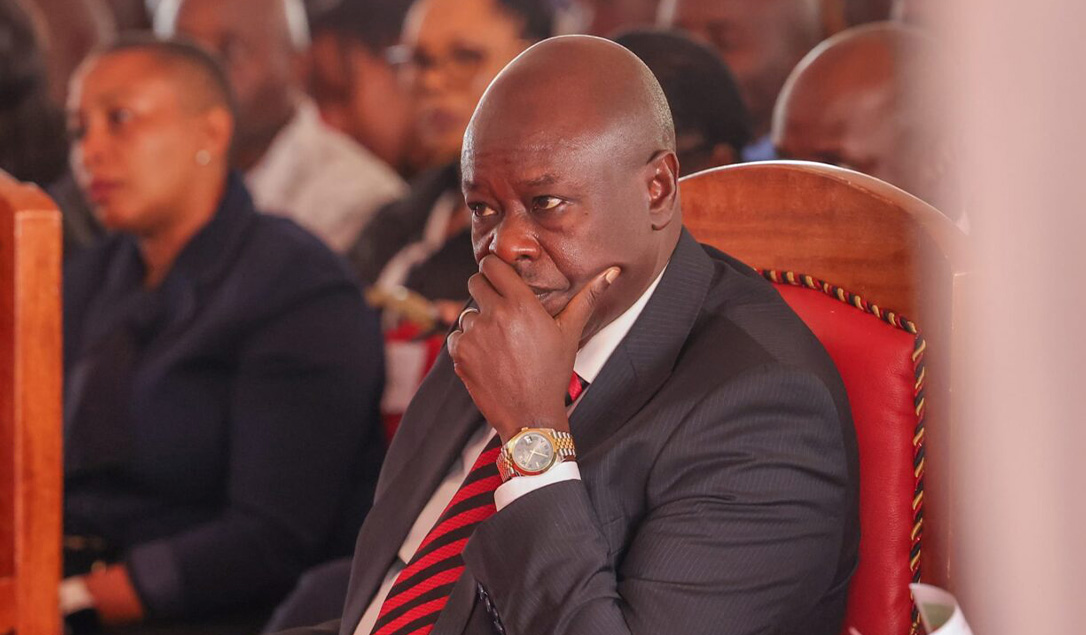
In Kenyan politics, the boundary between private life and public office is often fragile. In most cases, you find personal matters that would ordinarily remain within families or confined circles spilling into the national limelight. Such cases arise from rumours, allegations, or courtroom details, which quickly morph into matters of public interest and debate, attracting media scrutiny. This forces the affected politician to come out publicly and address them about what they would otherwise have kept private.
Rigathi Gachagua
In the latest incident, executors of the estate of the late James Nderitu Gachagua, former Governor of Nyeri County, have come out to defend the distribution of his multi-billion-shilling wealth, dismissing claims that some beneficiaries were disinherited or that assets were misappropriated.
In a statement published in two main national newspapers on April 8, the executors of the late governor’s will, former Deputy President Rigathi Gachagua, Mwai Mathenge, a Quantity Surveyor and Advocate of the High Court of Kenya, and Njoroge Regeru, Senior Counsel and Advocate of the High Court of Kenya, said all beneficiaries were adequately provided for in strict compliance with the will, and that no one was disinherited as alleged in media reports.
It all started in March, when President William Ruto alleged that his former deputy manipulated Nderitu’s will “to disenfranchise and disinherit widows and orphans”. The President publicly said that he will help them get back what he claimed they lost unfairly.
The narrative was heightened by a widely circulated March 23 letter in which Nderitu’s first wife, Margaret Nyokabi Nderitu, and her children – Susan Kirigo, Mercy Wanjira, Jason Kariuki, and Ken Gachagua – wrote to the President through the Attorney General, seeking Ruto’s assistance to “finally find justice, closure, and restoration” due to “suffering and hardship following the passing of our beloved patriarch”.
They asked the President to have an “independent and impartial” investigation into the forgery of a will and the “irregular interference, fraudulent dealings and unlawful intermeddling” of the late Nderitu’s estate. The former governor died on February 24, 2017, at Royal Marsden Hospital in London after a battle with cancer.
The executors said they have been compelled to set the record straight due to what they termed “the prejudicial effects” of the ongoing public discourse regarding the late governor’s estate, nearly 10 years after his death.
In a statement issued by Musyimi and Company Advocates, who have acted for the estate since 2017, the executors said they would have preferred to limit the publication of the estate’s affairs to court filings and the requisite engagement with the beneficiaries rather than engage in public discourse on the same.
They noted that the magnitude of inaccurate and misleading information disseminated widely in both mainstream and social media constrains the executors, drawing on information and records mostly in the public domain, through court and other filings, to come out to clear the air for the benefit of all the parties concerned.
President William Ruto
In 2017, when William Ruto was the Deputy President (DP), a woman sued him for child support. In a case which was filed in February 2017 through lawyer Gitobu Imanyara, the plaintiff and mother to an 11-year-old girl named Abby, accused the DP of neglecting the child he allegedly sired out of wedlock in 2006.
The suit was filed in the children’s department of Milimani Law Courts, alleging that the mother could not adequately provide for the child, and asked that the application be handled urgently, as the minor was suffering.
In the suit papers, Prisca Chemutai accused the DP in part of failing to provide the minor with adequate necessities such as good healthcare, food, school fees, clothing, shelter, and medication. All these, she claimed, began after Ruto became the country’s Deputy President.
But in his message posted on his Twitter account, now X, DP Ruto admitted knowledge of the child, adding that she was well catered for. The DP signed off, asking politicians and busybodies to keep out of his affairs.
In the court papers, Chemutai had asked the court to compel the DP to pay at least KSh180,000 every month to cater for the girl’s basic needs, as well as a quality vehicle for the use by the minor, and to enrol her in a school that befits the status of a Deputy President’s child. The issue sparked an online storm, with various hashtags supporting or criticising the DP.
President Mwai Kibaki
On March 4, 2009, President Mwai Kibaki called a press conference at State House in Nairobi to deny polygamy.
In a televised press conference, President Kibaki said. “I want to make it very clear that I have only one wife, Lucy, who is here, and I do not have any other”. His wife, first lady Lucy Kibaki, stood by his side with a stony face and the police chief behind him. Lucy, then weighed in, accusing the Kenya Television Network (KTN) of “tormenting the family”, stating, “I nearly came to your studio last night to attack you as I did with the Nation”. She was referring to an incident in 2005, when she stormed the Nation Media Group offices along Kimathi Street in Nairobi, at midnight and slapped a cameraman.
Before that press conference, media houses had frequently suggested that President Kibaki had a second wife, Mary Wambui, who was normally referred to as “political activist” in the President Mwai Kibaki’s party – the Party of National Unity (PNU), and a daughter by her called Winnie.
President Kibaki had gotten “foul mood” over a mention on television a few days earlier by a politician of his alleged relationship with Wambui, whom he was rumoured to have married under customary law in the 1970s. “I want to say quite frankly, anyone who is bent on that course will see me in court. And we shall deal with him, no other way whatsoever,” President Kibaki said.
Earlier in 2007, his wife, Lucy Kibaki, slapped a government official after he mistakenly introduced her to dignitaries as “first lady Mama Lucy Wambui”.
At the time, many sympathised with the first family about the lack of privacy. Still, others questioned why President Kibaki had called a press conference on a personal matter when he had never done so to address serious issues in the country, from high food prices to corruption and police brutality.