

The Year That Was: Events That Defined Kenya’s Political Landscape in 2025
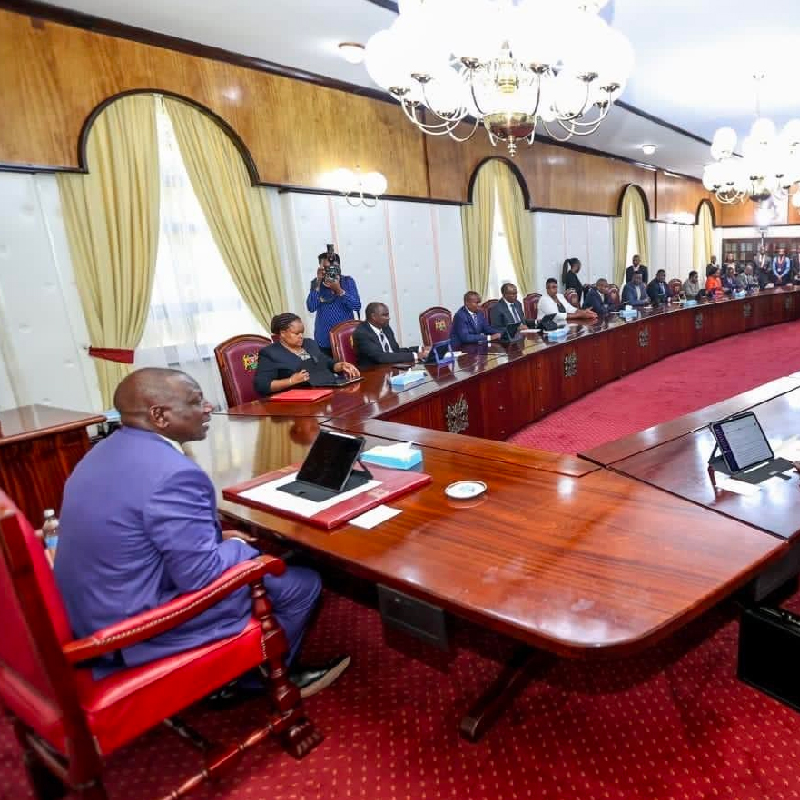
Kenyan politics in 2025 have been far from ordinary, with the Gen Z-driven protests that rattled the state, Cabinet reshuffle, political alliances, and even the death of opposition icon Raila Odinga, changing the country’s political landscape in ways few had predicted.
Cabinet Reshuffle
In March, President William Ruto carried out a Cabinet reshuffle, firing Justin Muturi as Public Service Cabinet Secretary and nominating Geoffrey Ruku in his place. He then moved Environment Cabinet Secretary Aden Duale to the Ministry of Health, where he replaced Deborah Barasa. Barasa was moved to the Environment, Climate Change, and Forestry Ministry, taking over from Duale. The President also named 14 new Principal Secretaries across various ministries.
Gen Z Protests
Gen Z protests pushed President Ruto to make bold and unexpected political decisions, including working more closely with the late Raila Odinga under the broad-based government. The protests took a dangerous turn as hundreds of violent agitators infiltrated the marches, attacked demonstrators, and spread fear across various parts of the country.
The year also saw a troubling rise in arbitrary arrests, primarily due to the protests, with human rights groups classifying the country as a “repressed” state due to this and other grave human rights violations. And it is during the year that it became evident that the youth were not standing passive, but were actively organised, voiced their opinions, influenced policies, and claimed their rightful roles in decision-making processes at local, regional, and global levels.
Raila Odinga
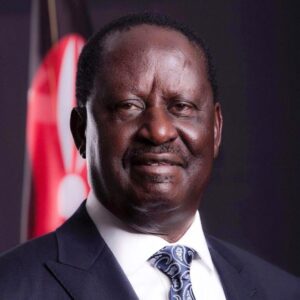
Before his death on October 15, Odinga had already reshaped the country’s political direction by backing the broad-based government and influencing the formation of the National Dialogue Committee (NADCO), which was a 10-member committee formed by Parliament in 2023 to build consensus and recommend reforms on critical national issues.
The committee was co-chaired by Kalonzo Musyoka (Azimio) and Kimani Ichung’wah (Kenya Kwanza) and brought together government and opposition leaders to address political tensions. The committee produced a report with proposals for constitutional, legal, and policy changes, such as creating a leader of the opposition and reforming the electoral commission, which Parliament later adopted.
The broad-based government was described as a milestone by some of President Ruto’s allies, noting that it reaffirmed the recommendations of the NADCO report. The move helped the President to stabilise his government while widening his political base. Even after death, Odinga remains one of the most influential political figures.
United Opposition
Opposition politics evolved significantly during the year. Former Deputy President Rigathi Gachagua repositioned himself as a force to be reckoned with ahead of the 2027 general election after his ouster in 2024. Gachagua has recast himself as a formidable opposition leader. He has turned his fierce criticism on his ally-turned-rival, President Ruto and his administration.
He was the power behind the formation of the United Opposition, which comprises Kalonzo Musyoka (leader of Wiper Party), Martha Karua (leader of People’s Liberation Party (PLP)), Eugene Wamalwa (leader of the Democratic Action Party of Kenya (DAP-K)), Justin Muturi (leader of the Democratic Party (DP)), Fred Matiang’i (Deputy Party Leader of Jubilee Party), and Rigathi Gachagua (leader of the Democracy for the Citizens Party (DCP)).
However, the united opposition bid to use the November 27 by-elections as a springboard for a 2027 showdown against President Ruto delivered uncomfortable lessons. Despite spirited campaigns, particularly in Mbeere North, Malava, and Magarini constituencies, the movement led by Gachagua emerged weakened and forced back to the drawing board.
The opposition camp left these contests with more questions than victories, as President Ruto’s team tightened its grip and exposed the opposition’s philosophy and structural vulnerabilities.
Economy
During the year, the country’s economic recovery continued to gain momentum, but most Kenyans have yet to see real improvements in their livelihoods. This is according to the latest economic report by the Kenya Institute for Public Policy Research and Analysis (KIPPRA) released on December 17.
According to the think-tank’s report, the economy grew by 4.7 per cent in 2024, largely fuelled by agriculture and services, but formal employment barely kept pace, adding fewer than 80,000 jobs. It noted that the country’s ability to generate jobs is increasingly under pressure as the country struggles to save enough to support productive investments.
The misalignment between economic growth and job quality is increasingly recognised as a critical challenge for enterprises, investors, and policymakers. However, the report notes that there are improvements in the wider economy, with inflation dropping from 7.7 per cent to 4.5 per cent and the Central Bank of Kenya (CBK) reducing the policy rate from 13 per cent to 10.75 per cent.
These measures eased borrowing costs and aimed to stimulate private sector activity. However, the benefits have not fully reached the job market. Of the 782,300 new jobs created in 2024, roughly 90 per cent were in informal roles, offering limited security or benefits. Additionally, the report indicated that real wages have stagnated or declined across major sectors in recent years, particularly in agriculture, where earnings remain the lowest.