

Ruto Adviser Prof. Mutua Defends Compensation Plan as Justice, Not Charity
Prof. Makau Mutua, President William Ruto’s adviser on Constitutional Affairs, has publicly defended the government’s controversial reparation plan, describing it not as a handout but as a crucial pillar of justice for victims and their families.
The government’s plan, which he describes as part of the justice process, is to provide compensation to victims and families of recent Gen Z protests. He emphasised that the government would secure justice for those killed and pursue accountability so that those found culpable face the law.
An ally of Orange Democratic Movement (ODM) leader Raila Odinga, the professor assumed the role of adviser to President Ruto following the broad-based agreement between the party and the United Democratic Alliance (UDA). 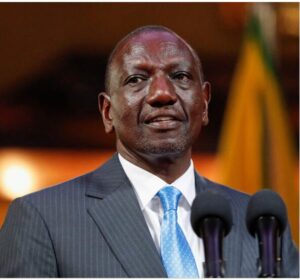
Prof. Mutua also serves as the Chairperson of the Panel of Experts on Compensation for Victims of Demonstrations and Public Protests. He emphasised that his role is not to sanitise or defend wrongdoing, asserting that his sole value to President Ruto’s government is in truth-telling. “I am not in this government to whitewash or cover up anything. If things happen that I am not happy with, I will resign,” he stated during an interview on Citizen TV’s JKLive on 10 September.
Prof. Mutua chairs the 18-member compensation panel, which includes the Law Society of Kenya (LSK) President, Faith Odhiambo, who serves as vice-chairperson. Other members are Kennedy Ogeto, Irungu Houghton, Dr. John Olukuru, Rev. Fr. Kennedy Barasa Simiyu, Dr. Linda Musumba, Dr. Duncan Ojwang’, Naini Lankas, Dr. Francis Muraya, Juliet Chepkemei, Pius Metto, Raphael Anampiu, and John Maina. Richard Barno, Dr. Duncan Okelo Ndeda, and Churchill Suba are technical experts, while Jerusah Mwaathime, Dr. Raphael Ng’etich, and Daki Guyo serve as joint secretaries.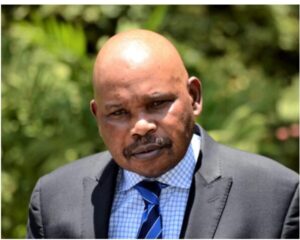
On September 8, the High Court in Kerugoya temporarily halted the directive for government compensation pending the hearing of the application filed by lawyer Levi Munyeri. The lawyer considers the process unlawful. High Court Judge Justice Kizito Magare certified the case as urgent and issued three conservatory orders, all effectively freezing the mandate of the Presidential taskforce, which had been sworn into office a week earlier.
Furthermore, in Nairobi, four activists – Dr. Magare Gikenyi, Eliud Karanja Matindi, Philemon Abuga, and Dishon Keroti – who also believe it was unconstitutional for the President to form the panel of experts, filed their case.
Both petitions allege the unlawful exercise of Presidential powers and that the Head of State lacks legal authority to establish such a panel, even as they question the criteria used to select members of the team.
They also allege overlapping duties on the grounds that the mandate given to the panel is part of the responsibilities carried out by other State institutions, such as the Kenya National Commission on Human Rights (KNCHR). President Ruto is also accused of usurping the powers of the Office of the Director of Public Prosecutions (ODPP), the Inspector-General of the National Police Service, the Independent Police Oversight Authority (IPOA), the Victims Protection Agency, and the Judiciary.
The petitions argue that it is contradictory for the executive to compensate victims when independent institutions, such as courts, usually provide such redress.
Speaking during the JKLive interview, Prof. Mutua stated that the Constitution had not envisioned the fatal protests between citizens and police in 2024 and June/July 2025. He said the compensation indicates that the government regrets the deadly outcome of the demonstrations.
“There is no doubt that 2024 and 2025 were marked by terrible events in this country. The scenes witnessed across the nation were nothing short of dystopian. We saw citizens and law enforcement clash in ways that are not intended by our Constitution,” Prof. Mutua said.
The High Court has scheduled the next hearing of the case for further directions on 6 October 2025. This development could potentially delay the anticipated payouts.